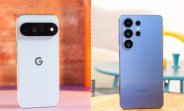
When you’re in the market for a premium Android flagship, the Google Pixel 11 Pro XL and the Samsung Galaxy S26 Ultra are two of the most compelling options available. Both offer top-tier specs and features, but they cater to slightly different audiences. Google’s latest Pixel continues to emphasize its camera prowess and tightly integrated Google software, while Samsung’s Galaxy S26 Ultra brings more powerful hardware, a broader feature set, and unique extras like the Privacy Display and the S Pen. Since the Galaxy S26 Ultra has been on the market longer, it can often be found at a lower price than the newer Pixel. But does Samsung’s hardware advantage translate into a better overall experience? And which phone ultimately comes out ahead? In this comparison, we break down the key differences to help you decide.
Design and Display
Both phones sport a premium build with glass and metal, but their design philosophies differ. The Pixel 11 Pro XL features Google’s signature visor-like camera bar and a matte finish that resists fingerprints. It’s available in several attractive colors. The Galaxy S26 Ultra has a more angular, boxy design with sharper corners and a slightly larger footprint. It also includes an S Pen silo, which adds a bit of thickness.
On the display front, the Pixel 11 Pro XL boasts a 6.8-inch LTPO OLED screen with a 120Hz refresh rate and high brightness for outdoor visibility. The Galaxy S26 Ultra ups the ante with a 6.9-inch Dynamic AMOLED 2X display, also with 120Hz adaptive refresh rate, and it gets extremely bright—up to 2,500 nits in peak brightness. Both screens are excellent, but Samsung’s panel is slightly more vibrant and supports the S Pen for precise input. However, the Pixel’s display is no slouch, offering accurate colors and smooth scrolling.
One notable difference is the Privacy Display on the Galaxy S26 Ultra, which reduces side-angle viewing to protect sensitive information. This is a unique feature that business users might appreciate. The Pixel lacks such a feature but offers a cleaner software experience.
Performance and Hardware
Under the hood, the Galaxy S26 Ultra is powered by the Snapdragon 8 Gen 4 for Galaxy (or Exynos 2500 in some regions), while the Pixel 11 Pro XL uses Google’s custom Tensor G5 chip. In benchmark tests, the Snapdragon consistently outperforms the Tensor in raw processing power, especially in graphics-intensive tasks. The Galaxy also offers more RAM (up to 16GB) and faster storage options. However, the Tensor G5 is no slouch; it’s optimized for AI and machine learning tasks, and in day-to-day use, both phones feel fast and responsive.
For gamers, the Galaxy S26 Ultra is the better choice thanks to its superior GPU and cooling system. It can handle demanding games at higher frame rates with less thermal throttling. The Pixel 11 Pro XL is capable but may not sustain peak performance as long. Both phones come with ample storage, starting at 128GB and going up to 1TB.
Battery life is another area where Samsung excels. The Galaxy S26 Ultra packs a 5,500mAh battery, while the Pixel 11 Pro XL has a 5,000mAh cell. In our testing, the Galaxy lasted noticeably longer, often over a day and a half with moderate use. The Pixel typically gets through a full day but may need a charge by evening if you’re a heavy user. Both support fast wired and wireless charging, but Samsung’s 45W charging is faster than Google’s 30W.
Camera Comparison
Cameras are a major selling point for both phones, but they take different approaches. The Pixel 11 Pro XL features a 50MP main sensor, a 48MP ultrawide, and a 48MP telephoto with 5x optical zoom. Google’s computational photography is second to none, delivering stunning photos with excellent dynamic range, accurate colors, and impressive night mode. The Pixel’s strengths lie in its consistency and ability to capture great shots in any condition, especially with moving subjects.
The Galaxy S26 Ultra, on the other hand, offers a 200MP main sensor, a 50MP ultrawide, a 12MP 3x telephoto, and a 10MP 10x periscope telephoto. This setup provides more versatility, especially for zoom shots. Samsung’s image processing tends to produce brighter, more saturated photos that pop on social media, but some may find them oversharpened. In low light, both perform well, but the Pixel often edges out with cleaner details and less noise.
For video, the Galaxy S26 Ultra supports 8K recording at 30fps and 4K at 120fps, while the Pixel 11 Pro XL tops out at 4K 60fps. Samsung also offers more advanced video features like director’s view and pro mode. However, Google’s video stabilization is excellent, and its new AI-powered features, such as Audio Magic Eraser, make editing easier.
Ultimately, if you prioritize zoom versatility and high-resolution stills, the Galaxy S26 Ultra wins. But if you want the most reliable point-and-shoot camera with true-to-life colors, the Pixel 11 Pro XL is the better pick.
Software and Features
Software is where the two phones diverge significantly. The Pixel 11 Pro XL runs Android 15 with Google’s Pixel UI, which is clean, minimal, and receives updates promptly—often before any other Android device. Google promises seven years of OS and security updates, matching Samsung’s commitment. The Pixel experience is deeply integrated with Google services and includes exclusive features like Call Screen, Now Playing, and the new Gemini AI assistant.
The Galaxy S26 Ultra runs Android 15 with One UI 6.1, which is feature-rich but can feel cluttered. Samsung offers its own suite of apps and services, including Bixby, Samsung Pay, and Knox security. The S Pen is a major differentiator, providing precise input for note-taking, drawing, and navigation. The Privacy Display, as mentioned, is another unique feature. Samsung also offers DeX mode, which turns the phone into a desktop-like experience when connected to a monitor.
Both phones receive AI features, but Google’s Tensor chip enables on-device processing for many tasks, ensuring privacy and speed. Samsung relies on a mix of on-device and cloud-based AI. In terms of update longevity, both are excellent, but Google’s track record is slightly better for timely updates.
Price and Value
The Google Pixel 11 Pro XL starts at $1,099 for the 128GB model, while the Samsung Galaxy S26 Ultra starts at $1,199. However, since the Galaxy has been out for a while, it’s frequently discounted, often dropping to around $999 or less. The Pixel is newer, so discounts are less common. Both phones are available through major carriers and unlocked.
When considering value, the Galaxy S26 Ultra offers more hardware for the money, especially if you can find it on sale. The S Pen, larger battery, and superior performance are tangible benefits. The Pixel 11 Pro XL, however, offers a cleaner software experience and arguably better camera consistency, which may be worth the premium for some users.
Conclusion
Choosing between the Google Pixel 11 Pro XL and the Samsung Galaxy S26 Ultra comes down to your priorities. If you want the best camera experience with minimal effort, the cleanest Android software, and timely updates, the Pixel 11 Pro XL is an excellent choice. It excels in everyday photography and offers a smooth, bloat-free experience.
On the other hand, if you crave the most powerful hardware, a versatile camera system with impressive zoom, longer battery life, and unique features like the S Pen and Privacy Display, the Galaxy S26 Ultra is the better option. Its lower street price makes it an even more attractive proposition.
Ultimately, both are outstanding flagship phones that cater to different needs. Whichever you choose, you’ll be getting a top-tier Android experience.