Opening
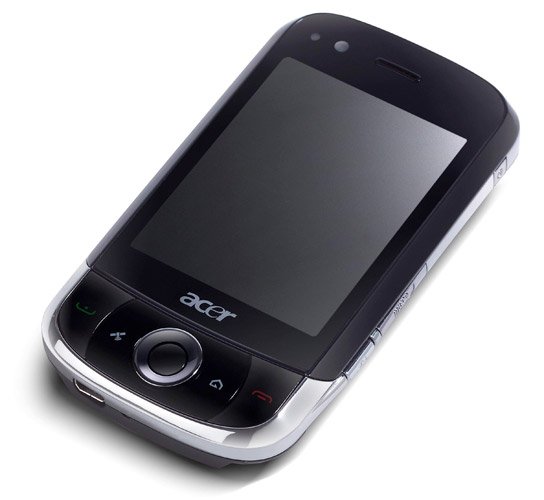
It is 2009. The smartphone market is a battlefield. The iPhone 3GS is the darling of the touchscreen world. BlackBerry is the king of email. Nokia still rules the feature phone empire. In the middle of this chaos, a Taiwanese company called Acer, known for cheap laptops, drops a device that makes everyone stop and squint. The Acer Tempo DX900. It was not pretty. It was not fast. But it did something almost no other phone could do: it ran two SIM cards at the same time. In an era where carrying two phones was normal for business travelers, this was a quiet revolution. The DX900 was a chunky, plastic brick with a resistive touchscreen and a slide-out QWERTY keyboard. It ran Windows Mobile 6.1. It had a 2.8-inch display with a resolution of 240 by 320 pixels. By today\'s standards, it is a relic. But in 2009, it was a statement. Acer was not trying to beat the iPhone. They were trying to solve a real problem for real people. They succeeded.
What This Device Brings
The Acer Tempo DX900 was announced in February 2009 at the Mobile World Congress in Barcelona. It was part of Acer\'s aggressive push into the smartphone space after acquiring the mobile division of E-TEN, a company known for GPS devices and Windows Mobile phones. The DX900 was a direct product of that acquisition. The key feature was dual SIM dual standby. This allowed users to insert two GSM SIM cards and receive calls on either number. One SIM could be for work. The other for personal life. No more swapping cards. No more carrying two phones.
The hardware was typical for the era. A 533 MHz Samsung S3C2442 processor. 128 MB of RAM. 256 MB of internal storage. A microSD slot for expansion. The screen was resistive, meaning you had to press hard or use a stylus. The slide-out QWERTY keyboard was small but usable for thumb typists. The rear camera was a 3.15-megapixel shooter with autofocus but no flash. The front camera was a VGA unit for video calls. The battery was a removable 1530 mAh unit, which was large for its time. The phone measured 106 x 60 x 17 millimeters and weighed 147 grams. It felt dense and solid, like a tool.
Software was Windows Mobile 6.1 Professional. This was a business-focused OS with a start menu, a file explorer, and support for Microsoft Exchange. Acer added a custom shell called Acer UI. It was a simple launcher with large icons for contacts, messages, and calendar. It made the phone easier for non-techies. The GPS was powered by SiRF Star III chipset, which was excellent for navigation. The phone came with Acer\'s own GPS software and Google Maps preloaded. The positioning was clear: a dual-SIM workhorse for professionals who needed connectivity and navigation. It was not a media phone. It was not a gaming phone. It was a tool for people who had two phone numbers and one pocket.
The Context That Matters
Acer was a latecomer to mobile phones. The company was the third largest PC maker in the world in 2009, but its smartphone portfolio was almost nonexistent. The acquisition of E-TEN in 2008 gave Acer instant access to Windows Mobile expertise and a lineup of GPS-enabled phones. The DX900 was the second Acer-branded smartphone after the Tempo X960. The X960 was a single-SIM touchscreen phone. The DX900 was the dual-SIM variant. At the time, dual-SIM phones were rare and mostly made by Chinese manufacturers like Gionee and Coolpad. These were cheap, low-quality devices with poor build and buggy software. Acer was the first major brand to bring a dual-SIM phone to the global stage with proper Windows Mobile support.
The competitive landscape was brutal. The iPhone 3G was selling millions. The BlackBerry Bold 9000 was the gold standard for email. Nokia\'s E71 was a sleek business device with a full keyboard. None of these phones supported dual SIM. The DX900 filled a gap that no one else addressed. Business travelers, expatriates, and frequent flyers often had SIM cards from multiple countries. They needed a phone that could handle both. The DX900 was their answer. It was also a lifeline for people in markets like India, Indonesia, and Africa, where carrying two local SIMs was common to get better rates for calls and data. Acer positioned the DX900 as a premium tool, not a budget toy. The price was around $500 unlocked. That was expensive for a dual-SIM phone, but cheap compared to an iPhone or BlackBerry.
What the Experts Say
Tech reviewers in 2009 were divided. Some praised the DX900 for its unique dual-SIM capability. Others criticized its sluggish performance and dated software. The consensus was that the DX900 was a niche product for a specific audience. Reviewers noted that the resistive touchscreen required a stylus for accuracy. The Windows Mobile OS was clunky and prone to crashes. The camera was mediocre, even by 2009 standards. Photos were grainy and colors were washed out. The video recording was a joke: 320 by 240 pixels at 15 frames per second. The keyboard was cramped. The keys were small and flat. Typing long emails was a chore.
Business analysts focused on Acer\'s strategy. They noted that the DX900 was not a flagship. It was a proof of concept. Acer was testing the waters with dual-SIM and GPS. They were building a portfolio. Some analysts argued that Acer should have focused on Android instead of Windows Mobile. Android was new in 2009, but it was gaining traction. Windows Mobile was dying. The DX900 was a dead end. Photographers and power users ignored the phone entirely. The camera was too weak. The processor was too slow. The screen was too small. The only group that praised the DX900 were frequent travelers and business owners. They loved the dual-SIM capability. They loved the GPS. They loved the long battery life. For them, the DX900 was a lifesaver. It was not a smartphone. It was a tool. And it worked.
The Numbers That Tell the Story
The DX900\'s performance was modest. The 533 MHz processor was considered slow even in 2009. The iPhone 3GS had a 600 MHz processor. The BlackBerry Bold 9000 had a 624 MHz processor. The DX900 lagged behind in every benchmark. Opening apps took two to three seconds. Scrolling was jerky. Multitasking was painful. The 128 MB of RAM was barely enough for Windows Mobile. Running GPS and a phone call at the same time caused the device to stutter. The battery life was the one bright spot. The 1530 mAh battery lasted two full days with moderate use. That was better than the iPhone 3GS, which barely lasted a day. The GPS was accurate to within five meters, which was excellent for turn-by-turn navigation.
Sales numbers were not publicly disclosed by Acer, but market analysts estimated that the DX900 sold fewer than 100,000 units worldwide. That was a tiny fraction of the iPhone\'s sales. The phone was popular in Asia and the Middle East. In India, the DX900 was a hit among business travelers who needed two SIMs. In Europe, it was a niche product. The camera scores from review sites were low. The 3.15-megapixel sensor scored a 4 out of 10 for image quality. The video recording was unusable for anything beyond basic clips. The display was the weakest link. The 2.8-inch resistive screen had poor viewing angles and low brightness. Using the phone outdoors was nearly impossible. The numbers told a simple story: the DX900 was a specialist tool, not a mainstream success.
What This Means for Buyers
If you are a collector or a tech historian, the Acer Tempo DX900 is a fascinating artifact. It represents a moment when dual-SIM phones were rare and Windows Mobile was the only option for business users. If you find one in working condition, it is worth picking up for the novelty. But for anyone else, this phone is a clear skip. The performance is too slow for modern apps. The operating system is dead. Windows Mobile 6.1 has no app store, no modern browser, and no security updates. You cannot use WhatsApp, Google Maps, or any modern service. The screen is tiny and low resolution. The camera is terrible. The keyboard is cramped. The phone is thick and heavy. It is not a daily driver.
For buyers in 2009, the advice was different. If you traveled frequently between countries and needed two SIMs, the DX900 was the only reliable option. The BlackBerry Bold was better for email, but it only had one SIM. The iPhone was better for media, but it only had one SIM. The Nokia E71 was better for typing, but it only had one SIM. The DX900 was the only phone that let you keep your work number and personal number active at the same time. It was a compromise. You traded speed and screen quality for connectivity. If you were a road warrior, it was worth the trade-off. If you were a casual user, you would be better off with a Nokia or a BlackBerry. The DX900 was not for everyone. It was for the few who needed two numbers in one pocket.
The Road Ahead
Acer continued to release Windows Mobile phones after the DX900. The Tempo series included models like the M900 and the F900. But the company struggled to gain traction. By 2010, Android was exploding. Acer shifted its smartphone strategy to Android, releasing devices like the Liquid and the Stream. The dual-SIM feature became standard on many Android phones. But Acer never dominated the smartphone market. By 2015, Acer\'s smartphone division was a minor player. The DX900 was a forgotten footnote. However, the concept it pioneered—dual SIM in a mainstream phone—became ubiquitous. Today, almost every Android phone supports dual SIM. The iPhone added dual SIM in 2018 with the XS and XR. The DX900 was ahead of its time. It solved a problem that the industry ignored for years. The road ahead for the DX900 was a dead end. But the road ahead for dual-SIM phones was wide open.
Conclusion
The Acer Tempo DX900 sits in a glass case in my memory. It was not a great phone. It was not a fast phone. It was not a beautiful phone. But it was a necessary phone. It was built for a specific person in a specific situation. That person was a traveler, a worker, a juggler of two lives. The DX900 did not try to be everything to everyone. It tried to be one thing to a few people. And it succeeded. The iPhone changed the world. The BlackBerry changed business. The DX900 changed nothing. It was a quiet whisper in a loud room. But that whisper said something important: sometimes the best solution is not the most elegant. Sometimes it is the most practical. The DX900 was practical. And that is enough.