Opening
It is 2009. The smartphone market is a battlefield. On one side, the iPhone 3GS is polishing its glass touchscreen. On the other, the BlackBerry Bold is the king of keyboards. In the middle, a flood of Windows Mobile devices is trying to keep up. Then, Acer, a company known for cheap laptops, throws a curveball. They announce the Acer Tempo M900. It is a strange beast. A massive 3.8-inch resistive touchscreen. A slide-out QWERTY keyboard. A stylus. And a 5-megapixel camera with a weird, sliding lens cover. It looks like someone glued a laptop keyboard to a PDA. The phone is thick. It is heavy. It feels like a brick in your pocket. But for a specific kind of user, it is exactly what they wanted. This was not a phone for the masses. It was a tool for the road warrior. The person who needed to type emails, edit documents, and take notes with a stylus. It was a bridge between the old world of PDAs and the new world of touchscreens. And it failed. But its failure tells us a lot about where smartphones were going.
What This Device Brings
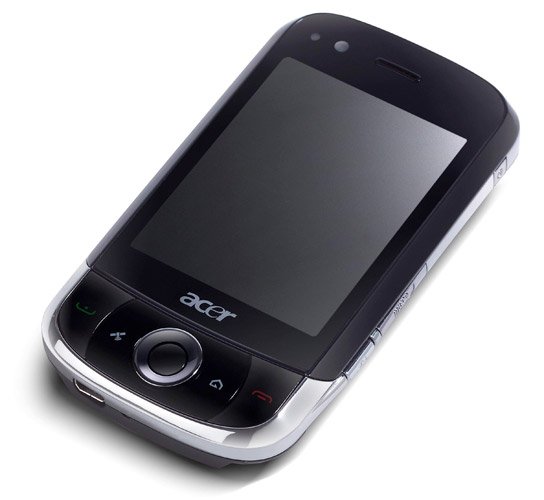
The Acer Tempo M900 launched in early 2009, running Windows Mobile 6.1 Professional. Acer was not a new name in phones. They had bought the Taiwanese phone maker E-TEN in 2008. The M900 was one of the first fruits of that deal. The specs were, for the time, top of the line. A 533 MHz Samsung S3C6410 processor. 256 MB of RAM. 512 MB of ROM. A microSD slot for expansion. The screen was a 3.8-inch TFT resistive display with a resolution of 480x800 pixels. That resolution was excellent for 2009. The design was a slider. You pushed the screen up to reveal a full QWERTY keyboard. The keyboard had four rows of keys. They were small, but they had a decent feel. The keys were slightly raised, making them easier to find by touch. Acer also included a stylus that tucked into the side of the phone. The stylus was needed because the resistive touchscreen was not great for finger navigation. You had to press hard. The screen was not very responsive to light touches. The camera was a 5-megapixel unit with autofocus and a dual-LED flash. It could record VGA video at 30 frames per second. The phone also had GPS, Wi-Fi b/g, Bluetooth 2.0, and a 3.5mm headphone jack. The battery was a 1530 mAh unit. Acer claimed it could last for 400 hours on standby and 5 hours of talk time. In real use, you were lucky to get a full day with moderate use. The phone also came with Acer’s own software skin on top of Windows Mobile. It included a custom today screen, a contacts manager, and a backup utility. The design was functional, but not beautiful. It was a black slab of plastic and metal. It was 117.5 x 63.5 x 17.1 mm and weighed 188 grams. It was a brick.
The Context That Matters
To understand the M900, you have to understand 2008 and 2009. The iPhone had killed the stylus. Steve Jobs famously said, “Who wants a stylus?” But Windows Mobile users still wanted one. They were business users. They used OneNote. They used Excel. They used Outlook. A stylus was not a relic. It was a tool. Acer saw a gap. The market was splitting. There were touch-only phones like the iPhone. There were keyboard phones like the BlackBerry. And there were Windows Mobile phones that tried to do both. The HTC Touch Pro was a direct competitor. It had a slide-out keyboard and a smaller 2.8-inch screen. The Samsung Omnia had a bigger screen but no keyboard. The M900 tried to be the best of both worlds. It had the biggest screen of any Windows Mobile phone at the time. It had a full keyboard. It had a stylus. But the timing was bad. Android was just emerging. The HTC Dream (G1) had launched in late 2008. It had a slide-out keyboard and a touchscreen. But Android was still rough. Windows Mobile was still the default for business. Acer’s own history was in PCs. They knew how to make keyboards. They knew how to make screens. But they did not know how to make a phone feel good. The M900 felt like a PC accessory, not a phone. It was built for a user who carried a laptop and a PDA and wanted to combine them. That user was a niche. And the niche was shrinking. The M900 was also expensive. It launched at around $600 to $700 without a contract. That was iPhone territory. For that price, you could buy an iPhone 3G and a Bluetooth keyboard. The M900 was a product of its time. It was a last gasp for the PDA-style smartphone.
What the Experts Say
Tech reviewers in 2009 were divided. Some praised the hardware. The screen was bright and sharp. The keyboard was, by Windows Mobile standards, very good. The keys had good travel. The layout was logical. The camera was also a surprise. It took decent photos in good light. The dual-LED flash was useful for close-up shots. But the software was the problem. Windows Mobile 6.1 was old. It was not designed for touch. The resistive screen made everything slow. You had to tap hard. You had to use the stylus for small buttons. The phone was also slow. The 533 MHz processor was fine for basic tasks, but opening apps took time. The web browser, Internet Explorer Mobile, was terrible. It rendered pages poorly. It crashed often. Reviewers from sites like PocketNow and GSMArena noted that the phone was good for email and typing, but bad for everything else. The lack of a 3.5mm headphone jack was also a complaint. Acer put the jack on the side, which made it awkward to use with the phone in a pocket. User reviews on forums like XDA-Developers were mixed. Some loved the keyboard. They said it was the best they had ever used on a phone. Others hated the size. They said it was too big to use one-handed. The battery life was a common complaint. Heavy users had to charge it by lunchtime. The camera was also inconsistent. It worked well in bright light, but in low light, it was noisy and blurry. The general consensus was that the M900 was a good tool for a specific job, but a bad phone for everyday use.
The Numbers That Tell the Story
The M900 did not sell in huge numbers. Acer never released official sales figures, but industry estimates suggest it sold fewer than 100,000 units worldwide in its first year. That is a tiny number compared to the iPhone, which sold over 20 million units in 2009. The battery life was a problem. In a standard battery test, the M900 lasted 4 hours and 20 minutes of continuous video playback. The iPhone 3GS lasted 6 hours. The BlackBerry Bold lasted 8 hours. The camera scored a 6 out of 10 on GSMArena’s rating system. The Nokia N97, a direct competitor, scored an 8. The screen was a bright spot. It measured 480x800 pixels on a 3.8-inch panel. That gave it a pixel density of 246 PPI. The iPhone 3GS had 163 PPI. The screen was sharp. But it was resistive, so it was not as responsive as the iPhone’s capacitive display. The keyboard was also tested. In a typing speed test, a user could type 45 words per minute on the M900. The same user could type 50 words per minute on a BlackBerry Bold. The difference was small. But the M900’s keys were smaller. The error rate was higher. The phone also had a slow boot time. It took 45 seconds to start up. The iPhone 3GS took 20 seconds. The M900 was a phone of compromises. It sacrificed speed and ease of use for a big screen and a good keyboard. That trade-off did not work for most people.
What This Means for Buyers
If you are a collector of old smartphones, the M900 is a piece of history. It is a reminder of a time when phone makers tried to please everyone. But if you are looking for a usable retro phone, skip it. The Windows Mobile 6.1 operating system is a nightmare. It is slow. It is ugly. It does not work with modern apps. The phone has no 3G in the US. It only supports GSM and EDGE. You cannot use it as a daily driver. The camera is bad by today’s standards. The screen is dim and hard to see outdoors. The battery is probably dead or degraded. If you find one in good condition, it is a curiosity. It is not a tool. For someone in 2009, the M900 was for a specific person. A person who typed a lot of emails. A person who used Microsoft Office on the go. A person who did not mind carrying a brick. That person was a business consultant, a journalist, or a lawyer. Today, that person uses an iPhone or an Android phone with a Bluetooth keyboard. The M900 is obsolete. But it is also a lesson. It shows that hardware is not enough. Software and ecosystem matter more. Acer made a good keyboard and a good screen. But they could not fix Windows Mobile. That is why the M900 is a footnote in smartphone history.
The Road Ahead
Acer did not give up after the M900. They released a follow-up, the Acer Tempo M900 Plus, which had a faster processor and a better battery. It did not sell well either. Acer eventually shifted to Android. They released the Acer Liquid, a Android phone with a 3.5-inch screen. It was a modest success. But Acer never became a major player in smartphones. They focused on laptops and tablets. The M900 was a dead end. It was the last of its kind. The future was capacitive touchscreens and virtual keyboards. The stylus came back, but only for note-taking on devices like the Samsung Galaxy Note. The slide-out keyboard died. The M900 is a relic. It is a reminder that the best technology is not always the winner. Sometimes, the winner is the one that is easy to use. The M900 was not easy. It was powerful, but it was a chore. That is why it failed. And that is why it is worth remembering.
Conclusion
The Acer Tempo M900 sits in a drawer somewhere. The battery is swollen. The screen has yellowed. The keyboard is covered in dust. It is a monument to a time when phones were tools, not fashion statements. It was built for work. It was built for typing. It was built for the road warrior who needed to get things done. But the road warrior changed. They wanted a phone that was also a camera, a music player, and a web browser. The M900 could do all of those things, but it did none of them well. It was a jack of all trades, master of none. In the end, that is its legacy. A good idea, executed poorly. A product of its time, left behind by a faster one. It is a quiet piece of plastic and metal, waiting for someone to remember what it was like to press a real key.