Opening
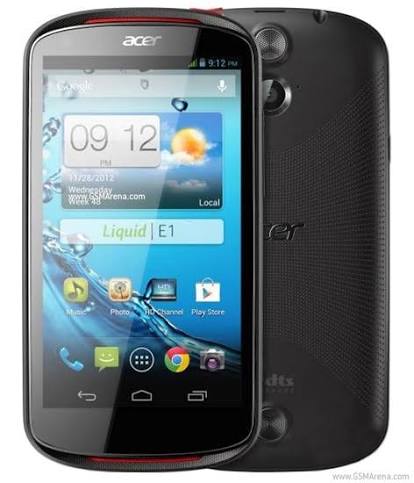
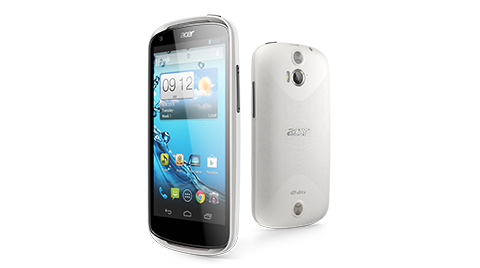
The man in the Bangalore electronics store holds the Acer Liquid E1 like a relic. He turns it over in his palm. \\\"This was 2013,\\\" he says, almost to himself. \\\"When phones still had curves.\\\" The device is a slab of glossy white plastic, thick by today\\\'s standards, with a screen that barely reaches 4.5 inches. It feels dense, solid. A single speaker grille sits on the back, promising audio that was once considered a big deal. The man remembers the launch. He remembers the price tag: roughly 15,000 Indian rupees. For that money, buyers got a dual-core processor, 1GB of RAM, and a promise of something different. The Liquid E1 was not a flagship killer. It was not even a mid-range hero. It was a statement from a company that had spent years making PCs, quietly insisting that they understood mobile. That insistence was quiet because it had to be. The smartphone market in 2013 was a warzone. Samsung owned the trenches. Nokia was still firing from its fort. And Acer, the Taiwanese giant of monitors and laptops, was trying to find a patch of ground to hold. The Liquid E1 was that patch. It was a bet on media consumption, on loud sound, on a design that felt good in the hand. It was a bet that almost worked.
What This Device Brings
The Acer Liquid E1, model number S510, launched in February 2013. It was announced at Mobile World Congress in Barcelona, a show where big phones and bigger promises usually steal the spotlight. Acer took a different approach. They focused on the multimedia experience. The phone ran Android 4.1.2 Jelly Bean, a version of the OS that finally felt smooth and responsive. Under the hood was a MediaTek MT6577 chipset, a dual-core processor clocked at 1GHz. This was paired with 1GB of RAM. Internal storage sat at 4GB, expandable via microSD up to 32GB. The display was a 4.5-inch IPS LCD panel with a resolution of 540 by 960 pixels. Pixel density came to 245 pixels per inch. The camera setup included a 5-megapixel rear sensor with autofocus and an LED flash. The front-facing camera was a basic 0.3-megapixel unit for video calls. The battery was a removable 1760mAh Li-Ion cell.
The design philosophy was clear: make it feel good. The phone measured 133 by 68.5 by 9.9 millimeters. It weighed 135 grams. The back cover was made of glossy white plastic that curved gently to fit the palm. The volume rocker and power button sat on the right edge. The top edge held the 3.5mm headphone jack. The bottom edge had the micro USB port. But the key feature was the audio. Acer included a dedicated audio chip from DTS. The single speaker on the back was tuned for loudness. Acer claimed it could deliver 100 decibels of sound. The company marketed the phone as a portable media player that also made calls. The market positioning was lower mid-range. It was priced to compete with devices like the Samsung Galaxy Grand and the Micromax Canvas series. Acer wanted to appeal to young consumers who watched movies on their phones and listened to music without headphones. The Liquid E1 was not about raw performance. It was about the experience of sound and the comfort of the grip.
The Context That Matters
Acer entered the smartphone market in 2008. The early phones were Windows Mobile devices, clunky and business-oriented. The company struggled to find a voice. By 2011, they started making Android phones. The Liquid series began with the Liquid A1, a device that was well-reviewed but never sold in large numbers. The Liquid Metal followed, offering a unibody aluminum design that caught attention. But Acer was still a PC company. Their laptops and monitors were everywhere. Their phones were nowhere. The competitive landscape in 2013 was brutal. Samsung was the undisputed king. The Galaxy S3 had sold over 40 million units. The Galaxy Grand was the mid-range champion. Nokia was still pushing the Lumia series with Windows Phone. BlackBerry was in decline but still had a corporate following. In India, local brands like Micromax, Karbonn, and Lava were flooding the market with cheap Android phones. They offered big screens and dual SIM slots for very little money.
The gap Acer tried to fill was the quality gap. The Indian brands offered specs but often skimped on build quality and software experience. Samsung offered quality but charged a premium. Acer wanted to sit in the middle. They wanted to offer a phone that felt solid, that sounded great, and that ran Android smoothly. The Liquid E1 was their answer to the question: what if a PC company made a phone for music lovers? The timing was important. In early 2013, streaming music services were growing. YouTube was becoming the default video player. People were watching content on their phones more than ever. Acer saw an opportunity. They were not trying to win the spec war. They were trying to win the experience war. The DTS audio was a differentiator. The comfortable design was a differentiator. The problem was that most buyers did not care about audio quality. They cared about screen size and processor speed. The Liquid E1 had a small screen and a slow chip. It was a device born from a good idea that the market was not ready for.
What the Experts Say
Tech reviewers at the time were polite but not enthusiastic. The general consensus was that the Acer Liquid E1 was a solid phone with a great speaker. Reviewers from GSMArena noted that the call quality was excellent and the loudspeaker was genuinely loud. They praised the build quality, saying the plastic back felt better than expected. They also pointed out the low screen resolution. The 540p display was fine for basic tasks, but text looked fuzzy compared to the 720p screens on competing phones. The camera was another point of criticism. The 5-megapixel sensor took acceptable photos in good light, but low-light shots were noisy and soft. The lack of a dedicated camera button was also noted.
Some reviewers focused on the software. The phone ran a near-stock version of Android 4.1.2. Acer added a few custom apps, including a file manager and a backup tool. The launcher was simple. Reviewers appreciated the lack of bloatware. But some users complained about the lack of updates. The phone never received Android 4.2 or 4.3. It was stuck on Jelly Bean forever. Analysts at the time saw the Liquid E1 as a niche product. They pointed out that Acer lacked retail presence in many countries. The phone was available online and in select stores, but it was hard to find in person. Photographers who tested the camera said it was adequate for social media but nothing more. The lack of HDR mode and slow autofocus were common complaints. Users on forums like XDA Developers were divided. Some loved the audio quality and the comfortable feel. Others were frustrated by the limited development community. There were no custom ROMs. No kernels. The phone was mostly ignored by the modding scene. The overall expert opinion was that the Liquid E1 was a good phone for a specific person. That person had to prioritize sound quality over everything else.
The Numbers That Tell the Story
The numbers from the Acer Liquid E1 are not impressive by today\\\'s standards. But they tell a story of a phone that was just good enough. The MediaTek MT6577 chipset was built on a 40nm process. In the AnTuTu benchmark of 2013, the phone scored around 10,000 points. That was half of what the Galaxy S3 scored. The single-core performance in Geekbench was about 350 points. The quad-core phones of the era were scoring over 1,000. The GPU was a PowerVR SGX531. It could run games like Angry Birds and Temple Run smoothly, but it struggled with heavier titles like Asphalt 8. The battery life was a mixed story. The 1760mAh cell was small. In real-world use, the phone lasted about 8 hours of moderate use. A full day was possible only with light usage. The DTS audio chip consumed extra power when the speaker was used at high volume. Reviewers tested the battery with video playback. The phone managed about 5 hours of continuous video playback. That was below average for the time.
The camera numbers were equally modest. The 5-megapixel sensor captured images with a maximum resolution of 2592 by 1944 pixels. The aperture was f/2.4. In good light, the photos had decent color accuracy but lacked sharpness. The LED flash was weak. It could illuminate subjects only up to about 1.5 meters. Sales data for the Liquid E1 is hard to find. Acer never disclosed official numbers. But industry estimates suggest the phone sold fewer than 500,000 units worldwide. In India, it was a minor player. The Samsung Galaxy Grand sold over 10 million units. The Micromax Canvas 2 sold over 3 million. The Liquid E1 was a blip on the radar. The numbers tell a story of a phone that was technically competent but commercially insignificant. It was a product that did everything adequately and nothing exceptionally, except for the audio. The audio numbers were the one bright spot. The speaker could reach 100 decibels. That was louder than the Galaxy S3 and the iPhone 5. That single number defined the phone.
What This Means for Buyers
Who should buy the Acer Liquid E1 in 2013? The answer was simple: someone who listens to music without headphones. Someone who watches YouTube videos in bed and wants the sound to fill the room. Someone who cares about call quality and wants a phone that feels good in the hand. The Liquid E1 was for the person who values the audio experience above screen resolution and processor speed. It was also for someone on a budget. The phone cost less than the Samsung Galaxy Grand but offered a similar build quality. For the price, the buyer got a device that was reliable, comfortable, and loud.
Who should skip it? Anyone who wanted to play games. The GPU was too weak. Anyone who took photos seriously. The camera was mediocre. Anyone who wanted a large screen. The 4.5-inch display felt small in a world moving to 5 inches and beyond. Anyone who wanted software updates. The phone was stuck on Android 4.1.2. The practical advice was clear: try the speaker before buying. If the audio quality matters, this phone is a good choice. If anything else matters, look elsewhere. For collectors and nostalgia seekers, the Liquid E1 is a curiosity. It represents a time when Acer tried to be different. For modern buyers, the phone is obsolete. The battery is small. The processor is slow. The screen is low resolution. But the speaker remains a unique feature. It is a reminder that not every phone needs to be a powerhouse. Some phones just need to sound good.
The Road Ahead
The Acer Liquid E1 did not change the smartphone market. It did not create a trend. The company continued to make phones, but never found a strong foothold. The Liquid series continued with the Liquid E2 and E3, both of which improved the screen and processor. But the audio focus was diluted. Acer eventually shifted to making budget phones for emerging markets. The company also experimented with gaming phones under the Predator brand. The Predator 6 was a concept phone with a massive screen and powerful speakers. It never launched. The Liquid E1 legacy is the speaker. It showed that a phone could prioritize audio without sacrificing build quality. Competitors did not follow. Samsung kept improving screens. Apple kept improving cameras. Audio remained a secondary concern. The road ahead for Acer in mobile was bumpy. The company stopped making smartphones in many markets by 2016. But the Liquid E1 remains a footnote in phone history. It is a device that tried to be different. That effort is worth remembering.
Conclusion
The man in the Bangalore store puts the Liquid E1 back in the drawer. He does not power it on. The battery is probably dead. The plastic has yellowed slightly at the edges. He closes the drawer and looks at the phones on the counter. They are all glass and metal now. They all have big screens. They all sound the same. He remembers when a phone could surprise you with its sound. When a company like Acer could walk into a market full of giants and carve a tiny space for itself. The Liquid E1 was not a success. But it was an attempt. An attempt to make a phone that sang. That attempt is what lingers. Not the sales figures. Not the benchmarks. Just the memory of a loud speaker and a curved back. The phone did not change the world. But for the people who owned it, it changed the way they listened.