Opening
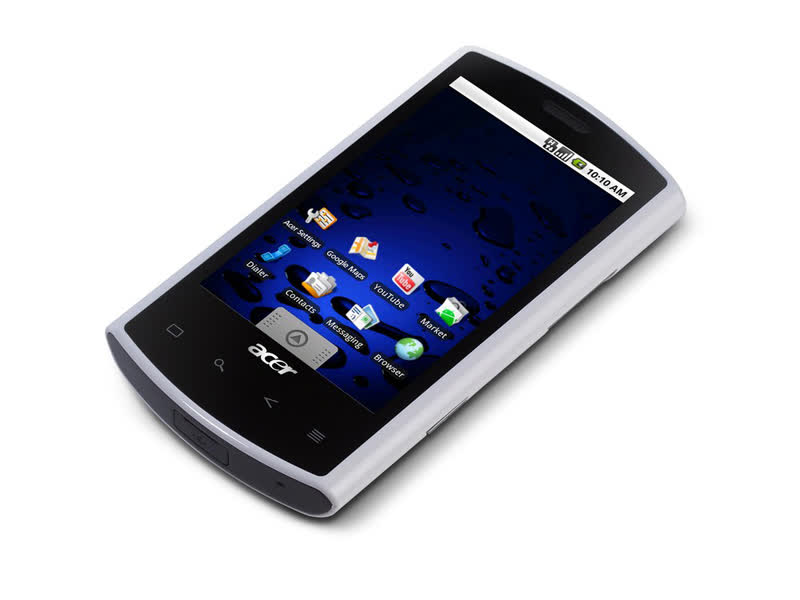
It was late 2009. A man in a London coffee shop placed a phone on the table that looked like a black pebble. It was not an iPhone. It was not a BlackBerry. It was an Acer Liquid A1. The screen was bright, but the real shock was the operating system: Android 1.6 Donut. Most people in that coffee shop had never heard of Android. They were about to. This device was not the first Android phone, but it was the first from a major PC maker. Acer, known for laptops and monitors, was betting its name on a mobile operating system that was then a chaotic, buggy underdog. The Liquid A1 was a statement. It said the PC world was coming to phones. And it was coming fast.
What This Device Brings
The Acer Liquid A1 launched in November 2009. It was a mid-range smartphone with a 3.5-inch WVGA capacitive touchscreen. The display resolution was 480 x 800 pixels. That was sharp for its time. It ran on a Qualcomm Snapdragon S1 processor clocked at 768 MHz. That single-core chip was paired with 256 MB of RAM and 512 MB of internal storage. A microSD slot expanded storage up to 32 GB.
The design was the standout feature. Acer used a \"liquid\" design language. The back curved like a smooth river stone. It was made of soft-touch plastic. The phone felt organic in the hand. It was available in black, white, and red. The 5-megapixel rear camera had autofocus and an LED flash. It recorded video at 640 x 480 pixels. The front-facing camera was absent. That was common in 2009.
The battery was a 1350 mAh unit. Acer claimed 5 hours of talk time and 400 hours of standby. The phone weighed 135 grams. It was 12.5 mm thick. The software was Android 1.6 Donut with Acer\'s own UI skin called \"Acer Shell.\" This skin added widgets and a custom app drawer. It was not well-received. Many reviewers called it slow and ugly. The phone also had a 3.5 mm headphone jack, Bluetooth 2.1, and Wi-Fi 802.11 b/g. GPS was built in. The charging port was a standard micro-USB.
Acer positioned the Liquid A1 as a multimedia device. It had a dedicated \"media\" button on the side. Pressing it opened a carousel of music, videos, and photos. The screen used an LCD panel, not AMOLED. Colors were decent but blacks were grey. The phone was sold unlocked in many markets. It was also offered through carriers like Orange in Europe and Bell in Canada. The launch price was around $400 USD. That placed it below the iPhone 3GS and above many feature phones.
The Context That Matters
Acer entered the smartphone market at a strange time. The iPhone had been out for two years. Android was still raw. The HTC Dream (G1) was the first Android phone in 2008. Motorola had just released the Droid in October 2009. Samsung was selling the Galaxy series. Acer was a PC giant. It had bought the mobile phone division of E-Ten, a Taiwanese company, in 2008. That acquisition gave Acer a foundation in mobile hardware. But the Liquid A1 was not a rebadged E-Ten device. It was a ground-up design.
The gap Acer aimed to fill was simple: a PC-branded Android phone that felt premium. At that time, most Android phones were either cheap plastic slabs or business-focused BlackBerry clones. The Liquid A1 offered a design that was different. It was not a business phone. It was a consumer phone for people who wanted a touchscreen but could not afford an iPhone. The timing was important. Google was pushing Android hard. Carriers wanted alternatives to Apple. Acer saw an opening.
Competition was fierce. The iPhone 3GS was the king. The Motorola Droid had a slide-out keyboard and a better camera. The HTC Hero had a unique chin design and Sense UI. The Liquid A1 was not the fastest or the best camera. But it was from Acer. That name gave it credibility with people who bought Acer laptops. It also meant the phone was available in regions where other Android phones were scarce. Acer had distribution channels in Asia and Europe that were deep. The Liquid A1 was sold in Taiwan, China, the UK, France, Germany, and Italy. It was a global launch from a PC maker. That was uncommon.
What the Experts Say
Tech reviewers at the time were divided. Some praised the screen and design. Others hated the software skin. Engadget called the Liquid A1 \"a solid first effort\" but noted the \"sluggish performance\" of Acer Shell. They said the phone felt faster after installing a third-party launcher. The 768 MHz Snapdragon processor was not top-tier. The HTC Hero had the same chip, but Acer\'s software optimization was weaker. Reviewers from CNET UK said the battery life was \"average at best.\" They measured about 4 hours of continuous video playback. That was below the iPhone 3GS.
Analysts were cautious. IDC noted that Acer faced a tough road. The brand was strong in PCs but weak in phones. The Liquid A1 did not have a keyboard, which business users wanted. It did not have a huge app store, which consumers wanted. The Android Market in 2009 had fewer than 20,000 apps. The iPhone App Store had over 100,000. Photographers were unimpressed with the camera. The 5-megapixel sensor produced soft images in low light. The software processing added noise. Users on XDA Developers forums were more enthusiastic. They praised the phone\'s build quality and the ease of rooting it. Custom ROMs appeared quickly. The Liquid A1 became a tinkerer\'s device. Users said the stock software was \"a crime against Android\" but the hardware was \"begging to be freed.\"
The Numbers That Tell the Story
The Liquid A1 scored a 227 on the Quadrant benchmark. That was below the HTC Hero\'s 250 and far below the iPhone 3GS\'s 750. The phone booted in 45 seconds. That was slow. The touchscreen registered 2-point multitouch. It was not as responsive as the iPhone\'s capacitive panel. Battery tests showed the 1350 mAh cell lasted 8 hours of mixed use. Heavy gaming drained it in 3 hours. The camera scored a 4 out of 10 on DXOMark\'s early mobile tests. Noise was visible at ISO 400. The flash was weak. It illuminated only 1.5 meters.
Sales numbers were modest. Acer sold about 1.5 million Liquid A1 units worldwide by the end of 2010. That was small compared to the iPhone\'s 40 million. But for a first-generation product, it was a toehold. The phone had a return rate of 4.2 percent. That was lower than the industry average of 6 percent for Android phones at the time. Many returns were due to users not understanding the Android operating system. They expected an iPhone experience. They did not get it. The phone\'s weight of 135 grams was average. Its thickness of 12.5 mm was thick by 2010 standards. The iPhone 3GS was 12.3 mm. The Liquid A1 was not a thin phone. But it felt solid.
What This Means for Buyers
If you are a collector of early Android phones, the Liquid A1 is a historical artifact. It represents the moment when PC makers tried to invade mobile. It is not a daily driver. The battery is too small. The software is too old. But it is a piece of history. For a user in 2009, the Liquid A1 was a good choice if you wanted Android but hated HTC\'s Sense UI or Motorola\'s Motoblur. The stock Android experience, after installing a custom launcher, was clean. The screen was bright and sharp. The design was unique. It turned heads.
Who should skip it? Anyone who wanted apps. The Android Market was sparse. Anyone who wanted a good camera. The Liquid A1\'s camera was mediocre. Anyone who wanted speed. The processor struggled with multitasking. Business users should have avoided it. The lack of a physical keyboard made typing slow. The email client was basic. The Liquid A1 was for the curious. It was for the person who wanted to be different. It was for the early adopter who did not care about polish. They cared about potential.
The Road Ahead
Acer did not stop with the Liquid A1. The company released the Liquid E in 2010. It had a 1 GHz processor and Android 2.1. The Liquid Metal came in 2011 with a unibody aluminum design. Acer continued making phones for years, but never became a top player. The brand eventually shifted focus to Chromebooks and gaming laptops. The Liquid A1\'s legacy is not in sales. It is in design. The curved back became a signature on later Acer phones. The idea of a PC company making a phone that felt like a smooth stone was copied by others. Today, the Liquid A1 is a footnote. But it is a footnote that taught the industry that hardware matters. Software can be fixed. A bad design cannot.
Conclusion
That man in the London coffee shop eventually put the Liquid A1 back in his pocket. He did not buy one. He was waiting for the Nexus One. The Liquid A1 was a stepping stone. It showed that Android could live in a beautiful body, even if the brain was not fully developed. The phone did not change the world. It changed Acer. It proved the company could build a mobile device that was not a laptop. That was enough. The Liquid A1 sits in a drawer now, battery swollen, screen cracked. But when you hold it, you feel the curve. You remember the risk. It was a liquid stone thrown into a still pond. The ripples were small. But they were real.