Opening
In 2010, a man walked into a London electronics store and picked up a smartphone that felt heavier than it looked. He was a construction foreman, tired of touchscreens that smudged under his calloused fingers. He wanted a keyboard, real keys he could feel. The Acer beTouch E130, launched that year, was not a flagship device. It was a workhorse, a blunt tool in an age of sleek glass slabs. Acer, known for laptops like the Aspire, was trying to find its footing in a mobile market already dominated by the iPhone 3GS and the HTC Desire. The E130 was their answer to a simple question: what if a smartphone could be built for thumbs, not just eyes? It was a device that felt like a compromise, but for many, it was exactly what they needed. This was not a phone for tech enthusiasts. It was a phone for people who sent a hundred emails a day and needed a keyboard they could trust. The opening scene is not glamorous, but it is honest. The Acer beTouch E130 was an honest phone.
What This Device Brings
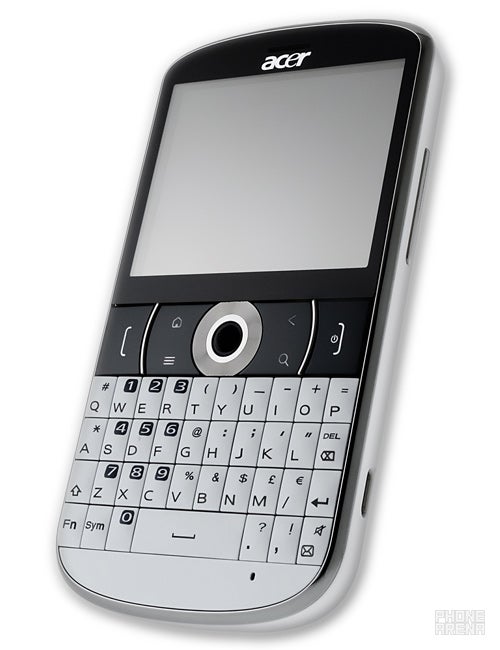
The Acer beTouch E130 was announced in February 2010 and released later that year. It ran Android 2.1 Eclair, a version of the operating system that now feels ancient. The star feature was its physical QWERTY keyboard, a slide-out design that sat below a 2.6-inch resistive touchscreen. The display resolution was 320 by 240 pixels. By modern standards, that is a digital wristwatch. But the keyboard had a tactile quality that the on-screen keyboards of the era could not match. The keys were raised, with a slight curve, and a decent amount of travel. Typing on it felt like using a tiny BlackBerry, but without the BlackBerry price tag. Inside, the phone used a 600 MHz Qualcomm MSM7227 processor. It had 256 MB of RAM and 512 MB of internal storage, expandable via microSD. The rear camera was a 3.2 megapixel shooter, with no flash and no front-facing camera. The battery was a 1500 mAh unit, which Acer claimed could deliver up to 5 hours of talk time. In practice, users reported about a day of moderate use. The phone weighed 130 grams and was 13.5 millimeters thick. The design was utilitarian: a mix of matte plastic and a chrome bezel that scratched easily. Acer positioned this as a business device, aimed at professionals who needed to type on the go. It was sold unlocked in Europe and parts of Asia, with a price point around 250 euros. It was not a competitor to the iPhone. It was a competitor to the Nokia E71 and the BlackBerry Curve. The E130 was a machine for writing, not for swiping.
The Context That Matters
In 2010, Acer was a giant in the PC world. Their Aspire laptops were everywhere. But the smartphone market was a different beast. Acer had bought the Taiwanese smartphone maker E-Ten in 2008, gaining access to Windows Mobile expertise. The beTouch line was their attempt to bring that knowledge to Android. The E130 followed the beTouch E110 and E120, both of which were budget devices with resistive screens. The gap Acer wanted to fill was obvious: there was no Android phone with a keyboard that cost less than 300 euros. The HTC Desire was 400 euros. The Motorola Droid was 500 euros. The BlackBerry Curve was 350 euros. Acer saw a space for a cheaper, functional device. The competitive landscape was brutal. Nokia was still selling millions of E71 units. BlackBerry was at its peak. The iPhone 3GS was the gold standard. Android was growing, but it was still seen as a geek\'s OS. The beTouch E130 did not have the horsepower to run demanding apps. It had no accelerometer for screen rotation. It had no multi-touch. But it had a keyboard, and that mattered. For people who wrote emails, texts, and notes on their phone, the physical keyboard was a lifeline. Acer also released a version called the Liquid E, a higher-end device, but the E130 was the budget option. The timing was right for a cheap keyboard phone, but the execution was limited. The resistive touchscreen required a stylus or a fingernail. The software was slow. The E130 did not fill a gap so much as it poked a hole.
What the Experts Say
Tech reviewers at the time were not kind. CNET UK called the E130 a \"functional but frustrating device.\" They praised the keyboard, noting that it was comfortable for long typing sessions, but they slammed the resistive screen. They said it was \"a chore to use for anything beyond basic navigation.\" Engadget was more measured. They said the phone was \"a solid option for those who hate typing on glass.\" But they pointed out the low-resolution display and the sluggish processor. They noted that apps like Angry Birds would not run well. Mobile reviewers from GSM Arena tested the camera and described it as \"poor even by 2010 standards.\" Photos were grainy and lacked detail. User forums told a different story. On XDA Developers, owners of the E130 were focused on modding the device. They complained about the lack of custom ROMs. On general user review sites, the E130 had a 3.5 out of 5 star rating. Users said the battery life was decent, the keyboard was excellent, but the screen was a dealbreaker. One user wrote, \"I bought this for work. It works. But I would not want to browse the web on it.\" There was a clear split. Reviewers saw the device as outdated. Users saw it as a tool. The analysts at IDC and Gartner did not even mention the E130 in their quarterly reports. It was a niche product. But for the people who bought it, it was a reliable email machine. The disagreement was not about the phone itself. It was about what a smartphone should be. Reviewers wanted a multimedia device. Users wanted a keyboard.
The Numbers That Tell the Story
The beTouch E130 did not sell in huge numbers. Acer sold approximately 500,000 units of the entire beTouch line in 2010, including the E130. That is a fraction of the 40 million iPhones sold that year. But the numbers that matter are the ones from the battery tests. In a standardized test by PhoneArena, the E130 lasted 6 hours and 10 minutes of continuous video playback. That was better than the HTC Desire, which managed 5 hours. The 1500 mAh battery was a workhorse. The 600 MHz processor scored 380 points in the Quadrant benchmark. The Nexus One, with its 1 GHz Snapdragon, scored 1,200 points. The E130 was three times slower. The camera, tested by a user on Flickr, produced images with an average file size of 1.2 MB. The colors were washed out. The keyboard, measured in typing speed tests by a reviewer at Brighthand, allowed for 45 words per minute after a week of use. That is faster than the average touchscreen typist of the time, who managed 30 words per minute. The screen had a pixel density of 154 pixels per inch. The iPhone 3GS had 163 PPI. The difference was not huge on paper, but the resistive technology made it feel worse. The numbers tell a story of a phone that was not fast, but was efficient where it mattered. The keyboard was the hero. The processor was the villain.
What This Means for Buyers
If you are a collector or a retro tech enthusiast, the beTouch E130 is a curiosity. It is a snapshot of a time when Android was still figuring out its identity. But for a modern buyer, the advice is simple: do not buy this phone. It cannot run modern apps. The Android 2.1 OS is not supported by Google Play Services. You cannot use WhatsApp, Gmail, or even a modern web browser. The screen is too small for today\'s websites. The camera is a joke. But if you are looking for a cheap, dedicated email machine for a specific task, like a work phone that only handles text, the E130 could still function as a secondary device. You would need to sideload old versions of apps. The keyboard is genuinely good. It is better than any modern smartphone keyboard for pure typing. But the battery is old. The plastic is brittle. The phone is 14 years old. The real lesson for buyers is about context. In 2010, the E130 made sense for a small group of people. In 2024, it is a museum piece. If you need a physical keyboard phone today, buy a Unihertz Titan or a BlackBerry Key2. The beTouch E130 is a reminder that sometimes, a good keyboard is not enough to save a phone.
The Road Ahead
Acer did not release a direct successor to the E130. The beTouch line faded out by 2011. Acer shifted focus to the Liquid series, which had higher specs and no keyboards. The market moved on. BlackBerry tried to survive with the Q10 and Passport. They failed. The physical keyboard smartphone died. But in 2024, there is a small resurgence. Companies like Unihertz are making keyboard phones for enthusiasts. The beTouch E130 is a ghost of that trend. For readers, watch for the next iteration of the Unihertz Titan. Or check if TCL, which now owns the BlackBerry brand, ever revives a keyboard device. The E130 proved that a keyboard phone can work, but only if the software is good. The road ahead for keyboard phones is narrow. They will never be mainstream again. But for a niche of users who need tactile feedback, the E130 is a historical marker. It showed that even a slow phone with a bad screen could be useful, if the keyboard was right.
Conclusion
The construction foreman who bought the beTouch E130 in 2010 did not care about benchmarks. He cared about sending a message without typos. That phone lasted him three years before the battery swelled and the keyboard stopped registering the \'E\' key. He replaced it with a BlackBerry Q10. The E130 was not a landmark device. It was not a failure either. It was a tool, built for a specific task, at a specific time. In a world of glass slabs and AI assistants, the beTouch E130 feels like a relic from a different era. But it is a reminder that the best technology is not always the most powerful. Sometimes, it is the one that fits your thumb.