Opening
The year is 2010. You are sitting in a coffee shop, and the person across from you pulls out a black slab. It is not an iPhone. It is not a BlackBerry. It is something else, something that makes you lean forward. The screen glows with a Windows logo, not the familiar Android or iOS. This is the Acer neoTouch P400, a device that tried to be a serious contender in a world already dominated by giants. In the first quarter of 2010, smartphone sales were exploding, with over 54 million units shipped globally. Yet, most people were fighting over the same two operating systems. Acer, a company known for laptops and monitors, decided to step into the ring with a Windows Phone. It was a bold move. It was also a risky one. The neoTouch P400 was not just a phone. It was a statement that the old guard of PC manufacturers could still matter in the mobile space. But the question that hung in the air then, and still echoes now, is whether that statement was ever heard.
What This Device Brings
The Acer neoTouch P400 was officially announced in February 2010, hitting shelves later that spring. It was a smartphone running Windows Mobile 6.5.3, a version of Microsoft’s operating system that was trying to modernize before the full Windows Phone 7 launch. The device was powered by a 600 MHz Qualcomm Snapdragon processor, paired with 256 MB of RAM and 512 MB of internal storage. That storage could be expanded via a microSD card slot, a practical touch for power users.
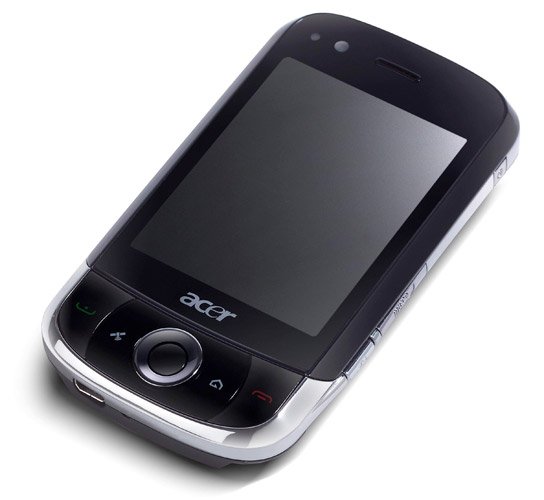
The design was clean and understated. It featured a 3.2-inch capacitive touchscreen with a resolution of 320x480 pixels. The display was bright, but the pixel density was low by modern standards. The phone measured 115.5 x 59.3 x 12.9 mm and weighed 125 grams. It felt solid in the hand, with a soft-touch back panel that resisted fingerprints. Acer included a 5-megapixel rear camera with autofocus and an LED flash. There was no front-facing camera, a common omission for the era.
What set the P400 apart was its software overlay. Acer added a custom UI called “Acer Shell” on top of Windows Mobile. This was a series of large, finger-friendly tiles for contacts, messages, and weather. It was an attempt to make the aging Windows Mobile interface more touch-friendly. The phone also came with Acer’s own “social networking” integration, pulling feeds from Facebook and Twitter into a single stream. It supported 3G connectivity, Wi-Fi b/g, Bluetooth 2.1, and aGPS for navigation. The battery was a 1090 mAh unit, which was average for the time.
Acer positioned the neoTouch P400 as a “smartphone for the connected professional.” It was meant to compete with the HTC HD2, the Samsung Omnia II, and the Motorola Droid. The price at launch was around $400 without a contract, which placed it in the mid-range segment. The logic was simple: offer a Windows Mobile device with a modernized interface, solid hardware, and a lower price than the flagship models from HTC or Samsung. It was a gamble that relied on the idea that people wanted Windows Mobile, just better executed.
The Context That Matters
Acer was not a newcomer to the mobile phone market. The company had been making feature phones and early smartphones for years, but mostly for Asian markets. The neoTouch series was their first serious global push. The P400 was the third device in the neoTouch line, following the P and S models. The brand was trying to establish itself as a viable alternative to the established players.
But the context of early 2010 was brutal. Apple had released the iPhone 3GS in 2009, and the iPhone 4 was just months away. Android was exploding, with the Motorola Droid and HTC Hero leading the charge. Windows Mobile 6.5 was seen as outdated. It was a business-oriented OS that struggled with consumer-friendly features. The interface was clunky, and the app ecosystem was significantly smaller than Apple’s App Store or the Android Market.
Acer’s strategy was to fill a gap for enterprise users who were loyal to Microsoft. These were people who used Exchange, SharePoint, and Office on their desktops. They wanted a phone that could sync seamlessly with their work environment. The P400 offered that, plus the Acer Shell to make it less painful for daily use. However, the gap was closing fast. BlackBerry was still strong in business, and Android was starting to offer better enterprise tools. The P400 was a device that answered a question fewer and fewer people were asking.
The competitive landscape was unforgiving. HTC, a company that built many Windows Mobile devices, was already pivoting hard to Android. Samsung was doing the same. Acer was a PC company trying to sell a phone, and that brand perception was a liability. People saw Acer as a budget laptop maker, not a premium smartphone brand. The neoTouch P400 had to overcome that bias with sheer competence. It was a tall order.
What the Experts Say
Tech reviewers at the time gave the Acer neoTouch P400 a mixed reception. Many praised the hardware build quality. The soft-touch back and the solid feel were frequently noted as positives. Reviewers from sites like CNET and TechRadar pointed out that the screen was responsive and the Acer Shell made the phone easier to use than a standard Windows Mobile device.
However, the criticism was sharp and focused. The main complaint was the operating system. Windows Mobile 6.5.3 was seen as a stopgap. Reviewers noted that the interface still required a stylus for many tasks, even with the Acer Shell. The web browser was Internet Explorer Mobile, which was slow and rendered pages poorly. The camera produced images that were noisy and lacked detail, especially in low light. The 600 MHz processor was adequate for basic tasks, but it struggled with multitasking and heavier applications.
Analysts were divided on Acer’s strategy. Some saw it as a smart move to leverage their PC distribution channels. Others viewed it as a desperate attempt to stay relevant in a market that was moving away from them. User reviews on forums like XDA Developers were mixed. Some appreciated the price and the build quality. Others complained about the lack of app support and the difficulty of customizing the device. There was a small community of enthusiasts who tried to port Android to the P400, with limited success. The consensus was that the hardware was decent, but the software was a deal-breaker for most consumers.
The Numbers That Tell the Story
The Acer neoTouch P400’s 600 MHz processor was a single-core chip. In benchmark tests of the era, it scored around 400 points in the SPB Benchmark, which was respectable but not class-leading. For comparison, the HTC HD2, with its 1 GHz Snapdragon, scored nearly double that. The 256 MB of RAM was a bottleneck. Opening multiple apps often led to slowdowns and crashes. Users reported that the phone could handle email and calls without issue, but anything beyond that was a gamble.
Battery life was a sore point. The 1090 mAh battery provided about 4 hours of talk time and roughly 200 hours on standby. In real-world usage, heavy users had to charge the phone by mid-afternoon. The 5-megapixel camera produced photos that averaged around 2.5 out of 5 stars in reviews. Images were often overexposed and lacked sharpness. The LED flash was weak, making night shots almost unusable.
Sales numbers were not publicly disclosed by Acer, but market analysts estimated that the neoTouch series sold fewer than 500,000 units globally in its first year. By comparison, the HTC HD2 sold over 2 million units. The P400’s share was a fraction of that. These numbers tell a story of a device that was technically competent but commercially invisible. It was a product that satisfied a few, but never captured the imagination of the many.
What This Means for Buyers
If you are a collector of mobile history, the Acer neoTouch P400 is a fascinating artifact. It represents the last gasp of the old Windows Mobile era before Microsoft rebooted with Windows Phone 7. For a tech enthusiast, it is a device to tinker with, to see how a PC maker tried to bridge two worlds. But for a modern buyer, it is a hard pass.
If you need a phone for daily use today, this device is useless. It lacks modern 4G or 5G connectivity. The apps you depend on, like WhatsApp, Uber, or modern banking apps, will not run on it. The security is outdated. The processor is too slow for even basic web browsing on modern websites. The battery is a fire hazard by current standards.
If you are a retro collector, look for one in good condition. The build quality is solid, and the design has a certain minimalist charm. But do not expect it to be a daily driver. It is a museum piece. If you are a developer interested in Windows Mobile history, the P400 is a good device to experiment with, but you will find limited community support compared to more popular Windows Mobile devices like the HTC HD2.
The Road Ahead
The Acer neoTouch P400 was a dead end. Acer’s smartphone ambitions did not last. The company continued to release phones for a few more years, but they never gained significant market share. By 2013, Acer had largely exited the smartphone business, focusing back on PCs and tablets. The Windows Mobile platform itself was replaced by Windows Phone 7, which was a clean break from the past. Microsoft’s mobile efforts eventually fizzled out, and the company stopped supporting Windows 10 Mobile in 2019.
What the P400 shows is that hardware alone is not enough. Acer built a decent phone, but it was trapped in a dying ecosystem. The lesson is clear: the platform matters more than the device. For readers, the story of the neoTouch P400 is a warning. When you buy a phone, you are also buying into an ecosystem. Make sure it has a future. The P400 did not, and that is why it is a forgotten footnote in mobile history.
Conclusion
Back in that coffee shop in 2010, the person with the Acer neoTouch P400 looked up from the screen. They smiled. It worked. It connected them to their email, their calendar, their social feeds. For a moment, it was enough. But the world was moving on. The iPhone was on the table next to them. Android was in everyone else’s pocket. The neoTouch P400 was a good phone. It was just born into the wrong family. It is a quiet reminder that in technology, timing is everything. And sometimes, being good is not good enough.