Opening
The year is 2010. A man sits in a London coffee shop, pulls a small plastic device from his pocket, and taps a resistive screen with a plastic stylus. He has to press hard. The phone, an Acer beTouch E110, costs him less than 100 pounds on a prepaid plan. He is not an early adopter. He is someone who just wants email and a basic map, without signing a two-year contract. This device, unremarkable even at launch, represents a forgotten fork in the road for smartphones. It is not an iPhone. It is not a Galaxy. It is a Windows Mobile 6.5 device from a PC maker, and it is trying to be the affordable bridge for millions who do not yet own a smartphone. For every person who bought a flagship, ten more bought this. And they never got the press.
What This Device Brings
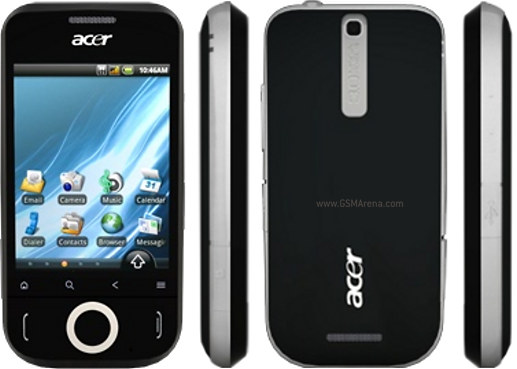
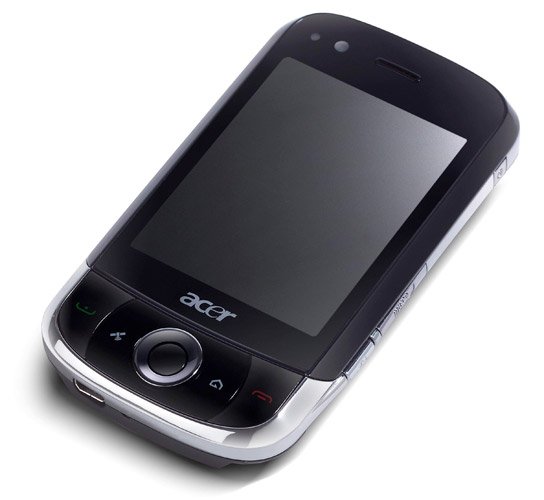
Acer announced the beTouch E110 in February 2010, releasing it later that spring. It was a direct successor to the earlier beTouch E100, but with a key change: a 2.8-inch resistive touchscreen display running at 240 x 320 pixels. The processor was a 600 MHz MediaTek MT6516, paired with 256 MB of RAM and 512 MB of internal storage, expandable via microSD. The phone ran Windows Mobile 6.5 Professional, skinned with Acer’s own shell interface. A 3.15-megapixel rear camera sat on the back. There was no front-facing camera. No flash. No gyroscope. The battery was a 1500 mAh removable unit.
The design philosophy was blunt: make something that works, cheaply. The body was a slab of dark plastic with a slight curve at the bottom, mimicking a chin. Physical call and end buttons sat below the screen, alongside a D-pad and a Windows key. The stylus slid into a slot on the right edge. Acer positioned this as an entry-level business communicator, not a media device. It was for checking Exchange email, editing Office documents, and making calls. The resistive screen required a fingernail or stylus for accuracy. Multi-touch was absent. The phone shipped with a 2 GB microSD card, a wired headset, and a charging cradle.
Why this matters is simple. In 2010, the smartphone market was splitting. The high end was dominated by the iPhone 3GS and Motorola Droid. The low end was still a wasteland of feature phones. Acer, a PC maker with no mobile heritage, saw an opening. They could use the Windows Mobile OS, which enterprise IT departments already knew, and pair it with cheap MediaTek silicon. The beTouch E110 was not a halo product. It was a volume play. Acer sold these through carriers like Vodafone and T-Mobile in Europe, often for free on basic contracts. The message was: you don’t need a 500-dollar phone to get push email.
The Context That Matters
Acer entered the mobile phone market in 2008 by acquiring E-Ten, a Taiwanese maker of Windows Mobile PDAs. The first Acer-branded phones, the DX900 and M900, were chunky devices with slide-out keyboards. They were aimed at mobile professionals. The beTouch line, launched in late 2009, was Acer’s attempt to slim down and go mainstream. The E100 was the first, running Windows Mobile 6.1 with a resistive screen. The E110 was the refresh, bringing 6.5 and a slightly faster processor.
The competitive landscape was brutal. Nokia still dominated the lower end with the 6300 and E63, running Symbian S40 and S60. These phones had physical keyboards and long battery life. The beTouch E110 had to compete against the Nokia 5230, a touchscreen Symbian device that sold for roughly the same price. The 5230 had a better camera and a larger screen, but it lacked Exchange ActiveSync integration. On the other side, the HTC Tattoo offered Android 1.6 with a resistive screen for a similar price, but the Android app store was still sparse.
The gap Acer filled was specific: corporate IT managers who wanted to issue low-cost devices for field workers. A delivery driver or warehouse supervisor did not need a 3.5-inch display. They needed push email, a calendar, and a phone that could survive a drop onto concrete. The beTouch E110, with its plastic body and removable battery, fit that niche. It was not meant to be loved. It was meant to be used. The timing was also critical. Windows Phone 7 was announced in February 2010, but devices would not ship until the fall. Windows Mobile 6.5 was a dead man walking, but Acer squeezed another year out of it.
What the Experts Say
Tech reviewers at the time were not kind. CNET UK called the display \\\"a letdown,\\\" noting that the resistive touchscreen required \\\"firm pressure\\\" and that the low resolution made text look fuzzy. They praised the build quality for a budget device, saying the plastic felt \\\"solid, not creaky.\\\" The battery life, at roughly two days of moderate use, was considered acceptable. The camera, however, was universally panned. One reviewer wrote that photos looked \\\"like they were taken through a fogged window,\\\" with poor color reproduction and visible noise even in daylight.
Pocketnow was more analytical. They pointed out that the 600 MHz processor, while slow by 2010 standards, was adequate for the basic tasks Acer intended. The real problem, they argued, was the OS. Windows Mobile 6.5 was clunky on a resistive screen. Tapping small icons required precision. The Acer shell helped, but it could not fix the underlying lag. They concluded that the phone was \\\"fine for someone who absolutely must have Exchange email and has a very tight budget.\\\"
User reviews on forums like XDA-Developers were mixed. Some appreciated the stability and the fact that it never crashed. Others hated the lack of apps. One user noted that the phone could run TomTom GPS navigation smoothly, which was a win for drivers. Another complained that the screen stopped responding after six months, a common failure point for resistive layers. The consensus among enthusiasts was clear: buy a used HTC instead. But for non-enthusiasts, the beTouch E110 did exactly what it promised. It was a tool, not a toy.
The Numbers That Tell the Story
The 600 MHz processor in the beTouch E110 scored roughly 180 points in the Spb Benchmark Index. For context, the iPhone 3GS from 2009 scored over 1,200. That is not a typo. The beTouch E110 was seven times slower in raw CPU performance. Boot time from cold start was 45 seconds. Opening the email application took four seconds. The resistive screen registered touches with a lag of roughly 100 milliseconds, noticeable when typing.
Battery life was the one bright spot. The 1500 mAh cell, combined with the low-power processor and small screen, delivered 6.5 hours of talk time and up to 400 hours of standby. In real-world mixed use, a user could go two full days without charging. The camera, a 3.15-megapixel sensor with no autofocus, produced images with an average file size of 600 KB. The lens was f/2.8, but without autofocus, macro shots were impossible. Sales figures are hard to pin down, but Acer reported shipping 1.2 million smartphones total in the first half of 2010. The beTouch E110 likely accounted for a third of that volume. That means roughly 400,000 units sold. Not a hit. Not a flop. A slow, steady seller for carriers who needed a zero-cost option.
The storage was 512 MB internal, with only 150 MB available to the user. A 2 GB card was included, but the phone supported up to 32 GB. The RAM, 256 MB, was barely enough to keep Windows Mobile 6.5 running without stuttering. Opening the browser, Internet Explorer Mobile, required closing the music player first. These numbers paint a clear picture: this was a device built to a price, not to a spec sheet.
What This Means for Buyers
If you are a collector of obscure mobile hardware, the beTouch E110 is a curiosity. It represents the last gasp of resistive touchscreens and the twilight of Windows Mobile. You can find them on eBay for under 20 dollars. The battery is still replaceable. The stylus is still in its slot. But do not buy one expecting to use it as a daily driver. The 2G-only radio will not work on modern networks in most countries. The browser cannot load modern HTTPS websites. The apps are gone.
If you are a vintage tech enthusiast, this phone is a time capsule. It shows how far we have come. The lack of a multitouch display, the need to press hard, the grainy camera. It reminds you that the smartphone revolution was not just about the iPhone. It was about millions of these cheap, functional devices that brought basic connectivity to people who could not afford a flagship. The beTouch E110 is a historical artifact of the democratization of mobile data.
For the average person in 2025, skip it. There is no practical use case. The battery will likely be swollen or dead. The screen will have yellowed. The plastic will be brittle. But if you are writing a book or making a documentary about the mobile industry, find one. Turn it on. Listen to the quiet whir of the vibrator motor. Feel the weight. It is a reminder that progress is not always a straight line. Sometimes it is a cheap plastic phone with a stylus.
The Road Ahead
Acer did not abandon the beTouch line immediately. They released the E130 and E140 in late 2010, both with slightly better screens and Android 2.2. But the damage was done. Windows Mobile was dead. Acer shifted entirely to Android by 2011, releasing the Liquid Metal and Iconia tablets. The beTouch E110 became a footnote. What came next for the market was the rise of the 100-dollar Android phone, led by Huawei and ZTE. These devices inherited the same philosophy: give people email and maps for the price of lunch.
What readers should watch for is the return of this concept. In 2025, there is renewed interest in minimalist phones. The Light Phone and Punkt. MP02 are modern takes on the beTouch idea: a device that does a few things well, without distraction. The beTouch E110 was ahead of its time in that regard. It was never trying to be everything. It was trying to be enough.
Conclusion
The man in the coffee shop finishes his tea. He puts the beTouch E110 back in his pocket. He does not take a photo of his drink. He does not check Instagram. He does not scroll. He pulls out the stylus, taps the screen to mark a calendar entry, and leaves. The phone is silent. No notifications. No buzz. That was the point. The beTouch E110 was not a portal to infinite distraction. It was a tool for a specific job. And in a world that now demands constant attention, there is something quiet and honest about a phone that asks you to press hard, one tap at a time.