Opening
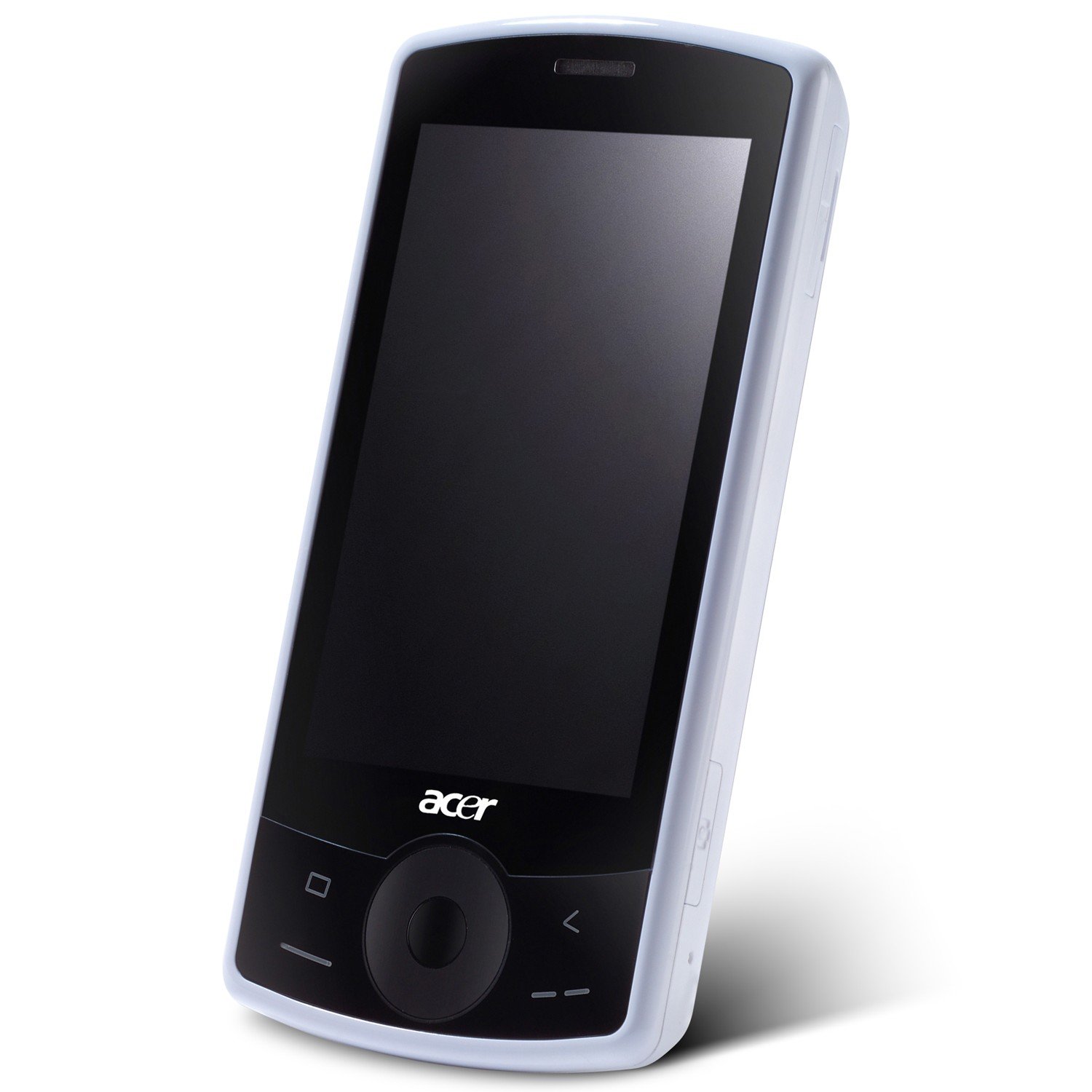
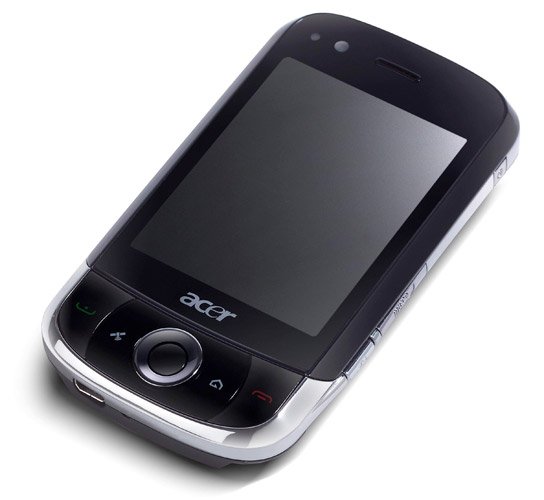
The year is 2010. You are sitting in a cramped internet café in Lagos, or a university common room in Jakarta, waiting for a page to load on a desktop that smells of stale cigarettes. Then, a friend pulls out a slab of black plastic, taps the screen, and the world shrinks. That friend is holding an Acer beTouch E100. To call it a \"smartphone\" by today’s standards is generous—it is a brick with a 2.8-inch resistive touchscreen and a plastic stylus you will lose within a week. But in 2010, this device was a bridge. It was a clumsy, imperfect, and affordable bridge from the feature-phone era to the world of apps. For millions of people, the beTouch E100 was their first taste of a pocket computer. It ran Windows Mobile 6.5, a clunky operating system that required a prod with a fingernail, not a finger. Yet, it sold. It sold because it was cheap. It sold because it had a QWERTY keyboard. It sold because Acer, a company known for laptops, bet that the future was touch, even if the present was still stubbornly resistive. This is the story of a phone that was never a hero, but was a necessary workhorse.
What This Device Brings
Acer announced the beTouch E100 and its slightly more capable sibling, the E101, in early 2010. The difference between the two was minimal: the E101 offered a higher capacity battery and a different color option. Both were launched as entry-level Windows phones aimed at first-time smartphone buyers. The core spec sheet reads like a relic. A 600 MHz Qualcomm processor. 256 MB of RAM. A 3.2-megapixel camera without flash. Internal storage of just 256 MB, expandable via microSD. The screen was a 2.8-inch TFT resistive display with a QWERTY keyboard sliding out from the side.
The design philosophy was blunt: function over form. The phone was thick, measuring 13.9 mm, and weighed 145 grams. It felt dense, like a well-built brick. The sliding mechanism was sturdy, a necessity for a device meant to survive pocket abuse. The market positioning was clear: this was not a competitor to the iPhone 3GS or the HTC Desire. It was a device for emerging markets, for corporate workers who needed push email, and for anyone who wanted a smartphone without the flagship price tag. Acer was leveraging its existing distribution channels for laptops. They understood that a store in rural India or Brazil that sold Acer notebooks could also sell a beTouch. The software was Windows Mobile 6.5 Professional, with Acer’s own custom UI skin called \"Shell.\" This skin added larger icons and a simpler interface, attempting to mask the underlying OS complexity. It partially worked. The E100 also featured Acer’s \"urFooz\" app, a social networking aggregator that let you sync contacts from Facebook and Twitter, a novelty at the time. Why did this matter? Because in 2010, the smartphone race was not about cameras or displays. It was about making the internet fit in your pocket for under $200.
The Context That Matters
Acer entered the smartphone market with a bang in 2009, but it was a quiet bang. The company had acquired the Taiwanese phone maker E-TEN in 2008 for a reported $290 million. E-TEN was a niche player known for Windows Mobile devices with strong GPS capabilities. Acer’s first phones, the neoTouch and beTouch series, were essentially rebadged and refined E-TEN designs. The brand history here is critical: Acer was a PC giant playing catch-up in mobile. They had no mobile OS legacy, no carrier relationships in the West, and no app store of their own. The competitive landscape in 2010 was brutal. Nokia still dominated with Symbian. BlackBerry owned the corporate email market. Apple was redefining the entire industry with the App Store and a capacitive screen. Google’s Android was just beginning to explode with devices like the Motorola Droid. Against these titans, the beTouch E100 was a value play.
The gap it filled was the low-end \"smart-feature phone\" segment. Devices like the Nokia E63 and the Samsung B3410 were popular but ran proprietary OSes. The beTouch offered a \"real\" smartphone OS (Windows Mobile) at a similar price point. The \"why now\" was the maturation of Windows Mobile 6.5. Microsoft had finally added a proper marketplace and a slightly better touch interface. Acer saw an opening: sell a device that could run Outlook and Excel for the cost of a feature phone. The E100 was not designed to win awards. It was designed to fill a spreadsheet line item for \"units shipped to Southeast Asia.\" It succeeded in that grim, corporate goal.
What the Experts Say
Tech reviewers at the time were not kind, but they were practical. Engadget’s review noted that the resistive screen required \"a deliberate, almost angry poke\" to register input. They conceded the keyboard was \"surprisingly good\" for typing emails, a relief after years of terrible slide-out designs. The general consensus was that the beTouch E100 was a device you bought because you had to, not because you wanted to. Reviewers from CNET Asia emphasized the value proposition, calling it \"the cheapest route to a full QWERTY Windows phone.\" They praised the call quality and battery life, which could stretch to two days with moderate use, a stark contrast to the one-day endurance of flagship Androids.
Users on forums like XDA-Developers had a different perspective. They saw the E100 as a hacking platform. The locked bootloader frustrated many, but a small community managed to tweak the device, installing custom ROMs that stripped the Acer skin for a lighter, faster Windows Mobile experience. The biggest complaint was the lack of RAM. With only 256 MB, the phone choked on multiple apps. Analysts at IDC noted that Acer’s market share in smartphones was negligible, hovering below 1% globally, but that the beTouch series helped the company gain a foothold in price-sensitive markets like China and Latin America. There was disagreement on the OS choice. Some argued Microsoft’s licensing fees made the phone more expensive than a comparable Android device. Others countered that corporate IT departments trusted Windows Mobile’s security and Exchange integration. The truth was, the beTouch E100 was a compromise no one loved, but many tolerated.
The Numbers That Tell the Story
Let’s look at the raw performance. The 600 MHz processor was considered slow even in 2010. A benchmark like the old Spb Benchmark would give the E100 a score of around 120, compared to the iPhone 3GS’s 350. This meant apps took three to four seconds to open. Browsing a simple website like BBC News took 15 seconds to render. The 3.2-megapixel camera produced images that were usable only for contact photos. In low light, the photos were a grainy, brown mess. The lack of flash meant any indoor shot was a blur. The battery, a 1500 mAh unit in the E101, was a saving grace. A human story: a salesman in Mumbai reported that he could charge his beTouch E100 on Sunday evening and it would last until Wednesday morning, surviving 150 emails and 45 minutes of calls. That was the killer feature.
Sales figures are murky. Acer never disclosed exact numbers for the beTouch series, but analysts estimated that Acer shipped roughly 3.5 million smartphones total in 2010. The beTouch E100 and E101 likely accounted for about 40% of that volume. For context, Nokia shipped over 100 million smartphones that same year. The E100 was not a commercial hit by global standards, but it was a success for Acer. It proved the company could manufacture a phone, ship it to 30 countries, and make a small profit on each unit. The price point was the real number: $199 unlocked, or free on a two-year contract with carriers like Vodafone and Orange in select markets. That price tag, not the processor speed, told the story.
What This Means for Buyers
If you are a collector today, skip this. The beTouch E100 is not a classic. It is a curiosity, a fossil of the resistive touch era. But for the buyer in 2010, the advice was simple. Buy it if you need email on a budget. The QWERTY keyboard was genuinely good for typing long replies. The Exchange ActiveSync integration worked flawlessly. If you were a field worker, a property agent, or a journalist on a shoestring budget, the beTouch was your tool. You could write, you could check schedules, you could make calls. That was it.
Skip it if you wanted media consumption. The resistive screen made gaming a nightmare. The YouTube app, if you could get it to work, played video at 15 frames per second. The lack of a proper app store meant you were stuck with whatever Microsoft and Acer pre-loaded. For the average consumer, a Nokia E63 was a better device. It had a better camera, a better keyboard, and a longer battery life, all for a similar price. The beTouch E100 was for the niche user who specifically needed Windows Mobile’s business features without paying for a premium HTC device. For everyone else, it was a frustrating reminder that the smartphone revolution was still in its ugly adolescence.
The Road Ahead
Acer’s smartphone journey after the beTouch was a slow decline. They released a few more Windows phones, then pivoted hard to Android with the Liquid series. By 2015, Acer’s mobile division was a zombie, shipping a handful of phones a year. The beTouch E100 was a dead end. It represented the failure of Windows Mobile to compete with iOS and Android. The road ahead for buyers in 2010 was clear: Android was the future. Google’s OS was cheaper for manufacturers, better for developers, and more intuitive for users. Microsoft would eventually respond with Windows Phone 7, a clean break from the clunky 6.5 interface, but it was too late.
What readers should watch for is the same pattern repeating. Every decade, a PC company tries to break into mobile. Acer did it. Dell did it. HP did it. All failed. The lesson of the beTouch E100 is that hardware alone is not enough. Without a compelling OS and a vibrant app ecosystem, a smartphone is just a brick with a keyboard. The beTouch E100 was the textbook example of that truth.
Conclusion
The Acer beTouch E100 sits in a drawer now, or in a landfill. The friend in the internet café has long upgraded to an iPhone. The QWERTY keyboard is a relic, the resistive screen a punchline. Yet, for a brief moment, that brick was a window. It showed a million people that the internet could fit in their pocket, even if the fit was awkward. It was not a great phone. It was not a smart phone. It was a necessary phone. And in the frantic, messy, and hungry year of 2010, that was enough. The beTouch E100 did not change the world. It simply let you touch it, one clumsy poke at a time.