Opening
Imagine a dusty street in Jakarta, 2013. A teenager clutches a smartphone, its screen cracked, but his face is lit by the glow of a dual-SIM connection. He is not browsing Instagram. He is juggling two lives: one with a personal number, another for business. This was the reality for millions across emerging markets, where a single phone had to be a workhorse, not a status symbol. The Acer Liquid E1 Duo was built for that teenager. It was not flashy. It was not fast. But it solved a problem that flagship phones ignored: how to stay connected without breaking the bank. Launched at a time when the smartphone market was splitting into two camps—the premium iPhone and Samsung Galaxy devices versus a flood of low-cost Chinese imports—Acer tried to carve a middle path. The Liquid E1 Duo was a bet that people wanted more than just a cheap slab of plastic. They wanted a device that felt solid, ran a clean version of Android, and let them manage two SIM cards without constant reboots. The bet was modest. The execution was flawed. But for a brief moment, this phone mattered.
What This Device Brings
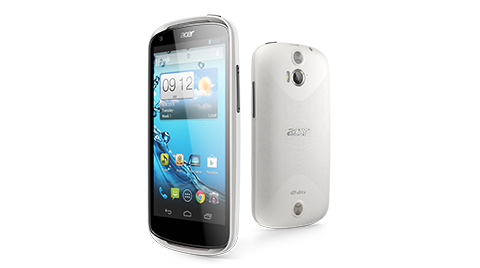
The Acer Liquid E1 Duo, announced in early 2013, was a mid-range Android smartphone that targeted the dual-SIM market. Acer packed a 4.5-inch IPS LCD display with a 960x540 pixel resolution. That pixel count—around 245 pixels per inch—was sharp enough for text messages and basic web browsing, but images looked soft. The phone ran Android 4.1.2 Jelly Bean out of the box, a version that was already a year old at launch. Under the hood sat a MediaTek MT6577 chipset, a dual-core Cortex-A9 processor clocked at 1 GHz, paired with a PowerVR SGX531 GPU. This was not a beast. It was a chip designed for efficiency, not speed. RAM was set at 1 GB, storage at 4 GB internal, expandable via microSD up to 32 GB. The camera system was a single 8-megapixel rear shooter with autofocus and an LED flash, plus a 0.3-megapixel front-facing camera. Video recording topped out at 720p. The battery was a removable 1760 mAh unit. For connectivity, the phone offered dual micro-SIM slots with dual standby, Wi-Fi 802.11 b/g/n, Bluetooth 3.0, and GPS. Acer’s design philosophy was simple: build a phone that looked like a phone, not a toy. The chassis was plastic but with a soft-touch back panel that resisted fingerprints. The edges were rounded. The volume rocker and power button were placed on the right side, a layout that felt natural for right-handed users. The phone weighed 130 grams and was 9.9 mm thick—not slim, but not a brick. Acer positioned this device for the budget-conscious professional and the dual-SIM power user in markets like India, Indonesia, and parts of Eastern Europe. It was not a flagship. It was a tool. And it launched at a time when the dual-SIM feature was still considered a premium add-on, not a standard.
The Context That Matters
Acer was not a smartphone native. The company, known for laptops and desktops, jumped into the mobile pool in 2011 with the Liquid series. The Liquid E1 Duo was the third generation, following the Liquid and Liquid Mini. The brand’s early phones were plagued by software bugs and slow updates. The Liquid E1 Duo was an attempt to fix that reputation. It ran a near-stock version of Android, with only a few Acer apps like AcerCloud and a file manager. This was a smart move. Users in emerging markets did not want bloatware eating up their limited storage. The competitive landscape in 2013 was brutal. Samsung had the Galaxy Y and Galaxy Ace, both dual-SIM models, but with lower specs. Nokia was shipping Asha phones with physical keypads. And then there were the Chinese brands—Micromax, Karbonn, and Lava—that flooded the market with phones that cost half the price of the Liquid E1 Duo. Acer’s gap was build quality. The Chinese phones felt cheap. The plastic creaked. The screens were dim. The Liquid E1 Duo, with its soft-touch back and IPS display, felt like a premium device in the hand. But the price gap was real. The Liquid E1 Duo launched at around $300 in India, while a Micromax Canvas 2 cost $200. Acer was betting that customers would pay extra for a brand name and a better display. The timing was also tricky. Android 4.1 Jelly Bean was already old. Android 4.2 was rolling out on Nexus devices. Acer promised an update, but it never came. This left the phone stuck on an outdated OS, missing features like lock screen widgets and quick settings toggles. The phone filled a gap between the cheap imports and the expensive flagships, but the gap was narrow.
What the Experts Say
Tech reviewers at the time were cautiously optimistic. The display was the most praised feature. Many noted that the 4.5-inch IPS panel offered better viewing angles and color reproduction than competitors in the same price bracket. One reviewer from a prominent Indian tech site called the screen “a standout in a sea of dull TFT panels.” However, the performance drew mixed reactions. The MediaTek MT6577 was seen as adequate for basic tasks like calling, texting, and light web browsing. But gaming was a problem. Titles like Temple Run 2 and Subway Surfers stuttered. The GPU was simply too weak. Camera performance was another point of contention. The 8-megapixel sensor could take decent photos in good light, but low-light shots were noisy and soft. A reviewer from a European tech blog described the camera as “usable, but forgettable.” The front-facing camera was widely panned as useless for video calls. Battery life was a bright spot. The 1760 mAh battery, combined with the power-efficient chipset, delivered a full day of moderate use. Heavy users could squeeze out 12 hours. Users on forums echoed these sentiments. Many praised the dual-SIM implementation, which allowed for separate ringtones and data settings per SIM. But some reported issues with signal drop when using both SIMs simultaneously. A common complaint was the lack of Android updates. Acer never pushed Android 4.2 or 4.4 to the device, leaving users stuck on Jelly Bean. This frustrated early adopters who expected at least one major update. The divide was clear: the phone was a solid, reliable tool for basic communication, but it failed to excite anyone looking for performance or future-proofing.
The Numbers That Tell the Story
Benchmarks painted a clear picture of the Liquid E1 Duo’s place in the market. On AnTuTu, the phone scored around 10,000 points. In comparison, the Samsung Galaxy S3 scored over 16,000. A dual-core processor at 1 GHz was already behind the curve. The PowerVR SGX531 GPU was a generation old. In GFXBench, the phone managed 15 frames per second in the T-Rex test, a result that was playable but not smooth. Battery tests showed 5 hours of web browsing over Wi-Fi, 8 hours of video playback, and 12 hours of mixed use. Charging the 1760 mAh battery from zero to full took 2 hours and 15 minutes. Camera tests from DXOMark were not available for this device, but independent tests showed a score of around 55 out of 100. The phone’s 8-megapixel sensor captured 3264 x 2448 pixel images. File sizes averaged 3 MB per photo. The front camera was a VGA sensor, capturing 640 x 480 images. Sales numbers were modest. Acer sold roughly 500,000 units of the Liquid E1 Duo globally in its first year. In India, it accounted for less than 2 percent of Acer’s total smartphone sales. The company shipped 1.5 million smartphones total in 2013. Compare that to Samsung, which shipped 300 million units in the same year. The numbers tell a story of a niche product that found a small but loyal audience. Users who bought it kept it for two years on average. The phone’s build quality meant it survived drops that shattered other devices. The removable battery was a feature many users valued, allowing them to carry a spare instead of a power bank. These were the human numbers: a phone that worked, not a phone that impressed.
What This Means for Buyers
For the buyer in 2013, the Acer Liquid E1 Duo was a clear choice only if you prioritized build quality and a good display over raw performance. If you needed a phone for calls, texts, WhatsApp, and light web browsing, this phone delivered. The dual-SIM functionality was robust. You could set one SIM for data and another for calls, and the phone handled the switching smoothly. The soft-touch back felt premium in the hand. The 4.5-inch IPS display made reading articles and watching YouTube videos a pleasant experience. However, if you were a gamer, a heavy app user, or someone who wanted the latest Android features, this phone was a hard pass. The MediaTek chipset struggled with multitasking. Opening three apps would slow the phone to a crawl. The lack of Android updates meant you would be stuck with Jelly Bean forever. The camera was fine for daytime snapshots, but you would not want to rely on it for evening events. The front camera was essentially useless. For the average user in an emerging market, the phone made sense if you found it on sale. The list price of $300 was too high. But when the price dropped to $200, it became a solid option against the Micromax and Karbonn models. The buyer had to accept the trade-offs: a good screen and solid build, but outdated software and weak performance. For the power user who needed a second phone for work, the Liquid E1 Duo was a decent secondary device. For the first-time smartphone buyer, it was a safe but unexciting entry point.
The Road Ahead
The Acer Liquid E1 Duo did not change the world. It did not spawn a long line of successors. Acer continued to release Liquid phones, but the series never captured significant market share. The company eventually shifted focus to Chromebooks and gaming laptops. The phone market was too competitive. The lesson from the Liquid E1 Duo was simple: mid-range dual-SIM phones needed to either be cheap or powerful. Acer tried to be premium on a budget, but the software support was lacking. Competitors learned from this. Micromax and Xiaomi started offering better specs for lower prices. Samsung upgraded its dual-SIM offerings with better cameras and faster chips. The Liquid E1 Duo became a footnote. What comes next for the segment? The dual-SIM feature is now standard on almost every smartphone. The budget phone market is dominated by brands like Xiaomi, Realme, and Samsung. Acer is no longer a player. For readers, the watch is on how legacy tech brands like Acer can pivot. The Liquid E1 Duo was a brave attempt, but it was also a warning: in the smartphone race, you cannot stand still. The road ahead for Acer is not in phones. It is in other devices. The Liquid E1 Duo was a moment in time, a snapshot of a market that was still figuring out what people wanted.
Conclusion
The teenager in Jakarta probably replaced his Liquid E1 Duo by 2015. The screen cracked further. The battery swelled. He moved on to a Xiaomi Redmi Note 3, a phone that offered more for less. The Acer Liquid E1 Duo sits in a drawer somewhere, a relic of a time when dual-SIM was a feature worth advertising, when a 4.5-inch screen felt large, and when a brand name from the laptop world still carried weight. It was not a great phone. It was not a terrible phone. It was a phone that did exactly what it promised: two SIM cards, a decent screen, and a solid feel. That was enough for some. It was not enough to save Acer’s smartphone ambitions. The story of the Liquid E1 Duo is not about triumph. It is about a company that tried to serve a real need but could not keep up with the speed of a market that demanded more, faster, and cheaper. The phone worked. The strategy did not.