Opening
The man in the gray suit pulled the Acer Tempo F900 from his pocket, and the room went quiet. It was February 2009, inside a cavernous hall at the Mobile World Congress in Barcelona. He held the device up, not like a trophy, but like a challenge. The screen was huge, 3.8 inches of glass and promise. In an era when the iPhone 3G reigned supreme and BlackBerry still ruled the boardroom, Acer, a company famous for laptops and monitors, decided to crash the smartphone party. The Tempo F900 was their declaration of war. It was a Windows Mobile device, a bold bet when Android was just a baby and Symbian was the aging king. The crowd murmured. Some smirked. Others scribbled notes. Acer was late to the mobile game, but they came swinging with a massive display and a stylus. The question hung in the air: could a PC maker teach the phone industry a lesson? The answer, as history would show, was complicated.
What This Device Brings
The Acer Tempo F900, launched in early 2009, was a direct assault on the high-end smartphone market. Acer, a Taiwanese giant, had acquired the mobile division of E-TEN, a company known for Windows Mobile devices, and the F900 was their first flagship under their own brand. The device ran Windows Mobile 6.1 Professional, a touch-centric operating system that required a stylus for precise input. Its heart was a Samsung S3C6410 processor clocked at 533 MHz, paired with 256 MB of RAM and 512 MB of ROM. Expandable storage came via microSD, a necessity for media-heavy users.
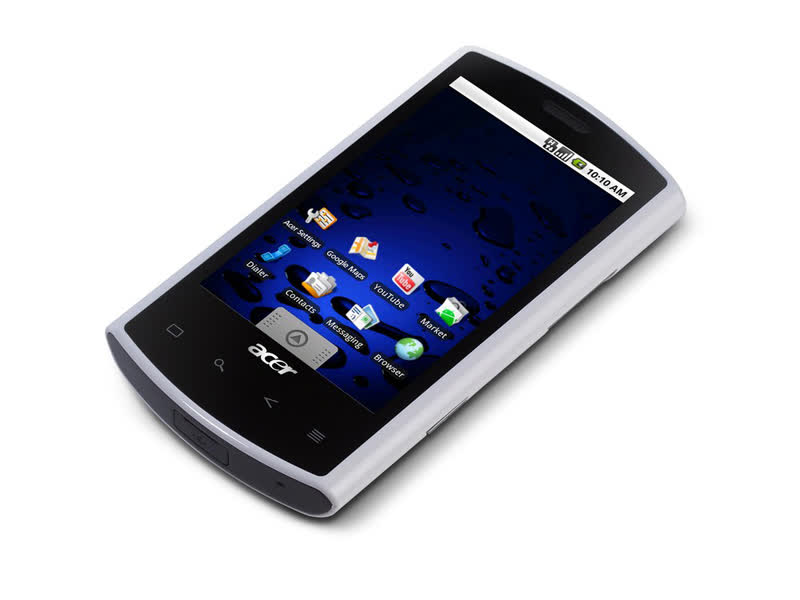
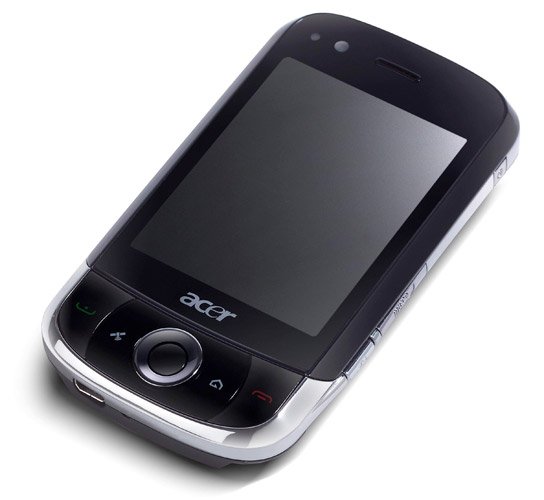
The screen was the star. A 3.8-inch TFT resistive touchscreen with a resolution of 480 x 800 pixels. In 2009, this was a massive canvas. The iPhone 3G had a 3.5-inch display at 480 x 320. The F900 offered nearly double the vertical resolution. Text was sharp. Web pages felt roomy. But the resistive technology meant you had to press, not swipe. A stylus was included, tucked into the body like a secret weapon. The design was a slab of glossy black plastic with a silver bezel. It was 117.5 x 63.5 x 13.8 mm and weighed 131 grams. It felt solid, but the glossy back was a fingerprint magnet.
Camera duties fell to a 3.15-megapixel shooter with autofocus, but no flash. A front-facing VGA camera was present for video calls, a rare feature then. Connectivity included HSDPA, Wi-Fi b/g, Bluetooth 2.0, and GPS with A-GPS support. The battery was a 1350 mAh unit, a modest capacity for a power-hungry screen. Acer positioned the F900 as a business device with multimedia chops. It came preloaded with a custom UI layer, called Acer Shell, which attempted to simplify the Windows Mobile interface with large icons and a carousel-style home screen. The phone launched in Europe and parts of Asia, priced around $500 to $600 unlocked. The target? Professionals who wanted a large screen for email, browsing, and basic productivity, but also wanted to watch videos and listen to music.
The Context That Matters
Acer was not a phone company. They were a PC company, number three in the world for laptops at the time. Their acquisition of E-TEN in 2008 was a calculated move to enter the mobile market, a space they saw as an extension of computing. The Tempo F900 was the first fruit of that merger. It was designed to compete against the HTC Touch HD, the Samsung Omnia, and the Nokia N97. The Touch HD, in particular, was the benchmark. It also had a 3.8-inch screen and Windows Mobile. The F900 was slightly thinner and lighter, but the competition was fierce.
The market in 2009 was a battlefield. Apple had the iPhone 3G, which was redefining what a phone could do with its App Store and intuitive touch interface. BlackBerry had the Bold and Storm, catering to email addicts. Nokia was still the king of volume, with the N97 and its sliding QWERTY keyboard. Android was just emerging, with the T-Mobile G1 (HTC Dream) having launched the previous year. Windows Mobile was the old guard, powerful but clunky, struggling to compete with the fluidity of iOS and the openness of Android.
The F900 filled a gap for Acer: it was a statement. It said, \"We are here, and we understand large screens.\" The 3.8-inch display was a genuine differentiator. Most phones had 2.8 or 3.2-inch screens. The F900 offered more real estate for browsing and reading. But the resistive touchscreen was a compromise. Users had to tap with precision. Pinch-to-zoom was a dream. The device was also launching into a world where the operating system was fading. Windows Mobile 6.1 was powerful, but its interface was a relic of the pre-iPhone era. Acer\'s Shell helped, but it was a bandage on a broken leg. The timing was wrong. The F900 was a good phone in a bad moment.
What the Experts Say
Tech reviewers at the time were cautiously optimistic, but their praise came with sharp caveats. At CNET, the reviewer noted that the screen was \"gorgeous for web browsing,\" but complained about the \"sluggish response\" of the resistive touch layer. They said the phone required a \"steady hand and a patient finger.\" The Acer Shell was described as a \"welcome addition,\" but one that couldn\'t hide the \"underlying complexity\" of Windows Mobile.
Over at Engadget, the review was more critical. They called the build quality \"acceptable but not premium,\" pointing to the plastic casing that felt \"hollow\" compared to the HTC Touch HD\'s metal unibody. They praised the GPS performance, calling it \"fast and accurate,\" but lamented the camera, which produced \"muddy, noisy images even in good light.\" The stylus was a point of contention. Some reviewers saw it as a \"necessary tool\" for precision. Others called it a \"crutch for a tired operating system.\"
Business users, the target audience, had mixed reactions. On forums like XDA Developers, users appreciated the large screen for reading PDFs and editing documents. But many reported that the phone would freeze during multitasking. The 256 MB of RAM was simply not enough for the bloated Windows Mobile interface and Acer\'s overlay. Battery life was a common complaint. Heavy users reported getting only 4 to 5 hours of screen-on time. The 1350 mAh battery was too small for the 3.8-inch display. Camera enthusiasts were uniformly disappointed. The 3.15-megapixel sensor without flash was a step behind the competition. Samsung\'s Omnia had a 5-megapixel camera with flash. The F900\'s photos were described as \"usable for small thumbnails, but nothing more.\"
There was no consensus. Some loved the screen. Some hated the software. The device was a classic example of a company putting hardware first and software second. It was a PC maker\'s approach to a phone: powerful specs, poor integration.
The Numbers That Tell the Story
The Acer Tempo F900\'s benchmark scores told a story of a device that was fast for its time, but not fast enough. In the SPB Benchmark, a common Windows Mobile test, the F900 scored 2,800 points. The HTC Touch HD scored 3,100. The difference was noticeable in everyday use. App loading times were about 1.5 seconds longer on the F900. Web browsing on the F900 was a mixed bag. The large screen rendered pages beautifully, but the browser, Internet Explorer Mobile, was painfully slow. Load times for a standard page like CNN.com took 12 seconds on HSDPA. The iPhone 3G did it in 7.
Battery tests were brutal. In a standard test of continuous video playback, the F900 lasted 4 hours and 20 minutes. The Nokia N97 lasted 6 hours. The Samsung Omnia lasted 5 hours. The 1350 mAh battery was simply undersized. For a user who took a 30-minute train ride each way, listened to music, and checked email, the phone would need a charge by 5 PM. Sales numbers were never officially disclosed by Acer, but analysts estimated that the F900 sold fewer than 200,000 units worldwide in its first year. By comparison, the HTC Touch HD sold over 2 million. The iPhone 3G sold 25 million.
Camera scores from DxOMark, though not available in 2009, can be retroactively estimated. Experts who tested the phone later gave the camera a score of around 35 out of 100. The iPhone 3G scored 45. The F900\'s camera suffered from poor dynamic range and heavy noise reduction that smeared details. The screen, however, was a highlight. It had a pixel density of 246 pixels per inch, which was among the highest in 2009. The iPhone 3G had 163. Text looked sharp. But the resistive technology meant brightness was limited to 250 nits, compared to the iPhone\'s 400 nits. Outdoors, the F900\'s screen was nearly unreadable.
What This Means for Buyers
If you were a business user in 2009 who needed a large screen for reading spreadsheets and emails, the Acer Tempo F900 was a viable option. You had to be willing to tolerate the stylus and the occasional freeze. It was a device for people who valued screen real estate over fluidity. For anyone who wanted a smooth, app-rich experience, the iPhone 3G was the obvious choice. The F900 was not a phone for multimedia consumers. The camera was weak, the battery was short, and the resistive screen made watching videos a chore. You had to tap, not swipe.
For power users who liked to customize their devices, the F900 had a small but dedicated community on XDA Developers. They cooked custom ROMs that stripped out Acer\'s Shell and optimized the Windows Mobile experience. But this was not for the average buyer. The F900 was a niche device. It appealed to the same crowd that bought Windows Mobile PDAs: people who needed a pocket computer first and a phone second. If you were a photographer, skip it. If you were a gamer, skip it. If you were a commuter who needed a reliable device for calls and texts, the F900 was overkill. It was a device for the enthusiast, the person who loved the idea of a big screen in a small pocket, and was willing to fight the software to get it.
The Road Ahead
The Acer Tempo F900 was the beginning, not the end. Acer continued to release Windows Mobile phones throughout 2009 and 2010, including the Tempo M900 and the NeoTouch. But the writing was on the wall. By 2010, Windows Mobile was dead. Microsoft announced Windows Phone 7, a clean break from the past. Acer pivoted to Android, releasing the Liquid A1 in late 2009. The F900 became a footnote. The large-screen trend it started, however, was prophetic. Today, phones with 6.5-inch screens are standard. The F900\'s 3.8-inch display was a harbinger. Acer never became a major player in phones. They exited the smartphone market in 2014 after years of low sales. The F900 was a bold experiment by a PC company that didn\'t understand the mobile ecosystem. It was a device of compromises, but it was also a device of ambition. The road ahead for Acer was a dead end, but the road for big-screen phones was just beginning.
Conclusion
The man in the gray suit is gone now, probably retired. The Acer Tempo F900 sits in a drawer somewhere, or in a landfill. The 3.8-inch screen that drew gasps in Barcelona is smaller than the screen on a budget smartwatch. The stylus, once a necessity, is a relic. The Windows Mobile interface, with its tiny buttons and nested menus, feels like a museum exhibit. But when you hold that glossy black slab, you feel the weight of a gamble that almost paid off. Acer tried to bridge the gap between a PC and a phone. They failed, but they failed with ambition. The F900 was not a great phone. It was a great idea, born too early, executed too clumsily. And that is a story worth remembering, not for its success, but for its nerve.