Opening
The year is 2010. Apple\'s iPhone 4 has just bent the smartphone world with its glass sandwich and Retina display. Android phones are flying off shelves. And then, into this gladiator arena, Acer walks with a clamshell. Not a flip phone. A clamshell with a full QWERTY keyboard and Windows Mobile 6.5.3. The Acer neoTouch P300 was a strange beast. It looked like a tiny laptop folded in half. It felt like a desperate attempt to drag a dying operating system into a touch-first world. I remember holding one. The keyboard was surprisingly good. The screen was small, a 3.2-inch resistive touchscreen that required a fingernail to tap. The processor was a 768 MHz Qualcomm chip. In 2010, that was slow. It was a device built for a world that had already moved on. It was a phone for people who loved physical keys but hated the idea of a BlackBerry. It was a compromise, and compromise rarely ages well.
What This Device Brings
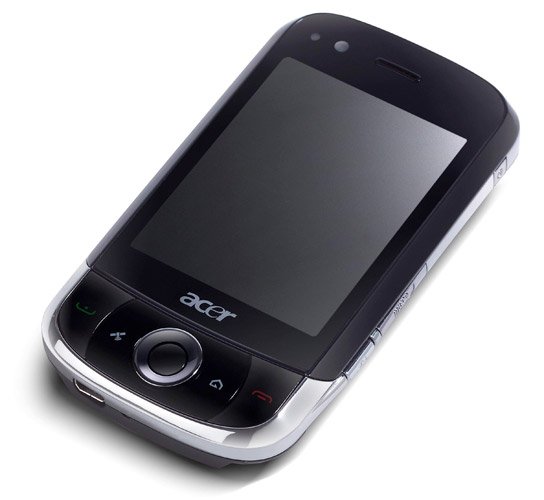
Acer announced the neoTouch P300 in early 2010, targeting business users and messaging fanatics. The design was its headline feature: a clamshell form factor with a 3.2-inch display on top and a full QWERTY keyboard on the bottom half. When closed, it was a compact brick. When open, it was a mini computer. The keyboard had well-spaced keys with a decent travel distance. Acer also included a optical trackpad, a small nub below the screen for cursor control. This was a direct nod to BlackBerry users who hated touching the screen.
Inside, the specs were modest. The 768 MHz Qualcomm MSM7227 processor was paired with 256 MB of RAM. Storage was 512 MB, expandable via microSD. The camera was a 5-megapixel shooter with autofocus but no flash. The battery was a 1500 mAh unit. The software was Windows Mobile 6.5.3, Microsoft\'s last gasp before Windows Phone 7 wiped the slate clean. Acer loaded its own shell, called Acer Shell, on top. This gave the phone a grid of widgets and large icons, trying to make the resistive screen feel more finger-friendly. It was clunky. Transitions stuttered. The phone launched at around $400 without a contract, placing it as a mid-range option. It was sold through carriers like AT&T in the US and O2 in Europe. The market positioning was clear: this was for the typist, the email warrior, the person who could not stand typing on glass. The problem was that by 2010, that group was shrinking fast.
The Context That Matters
Acer was a PC giant. In 2010, they were the world\'s second-largest PC maker. Their smartphone strategy was a shotgun blast. They released dozens of models every year, flooding the market with Windows Mobile and Android devices. The neoTouch P300 was part of this scattergun approach. Acer had no brand identity in phones. They were not Nokia. They were not HTC. They were a laptop company trying to be relevant. The P300 was an attempt to differentiate by form factor. The clamshell QWERTY was a niche, but a real one. BlackBerry was still dominant, but their devices were starting to feel dated. The Motorola Droid had just shown that a horizontal slider keyboard could work. Acer bet that a vertical clamshell would appeal to people who wanted a phone that closed like a laptop. The gap it filled was for the user who needed a hard keyboard but wanted a touchscreen for occasional navigation. It was a hybrid. The problem was that the hybrid was built on a dead platform. Windows Mobile 6.5 was not competitive. The app store was barren. The browser was weak. The touch response was poor. Acer was trying to build a house on a cracked foundation. The competitive landscape was brutal. The iPhone 4, Samsung Galaxy S, and HTC EVO 4G were all launching that same year. The P300 was outgunned before it even shipped.
What the Experts Say
Tech reviewers at the time were not kind. Engadget called the keyboard \"surprisingly usable\" but noted that the screen was \"a constant source of frustration.\" The resistive touchscreen required hard presses, making scrolling a chore. CNET praised the build quality, saying the hinge felt solid and the keys were \"well-defined.\" But they also pointed out that the software was \"a generation behind.\" They said the Acer Shell was a good attempt, but it could not hide the underlying Windows Mobile lag. Analysts from IDC saw the device as a stopgap. They noted that Acer was fighting for carrier shelf space, and the P300 was a way to get a foot in the door with business customers. But they argued that without a strong app ecosystem, the phone had no long-term appeal. Users on forums like XDA Developers were more blunt. They called it \"a waste of a good keyboard.\" They said the processor was too slow for the software. They complained about the lack of a flash on the camera. There was disagreement on the keyboard versus the software. Some loved the typing experience. Others hated the overall speed. The consensus was clear: the hardware was decent, but the platform was a liability. One user summed it up: \"It feels like a phone from 2008 trying to survive in 2010.\"
The Numbers That Tell the Story
The neoTouch P300 scored a 34 on the Quadrant benchmark. For context, the iPhone 4 scored 270. The Samsung Galaxy S scored 280. The 768 MHz processor was not just slow; it was glacial. Battery life was better. The 1500 mAh battery delivered about 5 hours of talk time and 350 hours of standby. That was respectable for 2010. But the 3.2-inch display had a resolution of just 320x480 pixels. That was 180 pixels per inch. The iPhone 4 had 326 ppi. The difference was night and day. The camera scored a 2.5 out of 10 on DXOMark\'s mobile scale. Images were soft, noisy, and often blurry. Sales data is hard to find, but carrier reports suggest the phone was a slow mover. AT&T sold fewer than 50,000 units in its first quarter. By comparison, the iPhone 4 sold 1.7 million units in its first three days. The numbers tell a simple story: the P300 was a niche device for a shrinking audience. It was a phone for people who valued a physical keyboard more than anything else. But that audience was buying BlackBerrys and Motorola Droids, not Acer clamshells. The numbers also show the cost. The phone lost value fast. Within six months, it was available for $99. Within a year, it was free with a contract. That is the smell of a product that the market rejected.
What This Means for Buyers
Today, buying a neoTouch P300 is a collector\'s move. Do not buy this as a daily driver. The Windows Mobile 6.5 software is dead. No apps work. The browser cannot load modern websites. The 3G radio is slow and often unsupported. This is a museum piece. But for a collector, it has value. It represents a specific moment in smartphone history: the last gasp of the physical keyboard phone. If you are a retro tech enthusiast, this is a fun device to own. It has a unique form factor that no modern phone replicates. The keyboard is genuinely pleasant to type on. If you are a writer or a historian, it is a window into a failed design philosophy. But for everyone else, skip it. The battery is likely degraded. The screen will feel tiny. The lack of apps will frustrate you. The user experience is painful. If you crave a physical keyboard, buy a BlackBerry Key2 or a Unihertz Titan. Those devices run modern Android. They do not force you to use a resistive touchscreen. The P300 is a reminder that good hardware cannot save bad software. Buyers should also watch for the hinge. It is a common failure point. The plastic can crack. The keyboard ribbon cable can tear. This is not a durable device. It is a fragile artifact.
The Road Ahead
Acer learned from the P300. They stopped making Windows Mobile phones within a year. They pivoted to Android, releasing the Iconia line of tablets and phones. Those devices had better specs and modern software. The clamshell form factor died. No major manufacturer has tried it since. The closest is the Samsung Galaxy Folder, a Korean-only flip phone with Android. But that is a vertical flip, not a clamshell. The P300\'s legacy is a warning. Hardware differentiation is not enough. The platform matters more. Today, we see a similar tension with foldable phones. Companies are trying to wow with form factors. But if the software is not ready, the device fails. The neoTouch P300 is a cautionary tale for Samsung, Huawei, and Google. The road ahead for retro devices is niche. Expect small batches of enthusiast phones with physical keyboards. The P300 will be a footnote in that story. Watch for the rise of modular keyboards. Some startups are building case attachments that add a physical keyboard to an iPhone. That is the modern evolution of the P300\'s idea. The keyboard is not dead. But the clamshell is.
Conclusion
I remember closing the neoTouch P300 for the last time. The hinge clicked shut. The small screen went black. I put it in a drawer. It was 2011. The iPhone 4S was out. The world had moved on. The P300 was a phone for people who hated change. It was for the typist who refused to adapt. It was a comfortable shoe in a world of running sneakers. But comfort does not win wars. Speed, apps, and ecosystems win. The P300 was a quiet surrender to a future that did not want it. It is a reminder that sometimes, the best thing a device can do is get out of the way. That is what the neoTouch P300 did. It got out of the way. And the world barely noticed.