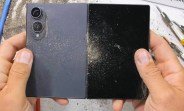
If you spot someone pouring sand and grit over a brand-new Samsung Galaxy Z Fold8, there’s a better than 50% chance their name is Zack. That’s because the JerryRigEverything host has made it his mission to torture-test every flagship phone that hits the market, and the Fold8 is no exception. This time, the spotlight is on Samsung’s new Flex Titanium screen design—a feature that promises to make the folding OLED display tougher than ever. But does it actually survive the sand, the blade, and the infamous bend test? Let’s dive into the gritty details.
The Flex Titanium Screen: A New Layer of Defense
Samsung has been iterating on foldable durability for years, and with the Z Fold8 generation, they’ve introduced what they call Flex Titanium. This isn’t just a marketing buzzword; it’s a structural upgrade that combines an aluminum plate with a titanium alloy film. The idea is to reinforce the folding OLED display without adding unnecessary bulk or weight. The Galaxy Z Fold8 and the Z Fold8 Ultra both feature this new screen build, while the Z Flip8 surprisingly missed out on the upgrade. So, what does Flex Titanium actually mean for real-world durability?
Understanding the Build: Aluminum Meets Titanium
At its core, the Flex Titanium screen is a sandwich of materials. The bottom layer is a rigid aluminum plate that provides structural support. On top of that sits the flexible OLED panel, and then a titanium alloy film covers it. Titanium is known for its exceptional strength-to-weight ratio and resistance to scratches and corrosion. By integrating this into the screen stack, Samsung aims to address one of the biggest pain points of foldables: the fragile display. But as Zack’s tests reveal, even titanium has its limits.
The Scratch Test: Can It Handle the Blade?
Zack’s durability tests always start with the Mohs hardness scale, using picks of varying hardness to scratch the screen. For the Fold8, the Flex Titanium layer is the first line of defense. In the video, Zack begins with level 6 picks, which typically leave marks on most glass screens. Surprisingly, the Fold8’s display showed no visible scratches at level 6. It wasn’t until level 7 that faint lines started to appear, and even then, they were less pronounced than on previous foldables. This is a significant improvement over the Z Fold7, which showed scratches at level 6.
What Does This Mean for Everyday Use?
For most users, this means the Fold8’s screen is more resistant to everyday wear and tear. Keys, coins, and even sand particles (which are often around level 7 on the Mohs scale) are less likely to leave permanent marks. However, it’s not indestructible. At level 8, the screen starts to show deeper grooves, and at level 9, it’s game over. But the fact that it survives level 7 without major damage is a win for foldable technology.
The Sand Test: Gritty Reality Check
Sand is the nemesis of any foldable phone. The hinge mechanism and the soft display are particularly vulnerable to abrasive particles. Zack doesn’t hold back—he pours a generous amount of sand and grit directly onto the screen and then folds the device. The result? The Flex Titanium screen does a decent job of resisting scratches from the sand, but the hinge area is a different story.
Hinge Durability: The Weak Point
After the sand test, Zack notices that the hinge becomes slightly gritty when opening and closing. The sand particles manage to get into the hinge mechanism, causing a noticeable crunching sound. While the phone still functions, the smoothness of the hinge is compromised. This is a common issue with foldables, and Samsung has improved the hinge’s dust resistance over the years, but it’s not completely sealed. The Fold8’s hinge has a new brush system that helps push out debris, but it’s not foolproof. For users who frequent sandy environments, a protective case with a hinge cover is still recommended.
The Bend Test: The Ultimate Stress Test
Every JerryRigEverything video culminates in the bend test, where Zack applies pressure to the phone from both the front and back. For foldables, this is particularly nerve-wracking because the hinge creates a natural stress point. The Fold8, however, passed with flying colors. When bent from the front, the phone remained intact with no flex or give. From the back, it also held up, with no signs of cracking or separation. The Flex Titanium screen, combined with the aluminum frame, provides excellent rigidity.
How Does It Compare to Other Foldables?
In previous tests, the Z Fold7 also survived the bend test, but the Fold8 feels more solid. The titanium layer adds a bit of extra stiffness, and the overall build quality is noticeably improved. Even the hinge, which is often the weakest link, didn’t show any signs of failure. This is a testament to Samsung’s engineering. However, it’s worth noting that the bend test doesn’t simulate all real-world scenarios—like dropping the phone or sitting on it—but it’s a good indicator of structural integrity.
Other Durability Observations
Beyond the main tests, Zack also checks the side rails and the camera module. The aluminum frame is scratch-resistant but not scratch-proof. The camera glass, which is made of sapphire or similar material, holds up well against the picks, showing only minor scratches at level 8. The buttons and ports are also well-sealed, with the SIM tray and speaker grilles showing no signs of weakness.
The Under-Display Camera: A Hidden Gem
One area that often gets overlooked is the under-display camera (UDC). The Fold8’s UDC is hidden beneath the Flex Titanium layer, and it’s protected from scratches. In the test, the UDC area showed no visible damage even after the sand test. This is a nice touch, as it means the hidden camera won’t be a weak point in the display.
Final Verdict: A Durable Foldable, But Not Invincible
So, does the Galaxy Z Fold8’s Flex Titanium screen make it more durable? The answer is a resounding yes. The screen is significantly more scratch-resistant than previous models, and the overall build quality is top-notch. The bend test proves that the phone can withstand considerable pressure without breaking. However, the hinge remains a vulnerable spot, especially when exposed to fine particles like sand. If you’re someone who works in dusty environments or spends time at the beach, you’ll want to invest in a good case with a hinge protector.
Who Should Buy the Fold8?
The Fold8 is a premium device that offers a unique blend of productivity and portability. Its improved durability makes it a more viable option for everyday use, even for those who are prone to dropping their phones. But it’s still a foldable, and it still requires a bit more care than a traditional slab phone. If you’re willing to accept that trade-off, the Fold8 is one of the most durable foldables on the market.
What About the Z Fold8 Ultra?
The Z Fold8 Ultra also features the Flex Titanium screen, and while Zack didn’t test it in this video, it’s likely to perform similarly. The Ultra has a larger display and a slightly different hinge design, but the core durability improvements are the same. If you’re considering the Ultra, you can expect similar results.
Final Thoughts
JerryRigEverything’s durability test is a rite of passage for any flagship phone, and the Galaxy Z Fold8 has passed with impressive marks. The Flex Titanium screen is a genuine upgrade that addresses the most common complaint about foldables: fragile displays. While the hinge is still a potential weak point, Samsung has made significant strides in dust and sand resistance. If you’re in the market for a foldable, the Fold8 is a solid choice that won’t easily break under pressure—unless, of course, you’re Zack.