
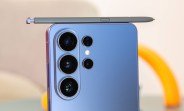
According to two separate industry sources, Samsung is planning to remove the dated 10MP 3x telephoto camera from the Galaxy S27 Ultra. This sensor has been a staple since the Galaxy S21 Ultra, but it appears its time is finally up. The move is seen as a cost-cutting measure, and the sensor itself has reportedly reached its “technical saturation point.”
One source specifically notes that there won’t be a direct replacement for the 3x telephoto shooter. Instead, the Galaxy S27 Ultra will rely on its 200MP main camera, a 50MP 5x periscope telephoto, and a 50MP ultrawide shooter. This streamlined setup marks a significant shift in Samsung’s flagship camera philosophy.
Why Is Samsung Dropping the 3x Telephoto?
The 10MP 3x telephoto camera has been a workhorse for Samsung, appearing in multiple generations of the Galaxy S Ultra series. However, the sensor’s age is showing. It was first introduced with the Galaxy S21 Ultra, and while it has been tweaked over the years, its core hardware hasn’t changed much. Industry insiders suggest that the sensor has reached its technical limits, meaning further software optimizations can’t extract much more performance.
From a cost perspective, removing this camera simplifies the manufacturing process and reduces component costs. Samsung has been under pressure to manage rising production expenses, especially with premium materials and advanced chipset costs climbing. By trimming a redundant camera, the company can allocate resources to other areas, like the main sensor or battery technology.
But this decision isn’t just about saving money. It’s also about streamlining the user experience. With fewer cameras, Samsung can focus on refining the software for the remaining lenses, potentially improving image processing and consistency. This approach aligns with a broader industry trend where flagship phones are moving away from gimmicky multi-camera setups and toward more purposeful, high-quality optics.
What Does This Mean for the Galaxy S27 Ultra’s Camera Setup?
If the reports are accurate, the Galaxy S27 Ultra will feature a triple-camera system on the back, a departure from the quad-camera setups we’ve seen in recent years. Here’s what we can expect:
- 200MP Main Camera: This will likely be an upgraded version of the current 200MP sensor, possibly with larger pixels for better low-light performance.
- 50MP 5x Periscope Telephoto: This camera will handle long-range zoom, offering up to 5x optical zoom and likely excellent digital zoom capabilities via cropping.
- 50MP Ultrawide: This will provide a versatile wide-angle perspective, ideal for landscapes and group shots.
The absence of a 3x telephoto means that users will have a gap between the main camera’s 1x zoom and the 5x periscope’s 5x zoom. This gap could be filled by software-based zoom, using the high-resolution main sensor to crop into the center of the frame. With a 200MP sensor, a 3x zoom crop would still yield a highly detailed image, potentially around 22MP, which is more than enough for most uses.
Potential Benefits of the New Setup
While some may lament the loss of a dedicated 3x lens, there are potential upsides. The main camera’s high resolution can serve as a digital 3x zoom, and modern computational photography can produce results that rival optical zoom. Additionally, with one less camera, Samsung could improve the image processing pipeline, reducing shutter lag and improving HDR performance.
Another benefit is the potential for better battery life. Fewer cameras mean less power consumption, especially when using the camera app, which often activates multiple sensors. This could lead to longer usage times, a key selling point for power users.
Potential Drawbacks
On the flip side, the 3x telephoto was popular for portrait photography. A 3x focal length (around 70mm equivalent) is ideal for natural-looking portraits with pleasing background compression. Without it, users will need to rely on the main camera’s portrait mode, which uses software to simulate depth. While this can work well, it may not always produce the same bokeh quality as a dedicated telephoto lens.
There’s also the issue of versatility. Having a 3x lens allows for quick, high-quality zoom shots without needing to step closer. With only a 5x periscope, users may find themselves switching between 1x and 5x, which can be jarring. Samsung will need to ensure that the digital zoom steps are smooth and that the transition between cameras is seamless.
How Does This Compare to the Competition?
Samsung’s move to drop the 3x telephoto is bold, especially when competitors like Apple and Google are embracing multiple telephoto lenses. For instance, the iPhone 15 Pro Max features a 5x periscope lens, but it also retains a 2x telephoto via the main sensor’s cropping. Google’s Pixel 8 Pro offers a 5x periscope and a dedicated 48MP ultrawide, but no 3x lens either.
In fact, Samsung’s decision aligns with a trend among some Android flagships. The Xiaomi 14 Ultra, for example, uses a dual-telephoto setup with 3x and 5x lenses, but many mid-range flagships are dropping the 3x lens in favor of higher-resolution main sensors. The key differentiator will be how Samsung implements the software zoom to bridge the gap.
Apple’s approach is interesting: they use the main sensor to simulate a 2x zoom, which is often praised for its quality. Samsung could adopt a similar strategy, using the 200MP sensor to provide a 2x or 3x crop. The success of this will depend on the sensor’s pixel-binning technology and the image signal processor’s ability to maintain detail.
What About the Galaxy S26 Ultra?
It’s worth noting that the Galaxy S26 Ultra, which is expected to launch later this year, will likely retain the 3x telephoto camera. The change is slated for the S27 Ultra, meaning that Samsung is planning this shift well in advance. This gives the company time to perfect the software and ensure that users don’t feel the loss of the 3x lens.
For those who are considering upgrading to the S26 Ultra, this news might be a reason to hold off or to grab the S26 Ultra while it still has the 3x lens. However, it’s also possible that Samsung will introduce a new sensor or a different solution in the S27 Ultra that makes the 3x lens obsolete. We’ll have to wait for more details.
Industry Reactions and Speculation
The news has sparked a debate among tech enthusiasts. Some applaud Samsung for simplifying the camera system and focusing on quality over quantity. Others are skeptical, fearing that the removal of the 3x lens will degrade the camera’s versatility. There are also rumors that Samsung might introduce a variable aperture or a new sensor technology in the S27 Ultra that could compensate for the missing lens.
One source hinted that Samsung is working on a new “super zoom” feature that uses AI to enhance digital zoom. This could mean that the 5x periscope will be paired with advanced software to deliver 10x, 20x, or even 100x zoom with improved clarity. If this is true, then the 3x lens might indeed be redundant.
However, no official confirmation has been made, and these are just early rumors. Samsung has a history of testing multiple prototypes, and the final design could change. It’s also possible that the 3x telephoto will be replaced with a different lens, such as a macro or a depth sensor, but the sources specifically state that there will be no substitute.
What This Means for Consumers
For consumers, this news is a double-edged sword. On one hand, a simplified camera system can lead to better overall performance and potentially lower costs. On the other hand, the loss of a dedicated 3x lens might be a dealbreaker for photography enthusiasts who rely on that focal length.
If you’re in the market for a new flagship, it’s essential to consider how you use your camera. Do you often take portrait shots at 3x zoom? Do you prefer the convenience of having multiple lenses? Or are you happy with a high-resolution main camera and software zoom?
It’s also worth noting that the Galaxy S27 Ultra is still a year away, so there’s plenty of time for Samsung to refine its plans. The company might also introduce new features that make the camera system even more compelling, such as improved low-light performance or advanced AI processing.
Looking Ahead: The Future of Samsung’s Flagship Cameras
Samsung’s decision to drop the 3x telephoto could signal a broader shift in its camera strategy. Instead of adding more lenses, the company may focus on making each lens more capable. This is evident in the rumored upgrades to the main sensor and the periscope telephoto. We might see larger sensors, better optical stabilization, and more advanced computational photography in the future.
Another possibility is that Samsung will adopt a periscope lens with a variable zoom range, similar to what Sony has experimented with. This would allow the phone to zoom optically from 3x to 5x without needing a separate lens. However, such technology is complex and may not be ready for mass production by 2026.
Regardless, the Galaxy S27 Ultra is shaping up to be a significant departure from previous models. By removing a camera that has been a staple for years, Samsung is taking a risk. But if the remaining cameras are improved enough, this risk could pay off, offering a cleaner and more powerful photography experience.
Conclusion
The rumored removal of the 10MP 3x telephoto camera from the Galaxy S27 Ultra is a bold move that reflects Samsung’s desire to innovate and cut costs. While it may disappoint some users, it could also lead to a more streamlined and efficient camera system. The 200MP main sensor and 50MP 5x periscope are likely to be the stars, and with advanced software, the missing 3x lens might not be missed.
As always, these are early rumors, and Samsung could change its plans. But for now, it’s clear that the company is thinking about how to optimize its flagship cameras for the future. Whether this decision will be praised or criticized remains to be seen, but it’s certainly a topic worth watching.