
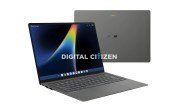
As the tech world gears up for IFA next month, a fresh wave of leaks has surfaced, offering what could be our first real glimpse at the next generation of laptops from Asus. These alleged renders, which have made their way online, show a device that initially seems like just another run-of-the-mill ultraportable. But dig a little deeper, and there’s a compelling twist: this might be one of the very first Googlebooks—a new category of devices that Google quietly introduced back in May. While the renders themselves appear to have been upscaled using AI, resulting in some visual oddities, they still provide enough detail to spark serious curiosity about what’s coming.
What Exactly Is a Googlebook?
If you’ve been following the laptop market closely, you’ve likely heard whispers about the Googlebook. Announced earlier this year, the Googlebook is Google’s latest push into the hardware space, but it’s not just another Chromebook. While Chromebooks have dominated the budget education and consumer markets for years, the Googlebook seems to be aiming higher—positioning itself as a more premium, more integrated alternative. The big question on everyone’s mind is whether these devices are meant to replace Chromebooks or simply complement them. Given the current trajectory, it looks like Google is hedging its bets, and the arrival of Asus and Lenovo models could be the first real test of this new concept.
The core idea behind the Googlebook is to offer a seamless experience that blends the best of ChromeOS with deeper Google services integration. Think of it as a laptop that’s not just powered by Google but is fundamentally built around the Google ecosystem—from the moment you power it on to the way you interact with apps and cloud storage. This isn’t a radical departure from Chromebooks, but it’s a significant evolution, one that could redefine what users expect from a cloud-first device.
First Look: Asus Googlebook Renders
The leaked renders, attributed to Asus, show a laptop that follows the design language we’ve come to expect from modern ultrabooks. The chassis appears slim and lightweight, with a minimalist aesthetic that wouldn’t look out of place next to the latest Zenbooks. The display is surrounded by thin bezels, giving it a modern, edge-to-edge look that’s become standard in 2025. However, there are a few subtle cues that set this apart from a typical Windows machine.
For starters, the keyboard layout seems to have a dedicated Google Assistant key, a feature that’s been rumored for Googlebooks but hasn’t been confirmed until now. The trackpad looks generously sized, and the overall build quality appears premium, with what looks like an aluminum unibody construction. The ports are also worth noting: we see a couple of USB-C ports, a headphone jack, and possibly a microSD card slot—a configuration that prioritizes versatility over thinness.
AI Upscaling: A Blessing and a Curse
One of the most interesting aspects of these renders is that they’ve clearly been through an AI upscaling process. This has resulted in some artifacts—edges that look slightly soft, textures that appear a bit too smooth, and text that’s hard to read. While this might frustrate those hoping for a crystal-clear look, it doesn’t detract from the overall impression. In fact, it adds an air of authenticity; these aren’t polished marketing images but rather leaked shots that someone scrambled to get out. The AI upscaling actually helps fill in some gaps, giving us a better sense of the device’s proportions and design cues than we might have otherwise gotten from a blurry photo.
What About Lenovo’s Googlebook?
Asus isn’t the only one getting in on the Googlebook action. Lenovo, a long-time partner of Google in the Chromebook space, is also rumored to be working on its own version. While no official renders have leaked yet, industry insiders suggest that Lenovo’s Googlebook will take a slightly different approach, focusing on durability and business-friendly features. Think of it as a ThinkPad-style Googlebook, with a focus on keyboard comfort, security features like a fingerprint reader, and a more utilitarian design. This could be a smart move, as it would appeal to enterprise users who are already invested in Google Workspace and are looking for a more robust alternative to traditional Chromebooks.
The Lenovo model is expected to launch around the same time as the Asus one, likely in the lead-up to IFA or shortly after. This coordinated release suggests that Google is serious about making Googlebook a mainstream category, not just a niche experiment. By having two major manufacturers on board from day one, Google can ensure that there’s a variety of options for different user needs—from students to professionals.
Googlebook vs. Chromebook: What’s the Difference?
To understand why Googlebook matters, you need to look at what sets it apart from the Chromebooks we’ve known for over a decade. Chromebooks have always been about simplicity and security, but they’ve also been criticized for their limited offline capabilities and sometimes underpowered hardware. Googlebook aims to address these issues by leveraging more powerful components and smarter software.
One of the key differences is likely to be in the operating system. While Googlebook will still run ChromeOS, it’s expected to come with a more optimized version that takes full advantage of the hardware. This could include better support for Android apps, improved multitasking, and a more seamless integration with Google’s AI features. There’s also talk of a new “Googlebook mode” that would automatically sync all your files and settings across devices, making the transition from phone to laptop virtually frictionless.
Another major differentiator is the price point. While Chromebooks are often budget-friendly, Googlebooks are expected to sit in the mid-to-high range, competing with the likes of MacBook Air and Windows ultrabooks. This positions them as premium devices for users who want the simplicity of ChromeOS but are willing to pay for better build quality and performance. It’s a bold move, but one that could pay off if Google delivers on its promises.
Design Trends and Hardware Expectations
Based on the Asus renders, we can start to piece together the design philosophy behind Googlebook. The device appears to be incredibly thin, likely under 15mm, and weighs around 1.2kg—making it a true travel companion. The display is expected to be a 14-inch OLED panel with a 16:10 aspect ratio, offering vibrant colors and deep blacks. This would be a significant upgrade over the typical IPS panels found in Chromebooks, and it aligns with Google’s push for a more premium experience.
Performance and Battery Life
Under the hood, we’re likely to see the latest Intel or AMD processors, possibly paired with dedicated AI accelerators to handle on-device machine learning tasks. This would enable features like real-time language translation, smart photo editing, and voice assistants that actually understand context. Battery life is another area where Googlebook is expected to shine, with some estimates suggesting up to 15 hours of mixed usage. That would put it on par with the best ultrabooks on the market, making it a compelling choice for all-day productivity.
Connectivity is also a focus, with support for Wi-Fi 7 and optional 5G modems. This makes sense for a device that’s designed to be always connected, especially for users who work remotely or travel frequently. The inclusion of multiple USB-C ports is a welcome sight, as it allows for fast charging and easy connection to external displays and peripherals.
The Software Experience: A Deeper Dive
While hardware is important, the software is where Googlebook could truly differentiate itself. Google has been investing heavily in AI, and it’s clear that the Googlebook will be the showcase for these advancements. Imagine a laptop that learns your habits—knowing when you’re likely to open certain apps, suggesting files before you even search for them, and automatically adjusting power settings based on your location. This level of personalization could make the Googlebook feel less like a tool and more like a personal assistant.
Another exciting possibility is the integration of Google’s new Gemini AI model. This could enable features like advanced summarization, real-time transcription, and even creative assistance for content creation. For students, this could mean a built-in tutor; for professionals, a research assistant. The potential is enormous, and it’s something that traditional Chromebooks simply can’t offer.
Of course, there are also concerns. Privacy is a big one, as these AI features will require significant data collection. Google will need to be transparent about how data is used and provide robust controls for users who want to opt out. Additionally, the reliance on cloud services means that an internet connection is almost essential for the full experience. While offline modes will exist, they may not be as robust as what you’d get on a traditional laptop.
Market Impact and Consumer Reception
The introduction of Googlebook could shake up the laptop market in several ways. For one, it puts pressure on Microsoft and Apple to innovate further in the cloud-first space. Microsoft has been pushing Windows 365 and cloud PCs, but it hasn’t integrated them as seamlessly as Google could with its own hardware. Apple, on the other hand, has its own ecosystem, but it’s more closed and less focused on cloud services.
For consumers, the Googlebook offers an intriguing alternative. If you’re already invested in Google’s ecosystem—using Gmail, Google Drive, Google Photos, and Android—then a Googlebook could be the perfect companion. It promises to eliminate the friction of moving between devices, making everything feel like one cohesive experience. The key will be execution. If Google can deliver a polished, bug-free product with a compelling price, it could win over a significant portion of the market.
Potential Challenges and Criticisms
Despite the excitement, there are hurdles. The first is app compatibility. While ChromeOS has improved its Android app support, there are still gaps, and some professional software (like Adobe’s full suite) isn’t fully optimized. Google will need to work with developers to ensure that the Googlebook can handle everything from video editing to 3D modeling. Another challenge is the perception of ChromeOS as a “toy” OS. Convincing skeptics that a Googlebook can be a serious workhorse won’t be easy, but it’s not impossible—especially if the hardware is top-notch.
Battery life and thermal management are also critical. With more powerful processors, there’s a risk of overheating and reduced battery life. The renders show what appears to be a passive cooling system (no visible vents), which could be a concern. However, modern chips are incredibly efficient, and with careful engineering, it might be possible to maintain performance without active cooling. Only time will tell.
What to Expect at IFA 2025
With IFA just around the corner, all eyes are on Asus and Lenovo to see if they’ll officially unveil their Googlebooks. Given the timing of these leaks, it’s highly likely that we’ll see a formal announcement during the show. The renders we’ve seen are probably just a teaser, and the final products could look slightly different. But they give us a solid foundation for what to expect.
If Asus does launch a Googlebook, it would be a significant addition to its lineup, which currently includes the Zenbook and Vivobook series. The Googlebook would slot in as a premium option, targeting users who value simplicity and cloud integration. Lenovo, on the other hand, might position its Googlebook as a business tool, leveraging its reputation for durable, reliable laptops.
We should also keep an eye on other manufacturers. Acer, HP, and Dell have all been rumored to be working on Googlebook models, so the category could expand rapidly. This would be good news for consumers, as it would lead to more choices and competitive pricing.
Final Thoughts: The Future of Cloud Computing
The Googlebook represents a bold step forward in the evolution of personal computing. It’s a bet that the future is cloud-based, AI-driven, and deeply integrated with our digital lives. If successful, it could make traditional laptops feel outdated, much like how smartphones changed the way we communicate. But it’s also a risky bet, as it requires a shift in how people think about their devices and data.
For now, we can only speculate based on these leaked renders. But one thing is clear: the laptop market is about to get a lot more interesting. Whether you’re a tech enthusiast, a student, or a professional, the Googlebook is worth keeping an eye on. As we await official announcements, the renders give us a tantalizing preview of what’s to come—a sleek, powerful, and intelligent device that could redefine our relationship with technology.
Stay tuned for more updates as we approach IFA, and be sure to check back for hands-on coverage and detailed reviews. The future is almost here, and it looks promising.