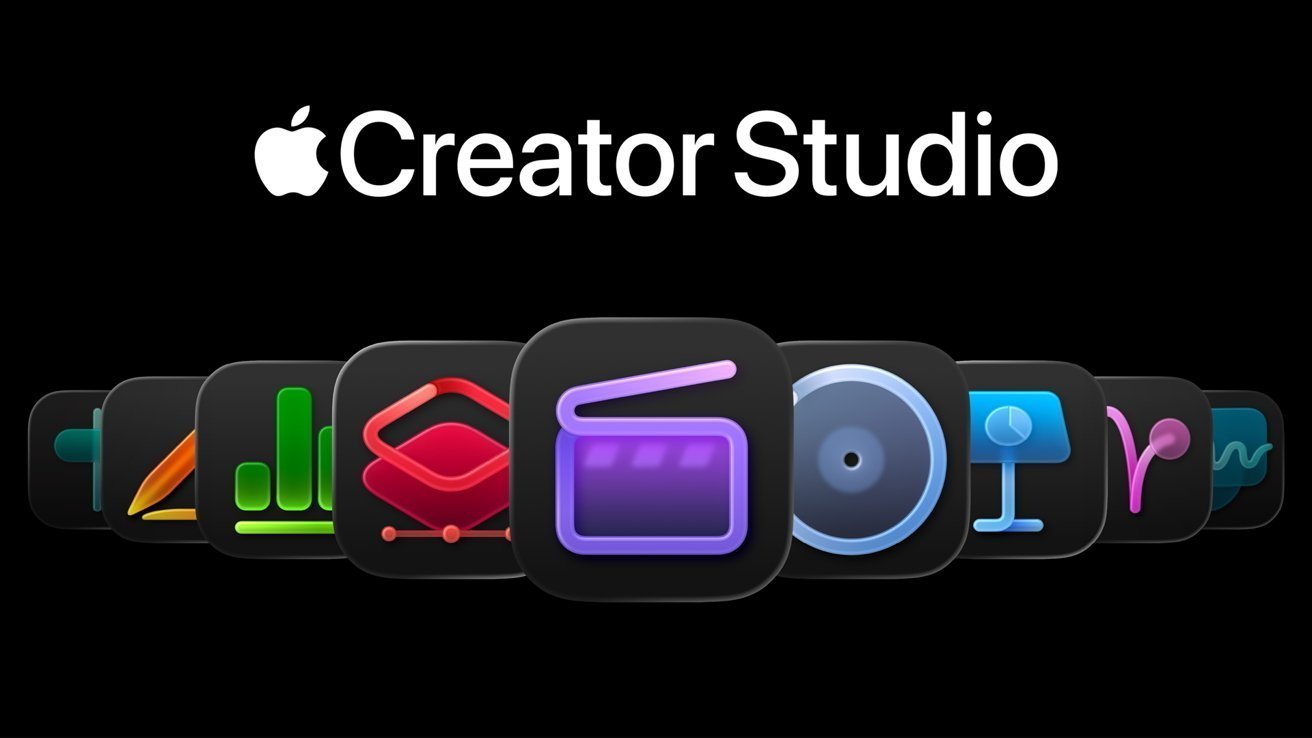
Apple has quietly begun rolling out a new monetization layer for its AI-powered creative tools, and it could reshape how professionals think about the cost of artificial intelligence in their daily workflows. According to reports, users of Apple Creator Studio who hit the usage limits of Apple Intelligence features will now be able to purchase additional usage packs to keep working. It’s a small change on the surface, but it represents a significant philosophical shift for a company that has, with a few notable exceptions, avoided charging users extra for AI-powered capabilities.
The timing is telling. Apple spent most of 2024 and early 2025 marketing Apple Intelligence as the headline feature of its latest hardware cycle, from the iPhone 16 lineup to M4-powered Macs. Every keynote slide promised that the AI was built in, not bolted on, and that it would simply work in the background across apps. The introduction of paid top-ups suggests the company has now gathered enough real-world usage data to understand where the heavy consumption actually happens — and it isn’t in casual photo cleanups or text summaries.
The End of Unlimited AI Access?
For the past couple of years, Apple Intelligence has been positioned as a value-add — a suite of features baked into the company’s operating systems and pro apps that users could enjoy without worrying about a meter running in the background. That era appears to be ending, at least for Creator Studio subscribers. The new usage packs mean that once you exhaust your monthly allotment of AI-powered actions, you’ll need to open your wallet to continue.
This is a familiar pattern in the broader consumer electronics industry. Cloud storage, transcription minutes, and now AI compute are all being metered. The difference here is that Apple is applying this model to its professional creative suite, where workflows are often intensive and unpredictable. A video editor working on a tight deadline might burn through AI-assisted tasks far faster than a casual user, and the new limits could hit them hardest.
It’s also worth noting that the shift arrives at a moment when Apple’s services revenue has become the company’s fastest-growing business line, and Wall Street has been pressing executives for years on how AI investments will eventually pay for themselves. Metered usage gives Apple a clean answer: the more AI customers consume, the more revenue the services segment books. Unlike a one-time hardware sale, an AI usage pack can be sold again and again, month after month, to the same customer.
What Apple Creator Studio Users Need to Know
Apple Creator Studio bundles together some of the company’s most powerful creative applications, and Apple Intelligence features are woven throughout them. The monthly subscription now comes with a defined cap on how much AI processing each user can consume. Once that cap is reached, the new usage packs kick in.
The features that draw on the allowance span the whole suite. In Final Cut Pro, AI-assisted object tracking, auto-captioning, and scene detection all run through Apple Intelligence servers. In Logic Pro, stem separation and AI-driven mixing suggestions count against the same pool. Pixelmator Pro, which Apple acquired and folded into its creative lineup, adds generative fill and subject-lifting tools to the mix. For a working studio, a single afternoon of editing can touch dozens of these actions across multiple apps.
The Mechanics of Usage Packs
While Apple hasn’t published exhaustive details on pricing tiers or the exact number of actions included in each pack, the model is straightforward: you buy additional capacity when you need it. This is similar to how mobile carriers sell data top-ups or how cloud platforms charge for compute overages. For creative professionals, the key question will be whether the included monthly allowance is generous enough to cover typical workflows, or whether the packs become a routine line item in their budgets.
Early reports suggest the packs will be sold in graduated sizes rather than as a single flat add-on, with smaller increments aimed at freelancers and larger bundles designed for teams. Whether unused capacity rolls over between billing cycles is one of the open questions Apple has yet to address publicly. If it doesn’t roll over, users will face the same end-of-month scramble familiar to anyone who has ever tried to use up leftover cloud storage or phone plan data before it expires.
Why Apple Is Doing This
Running large-scale AI inference is expensive. Every time a user asks Apple Intelligence to generate a caption, enhance an image, or summarize a document, servers somewhere are doing real work. Apple has absorbed those costs as a loss leader to drive adoption, but with Creator Studio — a subscription product aimed at professionals — the calculus is different. Professionals are accustomed to paying for tools, and Apple likely sees an opportunity to align AI consumption with revenue.
There’s also an infrastructure story underneath the pricing story. Apple has been building out its Private Cloud Compute network, the server fleet that handles requests too complex for on-device chips. Those data centers carry real capital costs, and analysts estimate that inference for creative workloads — especially video and audio processing — is among the most compute-hungry tasks in Apple’s catalog. Metering the heaviest users is one way to keep the math sustainable without raising the base subscription price for everyone.
The Broader Context: AI Monetization Across the Industry
Apple is far from alone in grappling with how to charge for AI. Google has been experimenting with premium tiers for Gemini. Microsoft bundles Copilot into its Microsoft 365 subscriptions but has also introduced standalone Copilot Pro. Adobe has been rolling out generative AI credits as part of its Creative Cloud plans, with overage charges for heavy users. The entire consumer electronics industry is wrestling with the same problem: AI features are expensive to run, but users have been trained to expect them for free.
What makes Apple’s move notable is the company’s historical reluctance to nickel-and-dime its user base. Apple has long positioned itself as a premium brand where the price you pay upfront covers the experience. Charging extra for AI usage within a paid subscription risks eroding that perception, especially if users feel the limits are too tight.
Adobe’s approach offers the closest comparison, and it’s instructive. Creative Cloud’s generative credits were initially met with backlash when users discovered that heavy Firefly usage could trigger additional charges on top of already steep subscription fees. Adobe later adjusted the program, adding more credits to higher tiers and clarifying how overages work. Apple will likely be watching that playbook closely as it rolls out its own version.
Impact on Creative Professionals and Power Users
For photographers, video editors, podcasters, and designers who rely on Apple Creator Studio, the new usage packs introduce a variable cost that didn’t exist before. Budgeting becomes more complex. A freelancer might need to estimate how many AI-assisted edits they’ll perform in a month, or risk running out mid-project. Agencies will need to factor these costs into client billing.
There’s also a psychological effect. Knowing that each AI action draws down a finite pool can make users more cautious about experimenting. That could stifle the kind of creative exploration that AI tools are supposed to enable. On the other hand, it might encourage more deliberate, efficient use of the technology.
Small studios may feel the squeeze most acutely. A two-person production shop doesn’t have the procurement leverage of a large agency, and it can’t easily absorb surprise overage costs on a fixed-fee client project. Some teams may respond by shifting certain tasks back to manual workflows, or by splitting work across platforms so that only the most AI-intensive steps run through Creator Studio.
Smartphones, Laptops, and the AI Cost Question
The implications extend beyond Creator Studio. Apple Intelligence runs across iPhones, iPads, and Macs. If Apple is testing metered AI on the professional tier, could consumer devices follow? For now, Apple has kept consumer AI features free, but the company has left the door open to future changes. As AI becomes more deeply integrated into smartphones and laptops, the question of who pays for the compute will only grow louder.
How the Limits Might Change Creative Workflows
For teams that lean heavily on AI, the practical response will probably be a hybrid workflow. Editors may run quick, low-stakes tasks locally on-device, where Apple Intelligence processing doesn’t count against the cloud allowance, and reserve server-backed features for final deliverables. Apple has emphasized that many on-device tasks run entirely on the Neural Engine, which means a savvy user can stretch their monthly allowance considerably by planning which actions need the cloud and which don’t.
Others may simply treat the usage packs as a cost of doing business, the same way they treat stock footage licenses or font subscriptions. The dividing line will likely come down to how predictable the monthly spend turns out to be. Predictable costs are easy to pass on to clients; unpredictable ones invite friction.
Competitive Landscape: How Rivals Are Handling AI Pricing
Samsung has bundled Galaxy AI features into its smartphones without extra charges so far, but has hinted that monetization could come later. Google’s Pixel devices offer AI features free at the point of use, with premium tiers available through Google One. Microsoft’s Copilot integration spans Windows laptops and its productivity suite, with a mix of free and paid tiers.
The common thread is that nobody has found a perfect model. AI is simultaneously a selling point and a cost center. Apple’s approach with Creator Studio — metering within a subscription — is a middle path. It keeps the base subscription attractive while ensuring that the heaviest users contribute more.
On the hardware side, the competitive pressure cuts the other way. Samsung and Google have both used free AI as a marketing hook to sell phones, and any hint that Apple might eventually meter consumer features could become a talking point for rivals. That tension helps explain why Apple is starting with the professional tier, where users are already conditioned to pay for software and where the AI workloads are genuinely heavier.
What This Means for the Future of Apple Intelligence
If the Creator Studio usage packs prove successful, expect Apple to expand the model. Perhaps there will be premium AI tiers for iCloud, or enhanced Apple Intelligence features for power users on iPhone and Mac. The company has already laid the groundwork with its services business, which now generates billions in revenue. AI could become the next services pillar.
There’s also a regulatory dimension worth watching. Apple faces scrutiny in several markets over how it bundles and prices digital services, and usage-based AI charges could draw attention from competition authorities if they’re seen as a way to lock users deeper into the ecosystem. How transparent Apple is about limits and pricing will matter as much as the numbers themselves.
For now, users of Apple Creator Studio should familiarize themselves with their usage limits and consider whether the included allowance meets their needs. Those who regularly push the boundaries of what Apple Intelligence can do will want to budget for the occasional top-up. It’s a new line item in the cost of doing creative business on Apple’s platform — and a sign that the free ride for AI is slowly coming to an end.
The broader takeaway is that the industry’s honeymoon phase with free AI is winding down across the board. Apple’s move is less a surprise than a confirmation of where the economics were always heading. The companies that get the balance right — generous enough to keep users experimenting, metered enough to keep the servers humming — will define what AI pricing looks like for the next several years. For creative professionals, the smart move is to start tracking usage now, before the first overage charge arrives unannounced.