
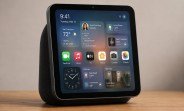
Apple’s much-rumored smart speaker with a display—often dubbed the HomePad, though also called the Home Hub—is reportedly on track for a launch later this year. The latest macOS 26.7 beta has essentially confirmed the device’s existence (though not its official name), and a deeper dive into the code reveals that while the HomePad will run a variant of tvOS, its user experience will feel more like a giant Apple Watch.
According to code analysis, the HomePad’s home screen will feature “Faces” and a “Face Gallery,” drawing a direct parallel to Apple Watch watch faces. This suggests that users will be able to customize the device’s interface with different clock styles, widgets, and complications—just like they do on their wrist. But instead of a small square screen, these faces will be displayed on a larger panel designed to sit in a kitchen, living room, or bedside table.
What the macOS Code Reveals
The discovery was made by developers who dissected the beta version of macOS 26.7, which contains references to a new device category. The code mentions a “HomePad” identifier, though Apple has not yet confirmed the name. More intriguingly, the code includes strings related to “Face Gallery” and “Faces,” which are terms currently used exclusively in watchOS for managing watch faces.
This crossover is a strong indicator that Apple intends to bring the customization philosophy of the Apple Watch to a larger, stationary device. Users could likely swipe between different faces, each showing different information like weather, calendar events, smart home controls, or even a photo slideshow. The code also suggests that the HomePad will support multiple user profiles, potentially switching faces based on who is nearby.
tvOS Foundation with a Twist
While the HomePad will be built on tvOS—the operating system that powers Apple TV—it will be heavily modified. The code indicates that the interface is not a simple port of tvOS’s grid-based app layout. Instead, it will feature a more glanceable, always-on display, similar to the Apple Watch’s always-on mode. This means that even when idle, the HomePad will show useful information at a glance, rather than going into a full-screen screensaver.
Developers also found references to a “Siri” interaction model that is more conversational, likely optimized for hands-free use across a room. This aligns with earlier rumors that the HomePad will be a central hub for Apple’s smart home ecosystem, allowing users to control lights, thermostats, and cameras with voice commands or through a touchscreen interface.
Design and Hardware Expectations
Based on the code and previous leaks, the HomePad is expected to feature a square or rectangular display with thick bezels, possibly with a camera for video calls. The device may come in two sizes, similar to the Apple Watch’s 41mm and 45mm options, though the exact dimensions are unknown. The code mentions support for a “stand” accessory, suggesting that the HomePad could be mounted on a wall or placed on a desk.
Under the hood, the HomePad is likely to use Apple’s S-series chip, which is currently used in the Apple Watch, rather than the A-series chips found in iPads. This would be a cost-effective choice and would enable the watch-like features. The device is also expected to include a speaker system, possibly with multiple drivers for better audio quality, making it a true smart speaker with a screen.
Software Features and Customization
The “Face Gallery” will likely be a curated collection of designs that users can browse and select. These faces could include traditional analog and digital clocks, as well as more interactive ones that show live data. For example, a “Smart Home” face might display the status of all connected devices, while a “Calendar” face could show upcoming appointments. The code also hints at third-party support, meaning developers could eventually create custom faces, just as they do for the Apple Watch.
Another interesting find is a “Companion” mode, which would allow the HomePad to sync with an iPhone or Apple Watch. This could enable features like handing off a phone call from the watch to the HomePad, or using the HomePad as a remote viewfinder for the iPhone’s camera. The code also mentions “Focus” modes, which would let users set different faces for different times of day, such as a relaxing face for bedtime.
Comparison to Existing Products
The HomePad sits in a unique position in Apple’s lineup. It is not a full-fledged tablet like the iPad, nor is it just a speaker like the HomePod. Instead, it aims to fill the gap between the two, offering a dedicated home control center. Compared to the Amazon Echo Show or Google Nest Hub, the HomePad will likely emphasize privacy and integration with Apple’s ecosystem, with on-device processing for Siri requests and HomeKit secure video.
One key difference is the watch-like interface. While competitors offer simple widget-based dashboards, Apple’s approach could be more fluid and personal, with the ability to change faces on a whim. This could be a major selling point for users who already own an Apple Watch and appreciate the customization.
Release Date and Availability
According to the code, the HomePad is expected to launch in the fall, likely alongside the iPhone 17 series. Apple typically releases new hardware in September or October, and the timing would align with the release of macOS 26.7 and the next major software updates. However, the code does not specify a price, but analysts predict it could range from $199 to $299, depending on the size and features.
It’s also possible that Apple will announce the HomePad at its Worldwide Developers Conference (WWDC) in June, with a release later in the year. The code references are from a beta version of macOS, which is usually released before WWDC, so a formal announcement could be imminent.
What This Means for the Smart Home Market
Apple has been slowly building its smart home presence with HomeKit and the Home app, but the HomePad could be the catalyst that makes Apple a major player in this space. By offering a dedicated device with a screen, Apple can showcase the benefits of its ecosystem in a way that a phone or watch cannot. The HomePad could also serve as a central hub for Thread and Matter, the new smart home standards, making it more interoperable with non-Apple devices.
For consumers, the HomePad could simplify daily routines. Imagine waking up and seeing the weather, your calendar, and the news on a screen that’s always visible. Or asking Siri to play a recipe while you cook, and having it show step-by-step instructions. The possibilities are vast, and the watch-like faces could make the experience more delightful than a standard smart display.
Potential Challenges and Concerns
Despite the excitement, there are some challenges. The HomePad’s reliance on tvOS might limit its app compatibility, as tvOS apps are designed for TV screens, not touchscreens. Apple may need to encourage developers to create new versions of their apps for the HomePad, which could take time. Additionally, the device’s price point might be higher than some competitors, which could deter budget-conscious buyers.
Another concern is privacy. While Apple has a strong track record, the HomePad will likely have a camera and microphone, which could be a target for hackers. Apple will need to ensure that all data is processed on-device and that users have clear controls over when the camera and mic are active. The code suggests that there will be a physical switch to disable the camera, similar to the MacBook’s privacy shutter.
Final Thoughts
The macOS 26.7 beta has given us the clearest picture yet of Apple’s upcoming HomePad. With its watch-like faces, tvOS foundation, and deep integration with the Apple ecosystem, it promises to be a unique addition to the smart home market. While there are still many unknowns, the code suggests that Apple is serious about making this device a central part of its strategy. As we await an official announcement, the HomePad is shaping up to be one of the most anticipated Apple products of the year.