The race to zero bezels has simmered down in recent years, with many brands settling for tiny chin bars and slightly thicker edges. But Tecno has decided to reignite that fiery competition with its latest concept device, a phone that promises truly invisible borders. We managed to get some hands-on time with it here at IFA Berlin 2026, and our first impressions are a mix of awe and curiosity.
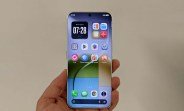
At first glance, the effect is striking. The screen seems to bleed right off the edges, with no visible black lines or borders interrupting the flow of the display. It’s the kind of immersive visual that makes you forget you’re holding a physical object. Yet, as soon as you pick it up, you notice something unusual: the metal frame around the device feels noticeably wider and more pronounced than what you’d find on a typical flagship. So, did Tecno just hide the bezels under the frame? The short answer is yes, but the full story is far more intricate.
A Closer Look at the Design
Tecno’s approach isn’t just about shrinking the bezels to near zero—it’s about rethinking how the display meets the body. The company has engineered a dual-layer cover glass system. The top layer is the actual display glass, which extends right to the edge. The bottom layer, however, wraps around the midframe, curling underneath to conceal all the necessary wiring and circuitry that would otherwise require a visible border.
This clever construction means that the black bezels aren’t eliminated—they’re simply tucked away out of sight. When you look at the phone from the front, you see pure screen. But when you run your finger along the edge, you can feel the slight ridge where the glass curves and meets the metal. It’s a tactile reminder that physics still has a say in the matter.
The Frame: Wider Than You’d Expect
Because the bottom glass layer needs space to wrap around, the metal frame has been beefed up. In our hands, the phone felt a bit chunkier than the sleek, wafer-thin devices we’re used to. The extra width is subtle—maybe a millimeter or two on each side—but it’s noticeable when you grip the phone. It’s not uncomfortable, but it does change the ergonomics slightly. You might find yourself adjusting your hold to accommodate the thicker edges.
This design choice is a trade-off. You get an uninterrupted visual canvas, but you sacrifice a bit of that slim, barely-there feel that many modern phones strive for. For some, the immersive display will be worth it. For others, the added bulk might be a dealbreaker.
Display Quality and Under-Display Tech
Beyond the bezel trickery, the display itself is a stunner. Tecno has equipped this concept with a vibrant OLED panel that supports a high refresh rate—likely 120Hz or even 144Hz—and the colors are punchy without being oversaturated. Brightness levels seem adequate for outdoor use, though we couldn’t test it under direct sunlight in the convention hall.
One of the biggest challenges with bezel-less designs is where to put the front-facing camera. Tecno has opted for an under-display camera solution, and it’s surprisingly effective. When the camera is not in use, it’s virtually invisible. You have to look very closely to see a faint circular outline in the right lighting. In our brief testing, the selfie quality was acceptable—not flagship-level, but certainly better than earlier under-display attempts from other brands.
Audio and Haptics: The Hidden Compromises
Another area that often suffers in bezel-less phones is audio. Without a chin or forehead, there’s no obvious place for an earpiece speaker. Tecno has integrated a piezoelectric speaker that vibrates the glass to produce sound. It works, but the audio quality is a bit tinny and lacks the richness of a traditional speaker. If you’re a heavy phone-call user, you might notice the difference.
Haptics, on the other hand, are surprisingly solid. The vibration motor is tucked into the lower frame, and it delivers crisp, precise feedback. Typing on the edge-to-edge keyboard feels satisfying, with each tap producing a subtle click.
Software and Real-World Usability
Running on a modified version of Android, the concept phone’s software has been adapted to handle the edge-to-edge display. Gestures are fluid, and the system does a good job of preventing accidental touches along the sides. There’s a software-based palm rejection that seems to work well, though we only had a few minutes to test it.
One interesting software touch is the way notifications and status icons are displayed. They can be tucked into the very corners of the screen, making full use of the available real estate. However, this means that sometimes the icons overlap with app content, which can be a bit distracting. Tecno is aware of this and is working on dynamic scaling to mitigate it, but it’s still a work in progress.
Battery and Charging: No News Here
We didn’t get to stress-test the battery, but the phone houses a typical capacity for a concept—around 4,500mAh. Charging speeds are also standard, with support for 45W wired charging and 20W wireless. Nothing groundbreaking, but it’s not a focus for a concept device.
Why Bezel-Less? The Bigger Picture
You might wonder: why go through all this trouble? The bezel has been shrinking for years, but we’ve reached a point of diminishing returns. The visual impact of a truly bezel-less phone is undeniable—it feels like you’re holding a slab of pure light. But the engineering compromises are significant.
Tecno’s concept is more than just a marketing stunt. It’s a statement that they are willing to push boundaries and explore unconventional solutions. Even if this exact design never makes it to mass production, the lessons learned could influence future devices, possibly leading to more refined versions with slimmer frames and better under-display camera technology.
The Competition and Market Readiness
Other brands like Xiaomi and Samsung have dabbled with bezel-less concepts, but none have managed to bring a production model to market. Tecno’s concept feels more polished than some of the early prototypes we’ve seen, but it’s still clearly a concept. The wider frame and the slight audio compromise are reminders that we’re not quite there yet.
Will we see a commercial version? Tecno isn’t saying, but they did hint that the technology is scalable and could be adapted for a future flagship. For now, this hands-on gives us a glimpse of what’s possible, and it’s an exciting prospect.
Final Thoughts and Early Verdict
After spending time with Tecno’s bezel-less concept, we’re left with a sense of wonder and a few reservations. The display is breathtaking, and the engineering is clever. But the added bulk and the slightly compromised audio make it a mixed bag.
That said, this is a concept phone, meant to showcase ideas rather than be a daily driver. As a piece of technology, it’s a triumph. As a potential product, it still needs some refinement. We’ll be watching closely to see if Tecno can turn this vision into a reality that fits comfortably in your pocket and your hand.