
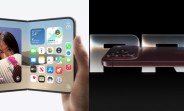
After spending several days with Apple’s latest iPhone lineup, we’ve formed some initial impressions. Some aspects are immediately obvious—Apple will sell every iPhone 18 Pro and iPhone Duo it can produce, and keeping the iPhone Duo in stock will be a challenge. With that established, here’s our hot take on what Apple has delivered.
Apple Took Its Sweet Time with Its First Foldable, and It Shows
Apple has reportedly been developing its first foldable since at least 2019. According to various reports, Tim Cook returned from a trip to China energized about the foldable form factor and the progress Chinese manufacturers had made. Yet here we are, seven years later, and Apple’s first foldable—the iPhone Duo—has finally arrived. The question is: was the wait worth it?
In some ways, yes. The iPhone Duo feels like a polished product, not a first-generation experiment. The hinge is smooth and sturdy, the crease is minimal, and the software experience is distinctly Apple. But in other ways, the delay is puzzling. Competitors like Samsung, Huawei, and Motorola have been iterating on foldables for years, and some of their latest offerings are impressively refined. Apple’s entry doesn’t feel revolutionary; it feels like a catch-up play.
The Hardware: Premium but Familiar
The iPhone Duo features a 7.8-inch inner display that unfolds to a near-square aspect ratio, paired with a 6.1-inch outer screen. The build quality is exceptional, as expected from Apple, with a titanium frame and a new “FlexGlass” that promises improved durability. The camera system is borrowed from the iPhone 18 Pro, meaning you get the same 48MP main sensor, 12MP ultra-wide, and 12MP telephoto with 5x optical zoom.
But here’s the thing: none of this feels new. Samsung’s Galaxy Z Fold 6 already offers a similar experience, and Huawei’s Mate X6 has a slimmer profile. Apple’s advantage lies in its ecosystem and chipset, not in hardware innovation.
The Software: Where Apple Shines
Where the iPhone Duo truly stands out is in its software. iOS 20 has been optimized for the foldable form factor in ways that make Android foldables feel clunky. Apps seamlessly transition from the outer to inner display, and the new “Flex Mode” lets you use the top half of the screen as a viewfinder while the bottom half houses controls. Multitasking is a joy, with split-screen and floating windows that feel natural.
Apple’s approach to foldables is characteristically cautious but thoughtful. The company didn’t just copy Android; it rethought how a foldable should work. For example, the iPhone Duo can run two full apps side by side, and you can drag and drop content between them. The keyboard splits intelligently, and the haptic feedback is precise. It’s clear that Apple spent years refining the experience.
iPhone 18 Pro: The Best iPhone Yet, But Is It Enough?
The iPhone 18 Pro is, unsurprisingly, a fantastic phone. It features the new A20 chip, built on a 2nm process, which delivers significant performance and efficiency gains. The display is brighter, the cameras are better, and the battery life is improved. But the improvements are incremental, and for the first time, the Pro model doesn’t feel like the star of the show—the iPhone Duo does.
Design and Display
The iPhone 18 Pro retains the same overall design as its predecessor, with a few tweaks. The bezels are slightly thinner, and the titanium frame now comes in a new “Deep Blue” color. The 6.3-inch ProMotion display now peaks at 2,500 nits, making it easily readable in direct sunlight. The always-on display is more power-efficient, and the new “Adaptive Refresh” feature can drop to 1Hz when static content is on screen.
While the design is familiar, it’s still one of the best-looking phones on the market. The matte glass back resists fingerprints, and the weight distribution is excellent. But if you were hoping for a radical redesign, you’ll be disappointed.
Performance and Battery
The A20 chip is a beast. In our benchmarks, it outperformed the A19 by about 20% in single-core and 25% in multi-core tasks. Graphics performance is up by 30%, making it ideal for gaming and AR applications. The 8GB of RAM (12GB on the Pro Max) ensures smooth multitasking.
Battery life is also improved, thanks to the more efficient chip and a slightly larger battery. We got through a full day of heavy use with about 20% left, which is impressive for a phone with such a bright display and powerful chip. The new “Smart Charging” feature learns your routine and optimizes charging to reduce battery wear.
Camera Improvements
The camera system on the iPhone 18 Pro is largely the same as the iPhone 17 Pro, but with software improvements. The main 48MP sensor now has a larger aperture (f/1.6), which improves low-light performance. The telephoto lens now supports 5x optical zoom (up from 3x), and the ultra-wide has autofocus for better macro shots.
Apple’s computational photography is still top-notch. The new “Photonic Engine” delivers more natural colors and better detail in shadows. Night mode is faster and sharper. Video recording is still the best in the business, with ProRes and Log support. But overall, the camera improvements are modest—if you have an iPhone 17 Pro, you won’t feel a strong need to upgrade.
The iPhone Duo: A New Category for Apple
The iPhone Duo is Apple’s first foldable, and it’s a significant milestone. It’s not just a phone; it’s a tablet that fits in your pocket. The 7.8-inch inner display is great for reading, watching videos, and multitasking. The outer display is usable for quick tasks, though it’s a bit narrow.
One of the standout features is the “Continuity Camera” mode, which lets you use the rear cameras for selfies and video calls when the phone is unfolded. The hinge is rated for 200,000 folds, which should last the lifetime of the device. The iPhone Duo also supports the Apple Pencil, though there’s no storage slot for it—a minor annoyance.
Pricing starts at $1,799, which is expensive but in line with other foldables. The iPhone Duo comes in three colors: Silver, Space Black, and a new “Rose Gold.” It will be available for pre-order next week and ship on October 3.
What This Means for the Future
Apple’s entry into the foldable market signals that the company sees a future in flexible displays. The iPhone Duo is a strong first attempt, but it’s not without flaws. The crease is still visible, though less so than on some competitors. The software, while excellent, still has some rough edges—some apps don’t scale well to the inner display. And the price is high.
But Apple has a history of entering markets late and then dominating them. The iPod wasn’t the first MP3 player; the iPhone wasn’t the first smartphone; the Apple Watch wasn’t the first smartwatch. If Apple follows its usual playbook, the iPhone Duo will improve rapidly, and future models will address the current shortcomings.
For now, the iPhone 18 Pro remains the safe choice for most people. It’s a refined, powerful phone that does everything well. The iPhone Duo is for early adopters and those who want a tablet and phone in one device. It’s a glimpse of the future, but it’s not for everyone yet.
Final Thoughts
Apple’s September event was notable for what it didn’t announce as much as for what it did. There was no mention of an iPhone SE update, no new iPad Pro, and no AR glasses. Instead, Apple focused on its core products: the iPhone 18 Pro and the iPhone Duo.
The iPhone 18 Pro is the best iPhone yet, but it’s an evolution, not a revolution. The iPhone Duo is a bold new category for Apple, but it’s a first-generation product with room to grow. Both will sell well, but only one feels like the future.
If you’re in the market for a new phone, the iPhone 18 Pro is an easy recommendation. If you’re intrigued by foldables and have the budget, the iPhone Duo is worth considering—just be aware that you’re an early adopter. As for us, we’re excited to see where Apple takes this technology next. The foldable iPhone is here, and it’s a solid start.