
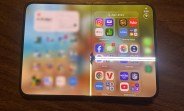
Early adopters of Apple’s first foldable smartphone are taking to social media and online forums to report a troubling pattern: vertical and horizontal lines appearing on the inner display, seemingly triggered by a hinge malfunction. The reports, which have surfaced on platforms like Reddit, describe a consistent sequence of events that begins with unusual stiffness in the hinge and ends with permanent display damage. For a device that starts at a premium price point, the issue is raising concerns about long-term durability and quality control.
A Consistent Set of Symptoms
According to multiple user accounts, the problem unfolds in a predictable way. At some point after purchase—sometimes within days, sometimes weeks—the hinge begins to feel unusually stiff. Opening the phone requires noticeably more effort than before. When the user pushes past the resistance, a distinct popping or cracking sound emanates from the hinge area. Immediately afterward, a permanent vertical and horizontal line appears on the inner display, forming a cross pattern that does not disappear after restarting the device or resetting the software.
The uniformity of these reports is striking. Users have shared photos and videos showing the same cross-shaped lines in roughly the same location on the screen. The damage appears to originate near the crease, where the display folds, suggesting that the hinge is applying uneven pressure or that a component inside the hinge is failing and pressing against the panel.
What Users Are Saying
One Reddit user, posting under the handle scary_duck23, described the experience as “heartbreaking” after only two weeks of careful use. “I opened it one morning and felt resistance, then heard a pop,” the user wrote. “Now there are two lines crossing right in the middle of the screen. Apple Support says it’s physical damage and wants to charge for a repair.” Other commenters in the same thread reported identical experiences, with some noting that the stiffness developed gradually before the final failure.
Another user compared the sound to “a tiny firecracker going off inside the phone.” Several noted that the lines appeared instantly and were accompanied by a small black spot at the intersection, which gradually expanded over time. This progression is consistent with internal display damage rather than a software glitch.
The Hinge Under Scrutiny
The iPhone Duo’s hinge is one of its most complex mechanical components. Apple designed a custom dual-axis mechanism that allows the phone to fold flat and hold at multiple angles. The hinge contains dozens of small parts, including gears, cams, and springs, all of which must work in precise coordination. If any of these components fail—whether due to a manufacturing defect, material fatigue, or debris ingress—the resulting imbalance can put stress on the flexible display.
Engineers who have examined similar foldable designs point out that a stiff hinge is often a warning sign. When the resistance increases, it means that the internal mechanism is no longer moving smoothly. Forcing the phone open can cause a cam or gear to slip out of alignment, and the sudden release of tension can create a shock wave that travels through the display stack. The popping sound users describe is likely the sound of a component snapping into a wrong position or a small piece of plastic breaking off.
Potential Root Causes
While Apple has not issued an official statement, several theories have emerged from teardown experts and repair technicians. One possibility is that a batch of hinges was manufactured with insufficient lubrication or with a misaligned part, leading to premature wear. Another is that the hinge’s torque settings were calibrated too tightly at the factory, causing excess stress on the display when opened. A third theory involves the accumulation of dust or lint inside the hinge, which can jam the mechanism and lead to the same stiffness and popping.
Notably, the reports so far seem to cluster around early production units. This has led some to speculate that Apple may have already adjusted the manufacturing process for later batches, though this remains unconfirmed. Users who purchased their devices in the first few weeks after launch appear to be overrepresented in the reports.
Apple’s Response So Far
Apple has not publicly acknowledged the issue, and the company’s support channels have reportedly been handling cases on an individual basis. Some users report being told that the damage is “accidental” or “physical” and therefore not covered under the standard warranty. Others have been offered free repairs after escalating the issue to senior support advisors. The inconsistency has frustrated early buyers, who argue that a defect present from the factory should be covered regardless of the cause.
When contacted for comment, Apple representatives referred to the company’s standard warranty terms, which cover manufacturing defects but exclude damage caused by misuse or accidents. However, consumer protection laws in some regions, such as the European Union and Australia, provide broader protections for products that fail to meet durability expectations. Users in those regions may have stronger grounds for a free repair or replacement.
What Buyers Should Do
If you own an iPhone Duo and notice any change in hinge stiffness, it is advisable to stop opening and closing the device forcefully. Instead, document the issue with photos and videos, and contact Apple Support immediately. Mention that the problem developed gradually and that you have not dropped or mishandled the phone. If the first representative declines a warranty repair, ask to escalate the case to a senior advisor. In some cases, users have had success by pointing to the growing number of similar reports online.
For those who have already experienced the display lines, a repair typically involves replacing the entire inner display assembly, which is one of the most expensive components in the phone. Out-of-warranty costs could be substantial, so pursuing a warranty claim is important. Some users have also reported success with third-party repair shops that specialize in foldable devices, though this may void any remaining warranty.
Broader Implications for Foldable Reliability
The iPhone Duo is Apple’s first foray into the foldable market, and the company has positioned it as a premium device with a focus on durability. The hinge and display are the two most critical failure points in any foldable, and early issues can damage consumer confidence. Apple’s competitors have faced similar challenges: Samsung’s original Galaxy Fold had a notorious display failure in 2019, and other brands have dealt with hinge-related problems over the years. However, those companies generally responded with public explanations and extended warranties for affected units.
How Apple handles this situation will likely influence how the market perceives the iPhone Duo’s long-term reliability. A proactive response—such as a free repair program or a design revision—could mitigate the damage. A silent or inconsistent approach, on the other hand, could leave early adopters feeling abandoned and deter potential buyers from investing in future foldable models.
What Comes Next
It is still early days, and the number of reported cases remains a small fraction of total sales. But the pattern is clear enough that prospective buyers should be aware. If you are considering an iPhone Duo, it may be wise to purchase AppleCare+ or an equivalent protection plan, and to inspect the hinge carefully during the return period. For current owners, keeping an eye on hinge stiffness and acting quickly at the first sign of resistance could save you from a costly repair.
Apple has a history of addressing hardware issues quietly through service programs, and it is possible that a similar program will be introduced if the reports continue to grow. For now, early iPhone Duo buyers are left to navigate the situation on their own, hoping that their expensive foldable does not become the next victim of a faulty hinge.