
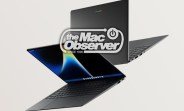
Google’s new premium notebook lineup, dubbed Googlebook, is set to kick off pre-orders on September 21. However, we haven’t heard anything official from Google’s hardware partners yet. That’s why the latest renders of the Asus Googlebook, obtained by The Mac Observer, give us a really good look at what to expect in just a few days. These images reveal a device that blends familiar design cues with some distinctive new elements, hinting at a cohesive strategy across the entire Googlebook series.
A Familiar Yet Distinctive Design
The Asus Googlebook comes in a very familiar form factor, reminiscent of premium ultrabooks we’ve seen before. But it’s not just another clone. Two key design traits stand out: a unique “G” key on the keyboard and an RGB light bar on the lid. From what we’ve seen so far, these two features will be present across all Googlebooks, giving the lineup a unified identity. The “G” key likely serves as a shortcut to Google services or perhaps a dedicated assistant button, while the RGB light bar adds a touch of modern flair that could appeal to gamers and creatives alike.
What the Renders Show
The renders depict a slim, metallic chassis with thin bezels around the display. The keyboard appears to have a standard layout, except for the “G” key replacing what would typically be the Windows or Chrome OS launcher key. The RGB light bar runs along the front edge of the lid, possibly customizable via software. Port selection seems adequate, with USB-C ports on both sides and what looks like a headphone jack. Overall, the design language is understated but premium, suggesting Asus is aiming for the higher end of the market.
Googlebook Lineup: What We Know So Far
Google’s foray into branded notebooks isn’t entirely new, but the Googlebook line represents a more coordinated effort. Unlike the Chromebooks of the past, which were primarily budget-friendly devices, Googlebooks seem poised to compete with high-end Windows laptops and MacBooks. The pre-order date of September 21 suggests an official announcement is imminent, possibly at a dedicated event or via a press release. We expect to see models from multiple manufacturers, but Asus is the first to leak.
Potential Specifications
While exact specs remain under wraps, industry insiders speculate that Googlebooks will run on the latest Intel or AMD processors, coupled with ample RAM and SSD storage. Given the premium positioning, we might see 16GB or even 32GB of RAM in top-tier configurations. Displays could range from Full HD to 4K, with touch and stylus support likely on some models. Battery life is another area where Google will need to impress, as competitors like the MacBook Air set a high bar. Connectivity options will probably include Wi-Fi 6E and Bluetooth 5.2, with optional LTE or 5G on select variants.
Software and Ecosystem
The big question is what operating system these devices will run. Early rumors suggested a new version of Chrome OS with deeper Android integration, but there’s also talk of a full-fledged Linux-based OS. Either way, expect tight integration with Google’s ecosystem—think seamless syncing with Android phones, Google Drive, and Google Assistant. The “G” key might launch the Assistant or a new productivity hub. Google could also introduce exclusive features like advanced stylus support or a redesigned launcher. For now, we can only speculate, but the renders give us hope that the software will match the premium hardware.
Design Details: The “G” Key and RGB Light Bar
The “G” key is more than just a branding exercise; it’s a functional element that could redefine how users interact with their devices. Imagine pressing it to instantly access Google Search, Assistant, or even a custom dashboard. It’s a bold move that differentiates Googlebooks from traditional laptops. The RGB light bar, on the other hand, adds a visual punch. It could be used for notifications, battery status, or simply aesthetic customization. Asus has used similar light bars on its ROG gaming laptops, so they have experience in this area. If executed well, these features could become signature elements of the Googlebook brand.
Build Quality and Materials
Based on the renders, the Asus Googlebook appears to have an aluminum or magnesium alloy chassis, which would give it a premium feel and durability. The hinge looks sturdy, allowing for 180-degree opening, which is common on modern ultrabooks. The keyboard keys seem well-spaced, with a decent travel distance for comfortable typing. The trackpad is large and centered, likely supporting multi-touch gestures. Overall, the build quality seems on par with other high-end laptops, which is crucial for Google to establish credibility in this space.
Competition and Market Positioning
Googlebooks will enter a crowded market. They’ll go head-to-head with Apple’s MacBook Air and MacBook Pro, Dell’s XPS series, HP’s Spectre lineup, and Lenovo’s Yoga models. To stand out, Google and its partners will need to offer competitive pricing, innovative features, and a compelling ecosystem. The “G” key and RGB light bar are a start, but they alone won’t sell devices. Performance, battery life, and software experience will be equally important. Google’s advantage lies in its software and services, which could provide a more integrated experience than Windows or macOS for users already invested in Google’s ecosystem.
Pricing Predictions
Given the premium branding, expect Googlebooks to start around $999 for base models and go up to $1,500 or more for high-end configurations. That would put them in direct competition with similarly specced Windows laptops and the MacBook Air. However, Google might subsidize some models to gain market share, especially if they push a subscription-based model for services. We’ll have to wait for the official announcement to know for sure.
What to Expect at Launch
With pre-orders starting September 21, an official launch is likely just around the corner. We can expect a press release or a virtual event where Google and its partners detail the full lineup, specs, and pricing. Asus will probably be one of several manufacturers, with others like Samsung, Lenovo, and HP also rumored to be working on Googlebooks. The initial wave might include a few models, with more to follow later in the year. Keep an eye out for announcements from Google’s hardware partners in the coming weeks.
Availability and Regions
Initially, Googlebooks will likely launch in the US, Canada, and select European countries. Other regions may follow in early 2027. Asus, being a global brand, will probably have its Googlebook available in most major markets. Pre-orders will likely be handled through Google’s online store and major retailers like Amazon, Best Buy, and Newegg. Carrier partnerships for LTE/5G models could also be in the cards.
Our First Impressions
Based on the renders, the Asus Googlebook looks like a promising addition to the premium laptop segment. The design is sleek, the “G” key is a clever touch, and the RGB light bar adds personality. If the performance and battery life live up to the hype, Google could have a winner on its hands. However, the company needs to ensure that the software experience is polished and that the ecosystem benefits are clear to consumers. We’re excited to see the full reveal on September 21.
Potential Pitfalls
One concern is that the “G” key might be seen as a gimmick if not properly integrated. Similarly, the RGB light bar could be dismissed as a frivolous feature if it doesn’t serve a practical purpose. Google and Asus need to demonstrate real value. Another challenge is pricing—if Googlebooks are too expensive, they’ll struggle against established competitors. Finally, software fragmentation could be an issue if different manufacturers run different versions of the OS. Google will need to enforce consistency across the lineup.
Conclusion
The Asus Googlebook renders give us a tantalizing glimpse of what’s to come. With pre-orders starting September 21, we won’t have to wait long for official details. The distinctive “G” key and RGB light bar suggest that Google is serious about making a mark in the premium laptop market. If the hardware and software deliver, Googlebooks could become a compelling alternative to traditional laptops. Stay tuned for more updates as we approach the launch date.