
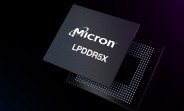
Just weeks after reports surfaced that Samsung’s upcoming Galaxy S27 series would break new ground with next-generation LPDDR6 memory, a fresh rumor from Korean outlet The Bell suggests the company might instead play it safe. According to industry insiders, Samsung is currently conducting quality tests using Micron’s new LPDDR5X memory, built on the 1y process node. That process is roughly equivalent to the 1c DRAM manufacturing technology that both Samsung and SK Hynix are developing for their most advanced chips. If true, this would mean the Galaxy S27 could arrive with memory that’s a step behind what many had anticipated, raising questions about performance, pricing, and Samsung’s broader supply chain strategy.
The LPDDR6 Dream vs. LPDDR5X Reality
When whispers of LPDDR6 first emerged, they painted an exciting picture. The new memory standard promises significantly higher bandwidth, lower power consumption, and improved efficiency—all crucial for future flagship smartphones. Pairing that with Qualcomm’s Snapdragon 8 Elite Extreme Gen 6 (the likely chipset for the Galaxy S27) would have created a powerhouse device, especially for AI-heavy tasks and high-refresh-rate gaming. But the latest report from The Bell throws cold water on that narrative. Instead of pushing the envelope, Samsung appears to be evaluating Micron’s LPDDR5X solution, which, while still fast, is already a generation old compared to LPDDR6.
Why would Samsung consider such a move? The answer likely comes down to cost and supply chain pragmatism. Micron’s LPDDR5X based on the 1y process is a mature, reliable product. It’s already in mass production and has been used in several flagship phones from other brands. Samsung’s own Device Solutions (DS) division, which manufactures DRAM chips, also produces LPDDR5X, but internal politics and pricing dynamics may be pushing the mobile division toward external suppliers.
Micron’s Aggressive Pricing and the RAM Cost Crisis
Here’s where things get interesting. According to the report, Micron is asking for a price that’s roughly 50% higher than what Samsung’s DS arm charges for comparable DRAM chips. On the surface, that sounds like a terrible deal. Why would Samsung’s mobile experience (MX) division pay a premium for Micron’s memory when its own sibling company can supply it for less? The answer lies in the complex world of internal transfer pricing, capacity allocation, and the broader memory market.
RAM prices have been climbing steadily over the past year. The AI boom has created insatiable demand for high-bandwidth memory (HBM) and advanced DRAM, squeezing supply for consumer devices. Samsung’s DS division, focused on maximizing profits from AI-related chips, may not be offering the most competitive rates to its own mobile division. In fact, internal customers often pay market rates or even a premium, especially when the semiconductor arm has more lucrative options elsewhere. Micron, hungry for design wins in flagship smartphones, might be willing to offer better terms—or at least terms that are competitive after factoring in reliability and performance.
But a 50% premium is still steep. That suggests either Micron’s LPDDR5X has unique advantages (like better power efficiency or higher yields) or Samsung is desperate to secure enough memory supply for its next flagship. The latter seems plausible given the ongoing memory shortage and the fact that LPDDR6 production is still ramping up. Early LPDDR6 chips are likely expensive and in limited supply, making LPDDR5X a safer bet for a mass-market flagship like the Galaxy S27.
What This Means for Galaxy S27 Performance
If Samsung does stick with LPDDR5X for the Galaxy S27, what does that mean for users? First, it’s important to note that LPDDR5X is no slouch. It offers data transfer rates up to 8.5 Gbps per pin, which is already faster than the LPDDR5 used in many 2023 flagships. Combined with the Snapdragon 8 Elite Extreme Gen 6, the Galaxy S27 would still deliver blazing-fast performance for everyday tasks, gaming, and AI processing. The difference between LPDDR5X and LPDDR6 would be most noticeable in extreme scenarios—like running large language models on-device or handling 8K video editing—where bandwidth becomes a bottleneck.
However, the bigger concern is longevity. Smartphones are increasingly being positioned as long-term investments, with Samsung promising up to seven years of software updates for its flagship devices. Using LPDDR5X instead of LPDDR6 could mean the Galaxy S27 is less future-proof. As apps and AI models become more demanding, the memory subsystem could become a limiting factor sooner than expected. Competitors like Apple and Google might leapfrog Samsung by adopting LPDDR6 in their 2026 or 2027 devices, putting the Galaxy S27 at a disadvantage in benchmarks and real-world AI tasks.
On the other hand, sticking with LPDDR5X could help Samsung keep costs down. The company has been under pressure to maintain profit margins while delivering competitive flagship phones. If LPDDR6 is too expensive, using LPDDR5X might allow Samsung to invest more in other areas—like camera improvements, display technology, or battery life—that consumers actually notice. It’s a classic trade-off between cutting-edge specs and practical value.
The Role of Samsung’s Device Solutions Division
To understand this rumor fully, you have to look at Samsung’s internal dynamics. The company is unique among smartphone makers in that it produces its own memory, displays, and processors. In theory, this vertical integration should give Samsung’s mobile division a cost advantage. In practice, it often creates tension. The DS division is a profit center that sells to external customers like Apple, Nvidia, and AMD. When the mobile division needs memory, it has to compete for allocation and negotiate internal prices.
Historically, Samsung’s MX division has sometimes sourced memory from outside suppliers to get better pricing or to ensure supply. For example, early Galaxy S models used memory from Micron and SK Hynix alongside Samsung’s own chips. The same could be happening with the Galaxy S27. If Samsung’s DS division is prioritizing HBM and DDR5 for AI servers, it may not have enough LPDDR5X capacity for the mobile division. Micron, with its 1y process, could fill that gap—even at a higher price.
There’s also the question of technology. Micron’s 1y process is a proven node that delivers excellent power efficiency. Samsung’s equivalent 1c process is newer and might still be ramping up yields. For a flagship phone that needs to ship in tens of millions of units, reliability matters as much as raw speed. Micron’s LPDDR5X could be the safer choice, even if it costs more per chip.
What About LPDDR6? Is It Delayed?
The rumor doesn’t necessarily mean LPDDR6 is off the table entirely. It’s possible that Samsung is testing both LPDDR5X and LPDDR6 for different configurations of the Galaxy S27. For instance, the base model might use LPDDR5X to keep costs down, while the Ultra model could feature LPDDR6. Or Samsung might reserve LPDDR6 for the Galaxy S27 Ultra and use LPDDR5X for the standard and Plus variants. This segmentation strategy is common in the smartphone industry—just look at how Apple differentiates Pro and non-Pro iPhones with memory and display technology.
Another possibility is that LPDDR6 production is simply not ready for prime time. The JEDEC standard for LPDDR6 was only finalized in late 2024, and mass production is expected to begin in earnest in 2025. Samsung’s Galaxy S27 is likely slated for early 2026, which is right on the cusp. If yields are low or costs are high, Samsung might opt for LPDDR5X as a stopgap, saving LPDDR6 for the Galaxy S28 or a mid-cycle refresh.
It’s also worth noting that Qualcomm’s Snapdragon 8 Elite Extreme Gen 6 is designed to support both LPDDR5X and LPDDR6. So the chipset itself isn’t a barrier. The decision ultimately comes down to Samsung’s supply chain and pricing negotiations.
Competitive Landscape: What Are Others Doing?
Samsung isn’t the only company wrestling with memory choices. Apple’s iPhone 16 Pro and iPhone 17 Pro are expected to use LPDDR5X, while the iPhone 18 (likely in 2026) could adopt LPDDR6. Google’s Pixel 10 series might also stick with LPDDR5X. In other words, Samsung would be in good company if it delays LPDDR6 by a year. The difference is that Samsung often markets its devices as having the latest and greatest technology. Using LPDDR5X in the Galaxy S27 could be a PR challenge, especially if competitors like Xiaomi or OnePlus tout LPDDR6 in their flagships.
Chinese brands have been aggressive in adopting new memory standards. For example, several 2025 flagships from Vivo, Oppo, and Honor are rumored to feature LPDDR6. If Samsung’s Galaxy S27 launches with LPDDR5X, it could be seen as lagging behind—even if real-world performance differences are minimal. That perception matters in the premium smartphone market, where specs often drive purchasing decisions.
Should You Wait for the Galaxy S27?
If you’re in the market for a new Samsung flagship, the memory question is just one piece of the puzzle. The Galaxy S27 will likely bring improvements in other areas: a brighter display, a more advanced camera system, longer battery life, and new AI features powered by the Snapdragon 8 Elite Extreme Gen 6. Whether it uses LPDDR5X or LPDDR6, it will be a fast phone. The real question is whether you plan to keep it for five or more years. If so, LPDDR6 would offer better future-proofing. But if you upgrade every two years, the difference may be negligible.
It’s also worth remembering that rumors are just that—rumors. Samsung is still months away from finalizing the Galaxy S27’s specifications. The company could change course based on supply chain developments, pricing negotiations, or competitive pressure. The Bell’s report is credible, but it’s not an official confirmation. Samsung has a history of testing multiple memory configurations before settling on a final design.
The Bottom Line
Samsung’s potential decision to use Micron’s LPDDR5X memory in the Galaxy S27 instead of LPDDR6 highlights the complex trade-offs facing smartphone makers today. Rising RAM costs, limited next-gen supply, and internal corporate dynamics are all playing a role. While LPDDR5X would still deliver excellent performance, it would represent a conservative choice for a company that often prides itself on pushing boundaries. Whether this rumor pans out or not, it’s a reminder that even the most advanced flagship phones are products of compromise. As we get closer to the Galaxy S27’s launch, expect more leaks and speculation to emerge. For now, all eyes are on Samsung’s next move—and whether it will prioritize cutting-edge memory or practical cost management.