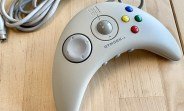
When Apple releases a product, it often sparks curiosity and sometimes even a little hype. But the tech giant has a history of surprising us with gadgets that range from the practical to the outright quirky—remember the iPod Socks? Yes, those were real. While those whimsical days may be behind us, Apple still has room for unexpected innovations. Recent findings suggest that Cupertino is quietly working on not one, but two distinct game controllers, according to code references discovered in the latest macOS 26.7 update.
This discovery has sent ripples through the tech community, hinting that Apple might be gearing up to take gaming more seriously. The code, found in the macOS Tahoe 26.7 release candidate, appears to contain multiple references to unannounced devices, including camera-equipped AirPods and, notably, two different game controller models. Let’s dive into what this could mean for Apple enthusiasts and gamers alike.
What the Code Reveals
The macOS 26.7 release candidate is more than just a routine update—it’s a treasure trove of clues about Apple’s future hardware plans. Developers and tech sleuths have been combing through the code, uncovering strings that point to devices that haven’t been officially announced. Among these are references to two separate game controllers, which have been codenamed internally. While the exact names are still under wraps, the existence of two distinct models suggests Apple is exploring different form factors or feature sets.
This isn’t the first time Apple has dabbled in gaming peripherals. The company has previously supported third-party controllers like the Xbox and PlayStation pads through its platforms. However, developing its own controllers would mark a significant shift, potentially integrating more deeply with Apple’s ecosystem.
Possible Features and Design
While specific details are scarce, we can speculate based on Apple’s design philosophy and the needs of modern gamers. One controller might be a standard gamepad, similar to the Xbox or PlayStation controllers, but with Apple’s signature minimalist aesthetic. The other could be a more innovative design, perhaps with motion controls or haptic feedback tailored to Apple’s devices.
Apple has been investing heavily in haptic technology, as seen with the Taptic Engine in iPhones and Apple Watches. Integrating such feedback into a game controller would provide a more immersive gaming experience. Additionally, with the rise of Apple Arcade and the increasing power of iPhones and iPads, a dedicated controller could elevate mobile gaming to new heights.
Why Two Controllers?
The decision to develop two controllers might seem puzzling at first, but it could be a strategic move to cater to different segments of the gaming market. One controller might be a premium, feature-rich option for hardcore gamers, while the other could be a more affordable, entry-level choice for casual players. This dual approach is common in the industry, as seen with Sony’s DualSense and DualShock lines or Microsoft’s various Xbox controller iterations.
Alternatively, the two controllers could serve different platforms. One might be designed for mobile devices like the iPhone and iPad, with a clip or wireless connectivity, while the other could be intended for Apple TV or even Mac. This would allow Apple to cover multiple gaming scenarios without compromising on design or functionality.
Integration with Apple’s Ecosystem
Apple’s strength lies in its seamless ecosystem, and any new hardware would likely be designed to integrate flawlessly with existing products. We can expect these controllers to work effortlessly across iOS, iPadOS, macOS, and tvOS. Features like automatic pairing, low-latency connectivity, and support for Siri or other voice commands could be included.
Moreover, Apple might leverage its Find My network to help users locate misplaced controllers, a feature that has become standard across its devices. Battery life would also be a key consideration, with possibly a rechargeable built-in battery and USB-C charging, aligning with Apple’s recent shift away from Lightning.
The Broader Context: Apple’s Gaming Ambitions
Apple has been slowly but steadily increasing its focus on gaming. The introduction of Apple Arcade in 2019 was a clear signal that the company wanted a slice of the gaming pie. More recently, Apple has been pushing its Metal graphics API and promoting AAA game titles on Mac and iPad. However, hardware has always been a missing piece in Apple’s gaming strategy.
Developing proprietary controllers could be the next logical step. It would allow Apple to optimize the gaming experience on its platforms, ensuring that games run smoothly and that controls feel intuitive. This move could also attract more game developers to bring their titles to Apple devices, knowing that there’s a reliable and high-quality input method available.
Competition and Market Impact
If Apple does release its own game controllers, it would directly compete with established players like Sony, Microsoft, and Nintendo. While these companies have years of experience in gaming hardware, Apple’s brand loyalty and ecosystem lock-in could give it an edge. Consumers who already own iPhones, iPads, and Macs might be more inclined to purchase an Apple controller rather than a third-party one, especially if it offers exclusive features or tighter integration.
However, Apple will need to price these controllers competitively. Third-party controllers for Apple devices are already available at various price points, and Apple’s offerings would need to justify their cost with superior build quality and features. If successful, this could shake up the gaming peripheral market and force competitors to innovate further.
What This Means for Developers
For game developers, Apple’s entry into the controller market could be a boon. Standardized input methods would simplify the development process, as they wouldn’t need to account for a wide range of third-party controllers with varying capabilities. This could lead to better-optimized games and potentially more titles being released on Apple platforms.
Apple might also provide developers with tools and APIs to take full advantage of the new controllers’ features, such as advanced haptics or motion sensors. This could result in unique gaming experiences that are only possible on Apple devices, further differentiating them from competitors.
Potential Challenges
Of course, there are hurdles to overcome. The gaming community is often skeptical of new hardware, especially from companies not traditionally associated with gaming. Apple will need to prove that its controllers are not just aesthetically pleasing but also functional and durable. Battery life, button responsiveness, and ergonomics will all be scrutinized.
Additionally, Apple’s closed ecosystem can be a double-edged sword. While it ensures a consistent experience, it may limit compatibility with non-Apple devices. Gamers who own multiple platforms might be hesitant to invest in a controller that only works with Apple products.
The Future of Apple Gaming
The discovery of these controllers is just one piece of the puzzle. Apple’s broader gaming strategy likely includes more than just hardware. We might see enhancements to Apple Arcade, more aggressive marketing of gaming capabilities, and possibly even a dedicated gaming service or subscription tier. The company has the resources and talent to make a significant impact in the gaming industry, and these controllers could be the first step toward that goal.
As with all rumors and code findings, there’s always a chance that these controllers might never see the light of day. Apple is known for scrapping projects that don’t meet its high standards. However, the fact that they appear in a release candidate suggests they are further along in development than mere concepts.
Conclusion: A New Era for Apple?
While we wait for official confirmation, the prospect of Apple-branded game controllers is an exciting one. It signals that Apple is willing to invest in gaming hardware, potentially bringing a new level of polish and integration to mobile and desktop gaming. Whether you’re a casual gamer or a hardcore enthusiast, this development is worth keeping an eye on.
In the coming months, we’ll likely hear more leaks and rumors, and perhaps even an official announcement. Until then, we can only speculate about what Apple has in store. One thing is certain: if Apple does release these controllers, they’ll be anything but ordinary.