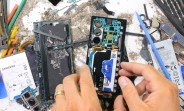
Samsung’s latest foldable flagship, the Galaxy Z Fold8 Ultra, has finally gone under the knife—or rather, under the pressure of a durability test. Following the mixed reviews of the standard Galaxy Z Fold8’s teardown, all eyes are now on the Ultra variant. Does it live up to the ‘Ultra’ name when it comes to build quality? The answer, as it turns out, is not a simple yes or no. In fact, two separate bend tests have produced wildly different outcomes, leaving potential buyers with a confusing picture.
The excitement around the Galaxy Z Fold8 Ultra is understandable. It promises to be the pinnacle of Samsung’s foldable engineering, packing top-tier specs and a refined design. But as with any foldable, the question of durability is paramount. A phone that bends in your pocket is a nightmare, and a screen that scratches at a glance is equally problematic. Let’s dive deep into what these tests reveal about the phone’s construction, starting with the most critical component: the display.
Display Durability: A Tale of Two Screens
The Galaxy Z Fold8 Ultra features two distinct displays, each with its own set of vulnerabilities. The cover screen, which is the one you use when the phone is closed, is protected by Gorilla Glass Ceramic 3. This is a premium glass solution designed to resist scratches and drops. In standard Mohs hardness testing, it performs as expected, with scratches appearing at level 6 and deeper grooves at level 7. This is on par with most flagship smartphones, so you can expect similar scratch resistance to your current phone.
The Inner Folding Screen: A Different Story
The inner folding display, however, is a different beast entirely. This is where the first test revealed a significant point of concern. The test found that the inner screen—or possibly the pre-installed screen protector—scratches at level 2 on the Mohs scale. That’s an incredibly low threshold. For context, most glass screens start showing scratches at level 6. Level 2 scratches can be caused by everyday materials like fingernails, coins, or even some types of dust. This is a common issue with foldable displays, as they use a flexible plastic-like material rather than rigid glass, but it’s still a point to consider.
The good news is that Samsung typically applies a factory-installed screen protector to the inner display. This protector is meant to be sacrificial, absorbing scratches that would otherwise damage the delicate panel underneath. However, it’s unclear from the test whether the scratch was on the protector or the actual screen. If it’s the protector, it’s a minor annoyance that can be fixed by replacing it. If it’s the screen itself, it’s a much more serious problem. This ambiguity is one of the reasons why the bend test results are so crucial.
The Bend Test: Two Different Outcomes
The headline-grabbing part of the durability testing is, of course, the bend test. This is where the phone is subjected to extreme pressure to see if the frame and hinge can withstand real-world stress. The results from two separate tests are starkly different, which is both surprising and concerning.
Test One: The Break
In the first test, the Galaxy Z Fold8 Ultra failed spectacularly. When pressure was applied to the hinge area from the back, the phone snapped. The frame cracked, and the internal components were exposed. This suggests that the hinge mechanism or the frame around it is not as robust as it should be. The break occurred at a point that is common for foldables, but it’s a failure nonetheless. This result is alarming because it indicates that the phone might not survive a fall onto a hard surface or even being sat on while in a back pocket.
Test Two: The Survival
In stark contrast, the second test showed the Galaxy Z Fold8 Ultra bending but not breaking. The phone flexed under pressure but returned to its original shape without any permanent damage. The hinge held up, and the screen remained functional. This result is much more reassuring, suggesting that the phone is actually quite durable. The difference in outcomes could be due to variations in the testing methodology, such as the exact point of pressure application, the speed of the bend, or even manufacturing tolerances between individual units.
So, what are we to make of these conflicting results? It’s possible that the first test hit a weak spot in the frame, while the second test distributed the pressure more evenly. It’s also possible that the first unit was defective. Either way, it’s clear that the Galaxy Z Fold8 Ultra’s durability is not consistent, which is a red flag for a device that costs this much.
Comparing to the Galaxy Z Fold8
It’s also worth comparing the Ultra’s performance to its sibling, the standard Galaxy Z Fold8. The standard model didn’t impress in its teardown, with similar concerns about the inner screen’s scratch resistance. However, the bend test results for the standard model were not as dramatic. The Ultra, with its larger size and potentially different hinge design, seems to be more susceptible to structural failure under extreme stress. This could be a trade-off for the larger display and slimmer profile, but it’s a trade-off that many users may not be willing to make.
Build Quality and Materials
Beyond the bend test, the teardown also revealed some insights into the build quality and materials used in the Galaxy Z Fold8 Ultra. The phone uses a combination of aluminum and stainless steel for the frame, which is typical for premium foldables. The hinge mechanism is complex, with multiple gears and springs, which is both a testament to Samsung’s engineering and a potential point of failure. The internal components are well-organized, with a large vapor chamber for cooling and a substantial battery.
The Hinge Mechanism
The hinge is the most critical part of any foldable. It needs to be strong enough to withstand thousands of folds and opens, yet flexible enough to allow smooth movement. The Galaxy Z Fold8 Ultra’s hinge appears to be similar to previous models, with a dual-rail structure that is designed to distribute stress. However, the bend test failure suggests that this design might have a weakness. If the hinge is not properly aligned or if there’s a manufacturing defect, it could lead to catastrophic failure.
Water and Dust Resistance
The Galaxy Z Fold8 Ultra comes with an IP48 rating, which means it’s protected against solid particles larger than 1mm and can withstand immersion in water up to 1.5 meters for 30 minutes. This is a good rating for a foldable, but it’s not as high as some non-folding flagships that offer IP68. The lower dust resistance is a compromise due to the moving parts, but it’s still a positive feature for everyday use.
What This Means for You
If you’re considering the Galaxy Z Fold8 Ultra, the conflicting bend test results should give you pause. On one hand, the phone is a marvel of engineering, with a stunning display and powerful performance. On the other hand, the durability concerns are real. If you’re someone who keeps their phone in a protective case and is careful with their devices, you might be fine. But if you’re prone to dropping your phone or sitting on it, you might want to consider a more rugged option or invest in a high-quality case.
It’s also important to note that bend tests are extreme stress tests that simulate worst-case scenarios. They are not representative of normal everyday use. Most users will never subject their phone to that kind of pressure. However, the fact that the phone failed in one test is concerning, as it suggests that there is a potential weakness in the design.
Final Thoughts
The Samsung Galaxy Z Fold8 Ultra is a fantastic device in many ways. It offers a large, beautiful display, top-tier performance, and a versatile camera system. But durability is a key factor for any smartphone, and the bend test results are a mixed bag. If you’re in the market for a foldable, you should weigh these findings carefully. It might be worth waiting for more long-term user reports or checking if Samsung addresses these concerns in a future software or hardware revision. In the meantime, handle your Fold8 Ultra with care.
Ultimately, the decision is yours. The Galaxy Z Fold8 Ultra is a premium product with a premium price tag, and it deserves a thorough evaluation. The bend test results are just one piece of the puzzle, but they are an important one. Stay informed, do your research, and make the choice that best fits your needs and lifestyle.