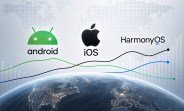
The battle for smartphone dominance isn’t just about hardware—it’s a war of operating systems. While Apple and Samsung often grab the headlines for their flagship devices, the software running beneath the surface dictates the user experience, app ecosystems, and even long-term brand loyalty. A fresh report from Counterpoint Research, based on global smartphone shipments for the second quarter (April through June), sheds light on how Android, iOS, and HarmonyOS are truly performing on the world stage.
This isn’t about the devices currently in people’s pockets; instead, it’s a snapshot of what manufacturers actually shipped during that three-month window. This distinction matters because it reflects the momentum of each platform in the here and now, not just its historical installed base. Let’s dive into the numbers and what they mean for the future of mobile computing.
Android’s Unshakable Global Dominance
Android continues to reign supreme, capturing a commanding 75% of all smartphone shipments in Q2. This marks a healthy increase from the 73% share it held in the first quarter. For context, that’s roughly three out of every four smartphones leaving factory floors running Google’s operating system. The growth is a testament to Android’s versatility, its presence across a vast price spectrum, and its adoption by virtually every major manufacturer except Apple and, to a lesser extent, Huawei.
Why Android Keeps Growing
Several factors fuel Android’s relentless expansion. First, the platform powers everything from budget-friendly entry-level phones to ultra-premium foldables. This breadth means it can capture demand in emerging markets where cost sensitivity is high, while still appealing to tech enthusiasts willing to spend top dollar. Second, Android’s open-source nature allows manufacturers like Samsung, Xiaomi, and Oppo to customize the experience, creating unique value propositions that cater to regional preferences. Third, the sheer volume of Android devices creates a powerful network effect: more users attract more developers, which in turn makes the ecosystem more attractive to new users.
Interestingly, Android’s growth isn’t coming at the expense of a single rival. Instead, it’s absorbing share from a combination of iOS’s slight dip and the stagnant HarmonyOS. In markets like India, Southeast Asia, and Latin America, Android is practically synonymous with smartphones. Even in regions where Apple is strong, Android’s sheer variety ensures it remains the default choice for many consumers.
iOS Holds Steady but Slips Slightly
Apple’s iOS secured a 20% share of global shipments in Q2, a noticeable drop from the 22% recorded in Q1. While this might look like a setback, it’s important to contextualize the numbers. Apple’s shipment cycles are traditionally tied to its annual iPhone launch in September, meaning Q1 often benefits from the holiday season and the lingering momentum of a new release. By Q2, that buzz has typically faded, and sales normalize.
The Premium Segment’s Resilience
Despite the dip, iOS remains the undisputed leader in the premium smartphone segment. Apple’s strategy of focusing on a limited number of high-margin devices continues to pay off, even if the overall shipment volume fluctuates. The 20% share still represents hundreds of millions of devices, and Apple’s ecosystem—spanning the App Store, iCloud, Apple Watch, and AirPods—creates a stickiness that keeps users loyal. In markets like the United States, Japan, and Western Europe, iOS often commands a significantly higher share than the global average, sometimes exceeding 50%.
What’s more, Apple’s recent push into services (Apple Music, Apple TV+, iCloud+) means that even with fewer unit sales, the company can generate substantial revenue per device. The slight decline in Q2 is less a cause for alarm and more a reflection of the seasonal ebb and flow. Historically, Apple’s share tends to rebound in the third and fourth quarters as new iPhones hit the market.
HarmonyOS: A Quiet but Steady Contender
Huawei’s HarmonyOS holds onto a 5% share, identical to its Q1 performance. While that might seem small compared to the giants, it’s a significant achievement given the geopolitical headwinds and trade restrictions Huawei has faced. The operating system is not just a fallback; it’s a strategic pivot aimed at creating a self-sufficient ecosystem that can operate without Google Mobile Services.
HarmonyOS’s Niche and Future Potential
HarmonyOS is primarily confined to the Chinese market, where Huawei has a strong domestic following. The OS is designed to work seamlessly across devices—phones, tablets, smartwatches, and even IoT appliances—creating a unified experience that rivals Apple’s ecosystem. However, outside China, its presence is minimal, and the lack of popular Western apps remains a significant barrier.
Still, the 5% share is nothing to sneeze at. It places HarmonyOS as the third-largest mobile operating system globally, ahead of other niche players. Huawei’s continued investment in its own app store and developer tools suggests that it’s playing the long game. If the company can maintain its hardware sales in China and slowly expand to other markets, HarmonyOS could become a more formidable competitor. But for now, it remains a regional player with global ambitions.
The Big Picture: What These Numbers Mean
The Q2 data paints a clear picture of a three-tier market. Android is the undisputed volume leader, iOS dominates the premium tier, and HarmonyOS is a scrappy challenger with a dedicated, if limited, user base. For consumers, this means choice and innovation. For developers, it’s a reminder that building for Android and iOS is still essential, while HarmonyOS offers a potential future opportunity.
Implications for Consumers and Developers
For everyday users, the operating system you choose determines your app library, your device’s integration with other gadgets, and even your privacy settings. Android’s flexibility is a boon for those who like to customize, while iOS’s curated approach appeals to those who prefer simplicity and security. HarmonyOS, if you’re in China, offers a compelling alternative that’s deeply integrated with Huawei’s hardware.
For app developers, the takeaway is straightforward: prioritize Android and iOS, but keep an eye on HarmonyOS. The cost of building a HarmonyOS version might be low, and early movers could gain a first-mover advantage in China’s massive market. However, the global reach of Android and iOS means they will remain the primary targets for years to come.
Regional Variations and Market Dynamics
While the global numbers provide a macro view, the regional breakdown is where the real story unfolds. In Asia, Android is dominant, but iOS is gaining ground in affluent urban centers. In Europe, Android holds a slight edge, but Apple’s market share is growing steadily. In North America, iOS often leads, thanks to strong brand loyalty and carrier subsidies.
The Rise of Foldables and New Form Factors
One trend that could shift these rankings in the future is the rise of foldable smartphones. Samsung and Google have embraced foldables with Android, while Apple is rumored to be working on its own foldable iPhone. Huawei has also released foldable devices running HarmonyOS. As these devices become more affordable and mainstream, they could influence which OS consumers choose. Android’s flexibility makes it well-suited for foldables, but Apple’s ecosystem could lure users with a seamless foldable experience if and when it arrives.
What’s Next for Mobile OS Market Share?
Looking ahead, the mobile OS landscape is likely to remain stable in the short term, with Android and iOS maintaining their duopoly. However, several factors could disrupt the status quo. Antitrust regulations, particularly in the US and Europe, could force changes in how app stores operate, potentially benefiting alternative platforms. Also, the growing importance of AI—both on-device and in the cloud—could give an edge to whichever OS integrates it most seamlessly.
The AI Factor
Google’s Gemini and Apple’s upcoming AI features are set to redefine what a smartphone can do. Android’s open ecosystem allows for rapid AI integration from multiple vendors, while iOS’s controlled environment ensures a consistent, polished experience. HarmonyOS is also investing in AI, but its global impact remains limited. The next few quarters will be crucial in determining whether AI becomes a differentiator or just a checkbox feature.
Final Thoughts on the Q2 Report
Counterpoint Research’s Q2 data offers a fascinating snapshot of the mobile OS hierarchy. Android’s 75% share is a testament to its ubiquity, iOS’s 20% reflects its premium strength, and HarmonyOS’s 5% shows that a determined challenger can still carve out a niche. For anyone following the tech industry, these numbers are more than just statistics—they’re a roadmap of where the industry is heading.
As we move into the second half of the year, all eyes will be on the holiday season and the launch of new devices. Will Android extend its lead? Can iOS bounce back to 22% or higher? Will HarmonyOS make any unexpected moves? Only time will tell, but one thing is certain: the operating system war is far from over.