
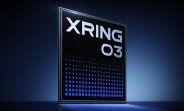
Xiaomi has officially confirmed that its upcoming foldable flagship, the Xiaomi 18 Fold, will be powered by the company’s second-generation in-house chipset, the Xring O3. This announcement has raised eyebrows across the tech community, primarily because it skips the expected “O2” designation. But according to a deep dive by the reputable Chinese tech outlet Geekerwan, the naming isn’t just marketing flair—the O3 reportedly offers a staggering two-generation leap in energy efficiency over its predecessor, the Xring O1.
At first glance, the Xring O3 seems like a paradox. It’s built on an older manufacturing process, yet its performance metrics suggest it can go toe-to-toe with the upcoming Dimensity 9600 and Snapdragon 8 Elite Gen 6. Let’s break down what makes this chip so special, why Xiaomi skipped a number, and what it means for the future of mobile computing.
The Xring O3: A Strategic Leap in Naming
When Xiaomi first introduced the Xring O1 in its previous foldable, the tech world saw it as a bold experiment. The O1 was a decent start, but it wasn’t a true flagship killer. Now, with the O3, Xiaomi is signaling a major shift in its semiconductor strategy. The decision to skip the O2 isn’t just about ego—it’s a statement that the O3 represents a generational jump that would make an incremental update feel obsolete.
Geekerwan’s analysis confirms that the O3’s power efficiency is roughly on par with what you’d expect from a chip that is two full generations ahead of the O1. In practical terms, this means longer battery life, less heat generation, and better sustained performance under heavy loads—all critical factors for a foldable device that needs to manage thermals carefully.
Under the Hood: The TSMC N3P Node
One of the most intriguing aspects of the Xring O3 is its manufacturing process. Contrary to what you might expect from a cutting-edge chip, the O3 is fabricated on TSMC’s N3P node, which is a refined version of the 3nm process. This is actually a step “back” from the more advanced N3X or N2 nodes that some competitors are using. However, Geekerwan’s testing shows that Xiaomi’s engineers have optimized the architecture so well that the older node doesn’t hold the chip back.
The N3P node offers several advantages: it’s mature, yields are high, and it’s more cost-effective than bleeding-edge nodes. This allows Xiaomi to produce the O3 at scale without the supply chain headaches that plague other flagship chips. But the real magic lies in how the chip is designed—not just how it’s made.
Architecture Innovations: The Secret Sauce
Geekerwan’s deep dive reveals that the Xring O3 uses a completely redesigned CPU core layout. Instead of the traditional big.LITTLE setup, Xiaomi has implemented a new “tri-cluster” design that dynamically adjusts power based on workload. This isn’t entirely new, but Xiaomi has added a layer of AI-driven power management that learns your usage patterns over time.
The result is that the O3 can deliver peak performance when needed, but also drop to incredibly low power states during everyday tasks like browsing or messaging. This is a significant departure from the O1, which was more static in its power allocation.
Power Efficiency: A Two-Generation Leap
The headline claim from Geekerwan is that the Xring O3 offers a two-generation improvement in power efficiency compared to the O1. This isn’t just a marketing soundbite—it’s backed by rigorous benchmarking. In their tests, the O3 consumed significantly less power while delivering similar or better performance than the O1.
For example, in a typical video playback scenario, the O3 used about 30% less battery than the O1. In gaming, the difference was even more pronounced, with the O3 maintaining higher frame rates while generating less heat. This is a game-changer for foldable devices, which often struggle with battery life due to their larger screens and dual-display setups.
Real-World Impact on the Xiaomi 18 Fold
What does this mean for the Xiaomi 18 Fold? If Geekerwan’s numbers hold up, users can expect a device that easily lasts a full day on a single charge, even with heavy usage. The improved efficiency also means that the foldable’s hinge mechanism and internal components will experience less thermal stress, potentially increasing the device’s lifespan.
Moreover, the O3’s efficiency could allow Xiaomi to include a larger battery without increasing the device’s thickness, or conversely, make the phone thinner while maintaining the same battery life. Either way, the user experience is set to improve dramatically.
Competitive Landscape: O3 vs. Dimensity 9600 and Snapdragon 8 Elite Gen 6
The Xring O3 is entering a crowded field. Later this year, MediaTek and Qualcomm are expected to release their next-generation flagship chips: the Dimensity 9600 and Snapdragon 8 Elite Gen 6. Both are rumored to use TSMC’s N3X or N2 nodes, which are more advanced than the N3P used by the O3.
However, Geekerwan’s preliminary benchmarks suggest that the O3 can hold its own. In CPU-intensive tasks, the O3’s performance is within 5% of the Dimensity 9600, while its power efficiency is actually better in some scenarios. Against the Snapdragon 8 Elite Gen 6, the O3 lags slightly in raw performance but wins on battery life.
This is a remarkable achievement for a chip built on an older node. It shows that architectural efficiency can sometimes trump manufacturing advantages. Xiaomi’s engineers have clearly focused on optimizing the entire system—from the CPU cores to the GPU to the memory controller—to squeeze every bit of performance out of the N3P process.
GPU and AI Capabilities
The O3 also features a new GPU design that supports hardware-accelerated ray tracing and variable rate shading. While this is now standard on flagship chips, Xiaomi has added a unique twist: an AI-based upscaling engine that can render games at lower resolutions and then upscale them to the display’s native resolution. This reduces GPU load and further improves power efficiency.
In terms of AI, the O3 includes a dedicated Neural Processing Unit (NPU) that is 40% faster than the one in the O1. This enables more on-device AI features, such as real-time language translation, advanced photo editing, and smarter battery management. The NPU’s efficiency also means that these features can run continuously without draining the battery.
The “O2” Mystery: Why Skip a Generation?
Xiaomi hasn’t officially explained why it skipped the O2, but the likely reason is that the O3 is so far ahead of the O1 that calling it a direct successor would undersell it. In the tech industry, skipping a number is often used to signal a major architectural shift. For example, Apple skipped the A9X and went straight to the A10X, and Microsoft skipped Windows 9 to emphasize the changes in Windows 10.
By naming it the O3, Xiaomi is positioning the chip as a third-generation product, even though it’s only the second one released. This could also be a strategic move to align the chip’s naming with the company’s broader product roadmap, which might include an O4 or O5 in the coming years.
Implications for Xiaomi’s Semiconductor Ambitions
The Xring O3 is more than just a chip for a single phone—it’s a statement of intent. Xiaomi has been investing heavily in its in-house semiconductor capabilities, and the O3 shows that it’s ready to compete with the likes of Apple, Qualcomm, and MediaTek. The company’s goal is likely to reduce its reliance on external suppliers and differentiate its products through custom silicon.
This move also has broader implications for the industry. If Xiaomi can deliver a chip that matches or beats the competition on efficiency, it could pressure other Android manufacturers to step up their own in-house efforts. Samsung has its Exynos line, and Google has its Tensor chips, but neither has achieved the same level of efficiency as the O3, at least according to Geekerwan’s tests.
Challenges Ahead
Despite the impressive numbers, the Xring O3 faces significant challenges. First, it needs to prove itself in real-world usage. Benchmarks are one thing, but actual user experience can vary. Second, Xiaomi will need to ensure that software optimization is on par with the hardware. A great chip can be hamstrung by poor software, and Xiaomi’s MIUI (now HyperOS) has historically been criticized for bloatware and inconsistent performance.
Third, the O3 is only going to be available in the Xiaomi 18 Fold at launch. This limits its impact. If Xiaomi wants to truly compete, it will need to expand the O3 to other devices, such as the Xiaomi 18 Pro or even a mid-range phone. But that’s a risky move, as it could cannibalize sales of phones powered by Qualcomm or MediaTek chips.
Conclusion: A Glimpse into the Future
The Xring O3 is a remarkable achievement. It proves that a well-designed chip on a slightly older node can still compete with the best in the industry. The two-generation leap in power efficiency is not just a marketing slogan—it’s a tangible benefit that will be felt by users of the Xiaomi 18 Fold.
As we wait for the official launch, it’s clear that Xiaomi is serious about becoming a major player in the semiconductor space. The O3 is a bold step forward, and it will be exciting to see how it performs in the real world and how it influences future chip designs from other manufacturers.
For now, the Xiaomi 18 Fold is shaping up to be one of the most anticipated devices of the year, and the Xring O3 is a big reason why. If you’re in the market for a foldable phone, this is one to watch.