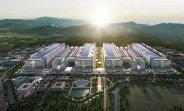
The global chip shortage continues to cast a long shadow over the tech industry, with even the most anticipated product launches, like Apple’s iPhone 18 Pro, potentially feeling the pinch. In a significant move to address this ongoing crisis, SK Hynix, one of the world’s three dominant memory chip manufacturers, has officially announced a massive investment plan. The company will pour over $38 billion into constructing two new fabrication plants—one dedicated to DRAM and another for NAND flash memory.
This strategic decision comes at a critical time when demand for memory chips is surging, fueled by the explosive growth of artificial intelligence, cloud computing, and advanced mobile devices. The investment is not just about expanding capacity; it’s a clear signal that SK Hynix is positioning itself to lead the next wave of semiconductor innovation. While the announcement is a welcome relief for an industry starved of supply, the timeline for these new fabs means that consumers and businesses will need to remain patient for a few more years.
A Closer Look at the Historic Investment
SK Hynix’s commitment is a two-pronged approach, targeting the two most critical types of memory chips in the market. The larger portion of the investment is earmarked for a new DRAM fabrication facility, with a planned outlay of KRW 35.2 trillion, which translates to roughly $25 billion. This substantial sum underscores the company’s focus on meeting the relentless demand for high-bandwidth memory (HBM) and standard DRAM, which are essential for everything from data center servers to high-end graphics cards and smartphones.
The second part of the plan involves a dedicated NAND flash memory fab, with an investment of KRW 19.1 trillion, approximately $13.5 billion. NAND is the backbone of solid-state drives (SSDs) and portable storage, and its demand is equally robust. By building a separate facility for NAND, SK Hynix aims to optimize production processes and increase yield, ensuring a steady supply of storage solutions for both consumer electronics and enterprise data centers.
Timeline and Production Goals
While the financial commitment is immediate, the fruits of this labor will take time to materialize. The new NAND fab is expected to come online first, with an opening date projected for December 2028. The DRAM fab will follow suit, with operations slated to begin in June 2029. These timelines are typical for semiconductor fabrication plants, which require years of meticulous planning, construction, and equipment calibration to achieve the ultra-clean environments and precision needed for chip manufacturing.
The staggered opening schedule is a calculated move. It allows SK Hynix to manage its capital expenditure over several years while also giving the company time to integrate the latest manufacturing technologies, such as extreme ultraviolet (EUV) lithography, into the new facilities. When fully operational, these fabs are expected to produce tens of thousands of wafers per month, significantly boosting the global supply of memory chips and helping to alleviate the persistent shortage.
Why This Investment Matters for the Tech Industry
The announcement from SK Hynix is more than just a corporate expansion plan; it is a pivotal moment for the entire technology ecosystem. For years, the semiconductor industry has been caught in a cycle of boom-and-bust, with periods of tight supply followed by oversupply. However, the current shortage is unique in its duration and severity, exacerbated by geopolitical tensions, the pandemic’s lingering effects, and an unprecedented surge in demand for AI-driven computing.
By investing heavily now, SK Hynix is betting on long-term demand, not just a temporary market spike. This move is expected to stabilize prices for memory components, which have been volatile. For consumers, this could eventually mean more affordable laptops, smartphones, and gaming consoles. For businesses, it ensures that data centers can expand without being bottlenecked by a lack of memory, enabling smoother AI model training and cloud services.
Impact on Apple and Other Major Players
The reference to Apple’s iPhone 18 Pro is not coincidental. Apple is one of SK Hynix’s largest customers, relying on the company for high-performance DRAM and NAND storage. The current shortage has already forced Apple to make tough decisions about component allocations, and there are concerns that the iPhone 18 Pro’s launch could see limited initial stock. While this new investment is a long-term solution, it provides a glimmer of hope that future iPhone models and other flagship devices will not face the same supply constraints.
Other major tech companies, including Samsung, Micron, and TSMC, are also investing in new capacity, but SK Hynix’s announcement is particularly notable for its scale and focus on memory. The company is clearly aiming to solidify its position as a top-tier memory supplier, especially in the high-margin HBM market, where it holds a significant share.
Challenges and Considerations for SK Hynix
While the investment is a bold and necessary step, it is not without its challenges. Building a new semiconductor fab is a complex, high-risk endeavor. The company must navigate rising construction costs, potential supply chain disruptions for manufacturing equipment, and the ever-present risk of technological obsolescence. The memory market is also notoriously cyclical, and there is a chance that by the time these fabs open in 2028 and 2029, the market could be facing an oversupply, leading to a price crash.
To mitigate these risks, SK Hynix is likely to adopt a flexible manufacturing approach. The new fabs will be designed to handle multiple product types and process nodes, allowing the company to shift production between DRAM and NAND based on market demand. Additionally, the company is investing heavily in research and development to ensure that these new facilities are not just larger, but also smarter, using AI-driven automation to improve efficiency and reduce defect rates.
Geopolitical and Economic Implications
The investment also has significant geopolitical implications. As the United States and China vie for technological supremacy, control over semiconductor manufacturing has become a strategic priority. SK Hynix’s new fabs are expected to be built in South Korea, which is a key ally in the global chip supply chain. This move reinforces South Korea’s position as a semiconductor powerhouse and could influence trade policies and export controls.
From an economic perspective, the investment is a major boost for the South Korean economy, creating thousands of high-skilled jobs during the construction and operation phases. It also signals confidence in the long-term health of the semiconductor industry, which is a bellwether for global economic growth.
What This Means for the Future of Memory Chips
Looking ahead, the new fabs will be instrumental in enabling the next generation of memory technology. For DRAM, this includes advancements in HBM4 and beyond, which are critical for AI accelerators like NVIDIA’s GPUs. For NAND, the focus will be on higher-layer 3D NAND, pushing storage densities to new heights. This will enable the creation of SSDs with capacities of 100TB or more, opening up new possibilities for data-intensive applications.
The investment also sends a strong signal to other players in the industry. It demonstrates that the memory chip market is not just about survival but about thriving through innovation. As SK Hynix expands its capacity, competitors will be forced to respond, leading to a more competitive and dynamic market. This is ultimately good news for consumers, who will benefit from better products at more competitive prices.
Short-Term vs. Long-Term Outlook
In the short term, the chip shortage is unlikely to resolve overnight. Even with this announcement, the industry will still face tight supply for at least the next two to three years. The new fabs will not produce chips until 2028 and 2029, so the immediate relief will come from other incremental capacity expansions and process improvements. However, the long-term outlook is much more optimistic. By the early 2030s, the industry should have ample capacity to meet the growing demand from AI, IoT, and 5G technologies.
For now, consumers waiting for the iPhone 18 Pro or the latest gaming hardware may need to be prepared for potential delays or price increases. But the SK Hynix investment is a promise that these shortages are not permanent. It is a multi-billion-dollar bet on the future of computing, and one that is likely to pay off for the entire industry.
Conclusion: A Strategic Bet on the Future
SK Hynix’s decision to invest over $38 billion in new DRAM and NAND fabs is a monumental undertaking that underscores the critical importance of memory chips in the modern world. While the benefits will not be realized for several years, this investment is a clear and necessary response to the persistent chip shortage that has plagued the tech industry. It is a strategic bet on the future, one that will help ensure the next decade of technological innovation is not hamstrung by a lack of memory.
As the construction begins and the industry watches closely, one thing is certain: SK Hynix is not just building factories; it is building the foundation for the next era of digital transformation. For those who rely on technology, from casual smartphone users to massive cloud providers, this is a reassuring sign that the industry is listening and acting to solve one of its most pressing challenges.