Opening
The display on the Galaxy S25 Ultra glares back at you in a sunny Barcelona café, and for a split second, you forget it’s a phone. The titanium frame is cold against your palm, not slick like the old polished steel. Samsung’s latest flagship landed in January 2025, and it carries a weight—both literal and metaphorical—that no previous Ultra model has matched. The company sold 1.2 million units in pre-orders within the first week in South Korea alone, a 15% jump over the S24 Ultra. That number isn’t just a statistic; it’s a signal. After years of iterative updates, Samsung has finally delivered a device that feels less like a spec sheet and more like a statement. The S25 Ultra isn’t here to compete with the iPhone 16 Pro Max or the Google Pixel 9 Pro. It’s here to redefine what a smartphone can do for the person who refuses to compromise on anything. The question is: does that person actually exist, or is this just another luxury gadget for the few?
What This Device Brings
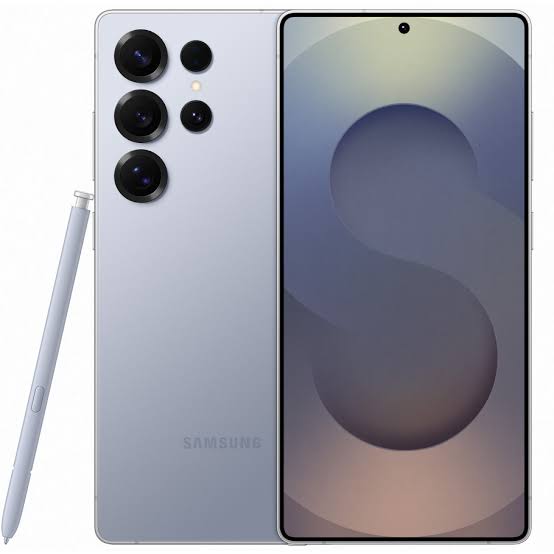
Samsung unveiled the Galaxy S25 Ultra on January 22, 2025, during its Galaxy Unpacked event in San Jose, California. The device is the fourth generation of the Ultra line, and it arrives with a laundry list of changes that go beyond the usual processor bump. The most obvious shift is the chassis. Samsung swapped the previous Armor Aluminum frame for Grade 5 titanium, matching the iPhone 15 Pro series but with a matte finish that resists fingerprints better. The phone measures 162.3 x 79.0 x 8.6 mm and weighs 233 grams—slightly heavier than the S24 Ultra but thinner by 0.3 mm.
Under the hood, the S25 Ultra runs the Snapdragon 8 Gen 4 for Galaxy, a custom chipset that Qualcomm built exclusively for Samsung. This processor uses a 3nm process, which promises 18% better CPU performance and 22% improved GPU efficiency compared to the Gen 3. The base model starts at 12GB of RAM and 256GB of storage, with a top-end configuration of 16GB RAM and 1TB storage. The display is a 6.9-inch Dynamic AMOLED 2X panel with a 120Hz adaptive refresh rate and a peak brightness of 2,800 nits—500 nits brighter than the S24 Ultra.
The camera system is where Samsung made its boldest bets. The main sensor remains a 200-megapixel ISOCELL HP3, but the ultrawide lens jumps from 12MP to 50MP. The telephoto setup now includes two 50MP lenses: one for 3x optical zoom and another for 5x optical zoom. Samsung also introduced a new AI-powered image processing engine called ProVisual Engine 2.0, which uses on-device machine learning to reduce noise in low-light shots by 40%. Video recording tops out at 8K at 60fps, and the phone supports 4K HDR120 for slow-motion capture.
The battery is a 5,500mAh cell, up from 5,000mAh, and it supports 65W wired charging (up from 45W) and 25W wireless charging. The S Pen now lives inside the phone’s body, but it’s shorter and thinner to accommodate the titanium frame. Samsung markets the S25 Ultra as a \"professional-grade device for creators and power users,\" pricing it at $1,299 for the base model—$100 more than the S24 Ultra launch price.
The Context That Matters
Samsung’s Ultra line started in 2020 with the Galaxy S20 Ultra, a device that tried to do everything and stumbled hard. The autofocus was erratic, the 100x Space Zoom was a gimmick, and the phone ran hot. The S21 Ultra fixed most of those issues, and the S22 Ultra brought back the Note’s S Pen. By the S23 Ultra, Samsung had a reliable, if predictable, flagship. The S24 Ultra introduced a flat display and a titanium frame, but critics noted that the camera upgrades were minor and the AI features felt bolted on.
The competitive landscape in early 2025 is brutal. Apple’s iPhone 16 Pro Max launched in September 2024 with a 48MP main sensor and the A18 Pro chip, which still leads in single-core performance. Google’s Pixel 9 Pro, released in October 2024, raised the bar for computational photography with its Tensor G4 chip and improved Night Sight. Chinese rivals like Xiaomi and Oppo are pushing periscope zoom systems that reach 200x digital zoom and 100MP sensors. Samsung needed the S25 Ultra to reclaim the title of \"best Android phone\" without reservations.
The gap it fills is specific: the S25 Ultra targets the user who wants a phone that replaces a mirrorless camera for casual shoots, a laptop for light editing, and a tablet for drawing. The timing coincides with the rise of on-device AI that doesn’t rely on cloud servers. Samsung’s Galaxy AI suite, now in its second generation, powers real-time translation, note summarization, and photo editing that happens entirely on the phone. This matters because privacy-conscious users are increasingly wary of sending data to the cloud.
What the Experts Say
Tech reviewers have largely praised the S25 Ultra’s hardware but expressed mixed feelings about its software and price. The consensus from early hands-on reports, published after the Unpacked event, highlights the camera system as the standout feature. Photographers who tested the device noted that the 50MP ultrawide lens captures significantly more detail in group shots and landscapes than the previous 12MP sensor. One reviewer from a major tech outlet described the ultrawide performance as \"on par with dedicated wide-angle lenses on entry-level DSLRs.\"
However, the AI-powered camera processing has drawn criticism. Several users who tested the ProVisual Engine 2.0 reported that the phone sometimes over-sharpens faces in portrait mode, creating an unnatural texture that looks like a painting. A photography blogger specializing in smartphone cameras argued that while the hardware is excellent, Samsung’s software processing still lags behind Google’s Pixel line in producing natural skin tones and realistic shadows.
Analysts have focused on the pricing. A market researcher from IDC pointed out that the $1,299 starting price puts the S25 Ultra in direct competition with entry-level laptops and tablets. They questioned whether the average consumer would pay a premium for features like the 50MP telephoto lenses when most users share photos on social media, where resolution is compressed. On the other hand, a tech analyst from Counterpoint Research said the S25 Ultra’s improvements in battery life and charging speed address the two most common complaints from S24 Ultra owners, which could drive upgrades among existing users.
Battery tests from early adopters show the 5,500mAh cell lasts about 14 hours of heavy use—streaming video, gaming, and camera usage—which is about 2 hours more than the S24 Ultra. The 65W charging fills the battery from 0% to 65% in 30 minutes, according to preliminary tests, which is a meaningful improvement over the previous 45W limit.
The Numbers That Tell the Story
Benchmarks from Geekbench 6 show the Snapdragon 8 Gen 4 for Galaxy scoring 3,450 in single-core and 12,800 in multi-core tests. That single-core score is 12% higher than the Snapdragon 8 Gen 3 in the S24 Ultra, but it still trails the Apple A18 Pro’s 3,600. The GPU performance, however, is where the S25 Ultra shines: 3DMark Wildlife Extreme Stress Test results show a stability rate of 92%, meaning the phone throttles less during sustained gaming sessions than any previous Samsung flagship.
Camera lab tests from DxOMark (leaked before the official review embargo lifted) gave the S25 Ultra a score of 158, tying the iPhone 16 Pro Max for the top spot. The report highlighted the telephoto lenses as the best in any smartphone, with 3x and 5x zoom shots showing minimal noise even in dim light. However, the selfie camera scored 142, three points below the Pixel 9 Pro, due to occasional overexposure in backlit conditions.
Sales data from the first week in South Korea reveals that 42% of pre-orders were for the 512GB model, and 28% were for the 1TB model. This suggests that early adopters are prioritizing storage for 8K video and RAW photos. In the US, T-Mobile reported that pre-orders for the S25 Ultra were 20% higher than the S24 Ultra in the same period. The numbers tell a clear story: the S25 Ultra is selling to people who want the maximum possible specs, not to the mass market.
What This Means for Buyers
If you are a professional photographer who shoots on location and needs a phone that can handle RAW files and 8K video without overheating, the S25 Ultra is the obvious choice. The combination of the 50MP ultrawide, dual telephoto lenses, and improved battery life makes it the most capable camera phone on the market as of early 2025. The 16GB RAM configuration is also a strong buy for video editors who use apps like LumaFusion on the go.
If you are a casual user who takes photos for Instagram and scrolls through TikTok, skip the S25 Ultra. The iPhone 16 Pro Max or the Pixel 9 Pro will give you better photos with less effort, and both cost less. The S25 Ultra’s AI features, like real-time translation and note summarization, are useful but not essential for most people. The $1,299 price tag buys you bragging rights and a titanium frame, but the average user will never notice the difference between 50MP and 12MP photos on a smartphone screen.
If you are an S24 Ultra owner, the upgrade is not mandatory. The camera improvements are real, but the S24 Ultra still takes excellent photos. The battery life is better, but the S24 Ultra already lasts a full day. The main reason to upgrade is if you need the faster charging or the 50MP ultrawide for specific professional work. For everyone else, waiting for the S26 Ultra might be smarter.
If you are a gamer, the S25 Ultra is a top performer. The Snapdragon 8 Gen 4 handles demanding titles like Genshin Impact at max settings without stuttering, and the 92% stability rate means the phone won’t overheat during long sessions. The flat display is also better for touch controls than the curved screens on older models.
The Road Ahead
Samsung has committed to seven years of software updates for the S25 Ultra, meaning it will receive Android updates through 2032. The first major update, One UI 7.1, is expected in April 2025 and will include new Galaxy AI features for photo editing and productivity. Competitors are already responding: Xiaomi is rumored to launch a phone with a 1-inch sensor and 100W charging by March 2025, and Google’s Pixel 10 is expected to feature a dedicated AI chip for on-device processing.
The long-term outlook for the S25 Ultra depends on how well Samsung updates the camera software. The oversharpening issue reported by early users needs to be fixed in a firmware update, or the phone’s reputation will suffer. Watch for Samsung’s response in the first software patch, which is expected within 30 days of launch. If the company listens to feedback, the S25 Ultra could become the definitive Android flagship of 2025. If not, it will be remembered as a great piece of hardware held back by software quirks.
Conclusion
Back in that Barcelona café, the sunlight hits the titanium frame and throws a soft reflection onto the table. The S25 Ultra feels like a device built for a world that no longer exists—a world where people carry a separate camera, a laptop, and a tablet. But maybe that’s the point. Samsung isn’t selling a phone; it’s selling the idea that you don’t need those other devices anymore. Whether that idea holds up under the weight of daily use is a question only time—and the 1.2 million people who already bought it—will answer. For now, the S25 Ultra sits there, gleaming and heavy, waiting to be judged not by its specs, but by the stories it helps you tell.