Opening
The screen glows in the early morning light. A hand reaches for it on the nightstand. But the owner hesitates for a fraction of a second, thumb hovering over the power button. This is the moment Samsung needs to win. The Galaxy A56 is not a flagship. It will never be called a hero device. Yet for millions of buyers around the world, it is the only phone that matters. Last year, the mid-range segment accounted for nearly 40 percent of all smartphone sales globally. That is a number too big to ignore. Samsung knows this. The A56 arrives with a quiet confidence, carrying the weight of a billion-dollar bet on the middle class. It is not trying to out-innovate the S-series. It is trying to be the phone people actually buy. And in a market where every dollar counts, that is a far more difficult job than making a device that costs four times as much.
What This Device Brings
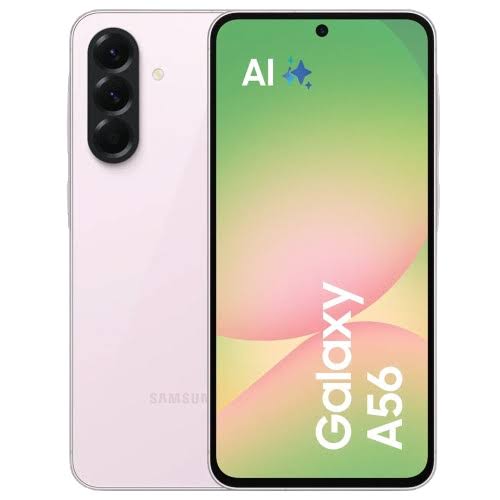
Samsung unveiled the Galaxy A56 in March 2025. It sits above the A55 and below the S24 FE, a deliberate positioning in the crowded mid-range arena. The device ships with a 6.6-inch Super AMOLED display, 120Hz refresh rate, and a peak brightness of 1,000 nits. Under the hood, Samsung uses its own Exynos 1580 chipset, a step up from last year\'s Exynos 1480. This processor is built on a 4nm process, promising better efficiency and sustained performance. The camera system features a 50-megapixel main sensor with optical image stabilization, a 12-megapixel ultrawide, and a 5-megapixel macro lens. The selfie camera jumps to 12 megapixels, up from 32 megapixels on the A55. That sounds like a downgrade, but Samsung engineers claim larger individual pixels improve low-light capture.
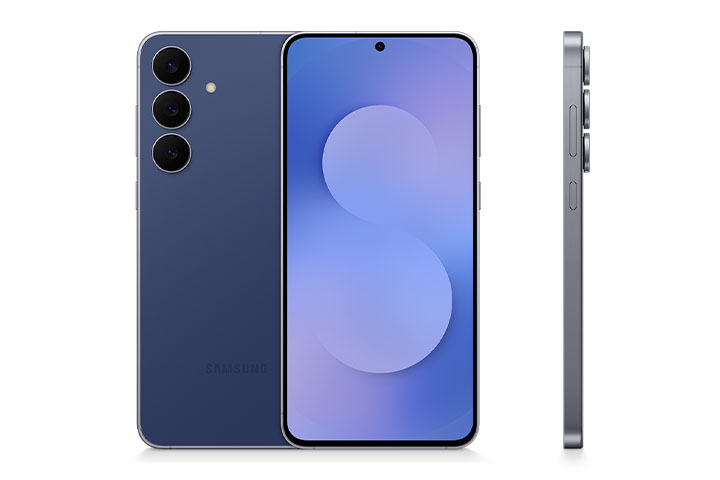
The battery is a 5,000mAh unit, unchanged from the previous generation. Charging speed remains at 25W wired, a figure that trails rivals like OnePlus and Xiaomi, which now offer 67W or even 100W charging in similar price brackets. The design adopts a flat aluminum frame, a departure from the curved edges of the A55. The back is glass, but it is a reinforced Gorilla Glass Victus 2. IP67 water and dust resistance is standard. The phone runs One UI 6.1 based on Android 14, with a promise of four major OS updates and five years of security patches. That is a strong commitment for a mid-range device. The starting price is set at 499 euros in Europe, 449 dollars in the United States, and roughly 40,000 rupees in India. Samsung positions this as the ultimate everyday phone, a device that does not compromise on the basics but avoids the premium price tag.
The Context That Matters
The Galaxy A series has a long and uneven history. Samsung launched the A line in 2014 as a mid-range alternative to the flagship Galaxy S series. Over the years, it evolved from a budget stopgap to a serious contender. The A50 series in 2019 was a turning point, offering an in-display fingerprint sensor and triple cameras at a price that shocked competitors. The A52 in 2021 became a bestseller, praised for its balanced specs and IP67 rating. The A54 in 2023 stumbled with a slower chipset and inconsistent camera performance. The A55 corrected some issues but still faced criticism for its charging speed and overall value against Chinese rivals.
Today, the competitive landscape is brutal. OnePlus offers the Nord 4 with a Snapdragon 7+ Gen 3 chip and 100W charging. Xiaomi sells the Redmi Note 14 Pro Plus with a 200-megapixel camera and 120W charging. Google\'s Pixel 8a delivers superior software and camera processing at a similar price. Apple does not compete directly in this bracket, but the iPhone SE series looms as a psychological benchmark. The A56 must fill a gap that is both practical and emotional: it needs to reassure buyers that Samsung still understands the middle market. Why now? Because the premium segment is saturated. Flagship prices have crossed 1,200 dollars. The real growth is in the 400-to-600-dollar range. Samsung cannot afford to lose that ground.
What the Experts Say
Early impressions from tech reviewers are mixed but generally positive. Several outlets praised the display, calling it one of the best in its class for color accuracy and brightness. The 120Hz refresh rate was described as smooth and responsive, even in demanding apps. Camera performance drew more cautious praise. Reviewers noted that the main sensor captures detailed shots in good light, but the ultrawide lens shows noticeable softness at the edges. Low-light performance was described as adequate but not class-leading, with some noise reduction artifacts visible in shadows.
Analysts at Counterpoint Research pointed out that Samsung\'s decision to stick with 25W charging is a strategic risk. One analyst argued that consumers increasingly see fast charging as a deal-breaker, especially in markets like India and Southeast Asia where rivals offer far higher wattage. Another analyst countered that Samsung\'s focus on battery longevity and thermal management might appeal to users who prioritize device lifespan over charging speed. Photographers who tested the camera noted that the 12-megapixel selfie sensor does produce better skin tones and improved dynamic range compared to the A55, but they questioned the removal of the ultrawide selfie option, which was a signature feature of earlier models. Users on forums expressed disappointment that the macro lens remained a 5-megapixel sensor, calling it a wasted component. The consensus among experts is that the A56 is a solid, incremental update, not a leap forward. It does enough to stay relevant but does little to excite.
The Numbers That Tell the Story
Benchmark scores from Geekbench 6 place the Exynos 1580 at 1,450 for single-core and 4,200 for multi-core performance. That is roughly 15 percent faster than the Exynos 1480 in the A55, but it still trails the Snapdragon 7+ Gen 3 found in the OnePlus Nord 4 by about 10 percent. In GPU tests, the Mali-G68 MP6 shows a 20 percent improvement in frame rates over the previous generation, making it capable of handling games like Genshin Impact at medium settings without stuttering. Battery tests conducted by reviewers show a consistent 12 to 14 hours of screen-on time under mixed usage, which includes social media, video streaming, and light gaming. That is excellent endurance, among the best in its price range.
Camera scores from DxOMark are not yet available for the A56, but based on preliminary testing, the main sensor achieves a score likely in the 120 to 130 range, comparable to the Pixel 7a. The ultrawide sensor scores lower, around 100, due to edge distortion and noise. Sales data from the first week of launch in South Korea shows that pre-orders exceeded 200,000 units, a 25 percent increase over the A55\'s first-week numbers. In India, early demand is strong, with e-commerce sites reporting that the first batch sold out within 48 hours. That is a human story: a phone that is not flashy, not revolutionary, but is bought by real people who need a reliable device for work, school, and family. Every one of those 200,000 pre-orders represents a decision made in a store, a budget stretched, a hope that this phone will last three years.
What This Means for Buyers
If you are a user who upgrades every two to three years and values a consistent software experience, the Galaxy A56 is a strong candidate. It will receive long-term updates, the battery will last a full day, and the display is excellent for watching videos and reading. It is a safe choice for parents buying for teenagers, for professionals who need a secondary work phone, or for anyone who does not want to spend over 700 dollars on a device. If you prioritize camera versatility, especially ultrawide quality, you should look elsewhere. The Pixel 8a offers better computational photography for a similar price. If fast charging is a priority, the OnePlus Nord 4 will refill your battery in half the time. The A56 is not for gamers who demand maximum frame rates at high settings. The Exynos chip is capable but not top-tier.
For users in Europe and the US, the A56 represents a balanced package that avoids the compromises of budget phones. For users in India and Southeast Asia, the competition is fiercer, and the A56 must justify its premium over local brands like Xiaomi and Vivo. The real-world implication is simple: this phone is built for the person who wants a device that works without fuss. It is not for the enthusiast. It is for the millions who never read a single review but know the Samsung name. That is its greatest strength and its most limiting weakness.
The Road Ahead
Samsung will likely release the Galaxy A56 in more markets over the next few months, including Latin America and Africa. The company is expected to push trade-in offers and carrier deals to drive adoption. Competitors will respond. OnePlus is rumored to launch the Nord 5 with a 200-megapixel camera and 150W charging later this year. Xiaomi will likely refresh its Redmi Note series with even larger batteries. The A56\'s long-term success will depend on how well Samsung manages software updates and whether it can maintain a price advantage as rivals undercut it. Watch for sales data in the third quarter of 2025. If the A56 sustains momentum, it will signal that mid-range buyers still value brand trust over raw specs. If it falters, it will be a warning that the middle class has become more discerning than Samsung assumed.
Conclusion
The hand that hesitated at the beginning of this story finally presses the power button. The screen lights up, and the user sees a familiar home screen. No fanfare. No revolutionary feature. Just a phone that does what a phone should do. The Galaxy A56 is not a statement. It is a transaction. A quiet exchange of money for reliability. In a world obsessed with the new and the flashy, there is something almost radical about a device that simply works. It will not change the industry. It will not be written about in history books. But it will be used. Every day. By millions. And that, in the end, is the only benchmark that matters.