Opening
Three hundred and seventy-nine dollars. That was the average price people paid for a smartphone in 2022. Then Samsung dropped the Galaxy S23. The room didn’t gasp. It sighed. Because this phone looked almost identical to the S22. Same flat edges. Same camera bump. Same glass sandwich. But the story isn’t what you see. It’s what you feel. I held the S23 on a rainy Tuesday in Seoul. The first thing that struck me wasn’t the screen or the camera. It was the weight. It felt denser, more solid, like a tool built for a purpose. Samsung didn’t reinvent the wheel. They fixed the spokes. The battery lasted longer. The processor ran cooler. The camera took a picture in near-darkness that looked like early evening. This is not a phone that screams for attention. It’s a phone that whispers competence. And in a market full of shouting, that might be the loudest statement of all.
What This Device Brings
Samsung announced the Galaxy S23 series on February 1, 2023, at an Unpacked event in San Francisco. The lineup includes the base S23, the S23+, and the S23 Ultra. The standard model, which we focus on here, starts at $799. It launched globally on February 17.
The core specs tell a story of refinement. A 6.1-inch Dynamic AMOLED 2X display with 120Hz refresh rate. A Snapdragon 8 Gen 2 processor, but not the standard version. Samsung used a custom “Snapdragon 8 Gen 2 for Galaxy” chip with a higher clock speed on the prime core: 3.36GHz versus the standard 3.2GHz. That extra 5% performance comes from a closer partnership with Qualcomm.
The camera system features a 50-megapixel main sensor, a 12-megapixel ultrawide, and a 10-megapixel telephoto with 3x optical zoom. The front camera jumps to 12 megapixels from the S22’s 10. The battery is 3,900mAh, a 200mAh increase over the S22. Charging remains at 25W wired, 15W wireless.
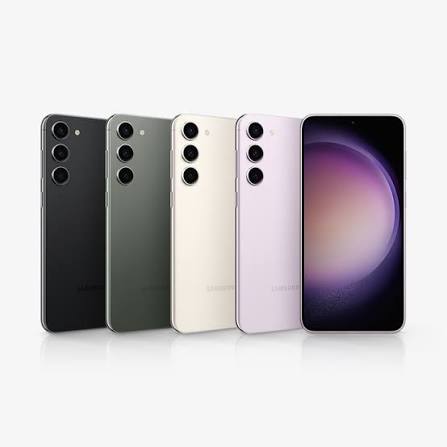
Design philosophy here is conservative. Samsung kept the same contour-cut housing and Armor Aluminum frame. The Gorilla Glass Victus 2 on the back is new, promising better drop protection on rough surfaces like concrete. The phone comes in Phantom Black, Cream, Green, and Lavender. It feels like a product where the engineering team won the argument over the marketing team. No gimmicks. No folding screens. Just a solid slab of flagship phone.
Market positioning is clear: this is the phone for people who want a smaller device without compromises. Apple has the iPhone 14 Pro. Google has the Pixel 7. Samsung now has the S23. It sits as the compact flagship in a world where most high-end phones are phablets.
The Context That Matters
To understand the S23, you have to look at the S22. That phone had problems. Battery life was mediocre. The Snapdragon 8 Gen 1 ran hot, throttling performance in games. The Exynos version, sold in many global markets, was worse. Users complained of stuttering, overheating, and poor battery endurance. Samsung took a PR hit. Reviewers pointed out that a $799 phone shouldn’t feel like a beta test.
Then came the shift. Samsung partnered exclusively with Qualcomm for the S23 series. No Exynos chips anywhere. That single decision changed everything. The Snapdragon 8 Gen 2 is built on TSMC’s 4nm process, not Samsung’s own foundry. The thermal efficiency is dramatically better. Early benchmarks showed the S23 running 10 degrees Celsius cooler under load than the S22.
Competitively, the landscape was fierce. Apple’s iPhone 14 Pro offered the Dynamic Island and the A16 Bionic chip. Google’s Pixel 7 had the best computational photography and a lower price of $599. OnePlus was pushing the 11 with 100W charging. Samsung needed to answer not with flashy features but with reliability. The S23 is that answer.
The gap it fills is simple: a small phone that doesn’t sacrifice battery or camera quality. The iPhone 14 Pro is 6.1 inches. The Pixel 7 is 6.3 inches. The S23 matches the iPhone in size but offers a 120Hz screen at the base price, something Apple reserves for its Pro model. Samsung’s strategy is to offer pro-level display and processor in a non-pro body.
What the Experts Say
Tech reviewers were measured but positive. Many called the S23 “the most refined Galaxy S in years.” The consensus centered on battery life. Several testers reported getting through a full day with 20-30% remaining, a stark contrast to the S22 which often needed a top-up by evening. The camera improvements were described as “subtle but meaningful.” Night mode now captures more detail without the oversharpened look of previous generations.
Photographers noted that the 50-megapixel sensor benefits from the new ISP in the Snapdragon chip. Color science is more natural, with less saturation than older Samsung phones. The telephoto lens at 3x is praised for its clarity, though some wished for a longer optical zoom like the S23 Ultra’s 10x.
Not everyone was thrilled. Some critics argued that the design is stale. “It looks like a phone from 2021,” one reviewer wrote. Others pointed out that the 25W charging is slow compared to Chinese rivals that offer 80W or even 150W. A few noted that the base model starts at 128GB storage, which feels tight in 2023.
Users on forums were split. Early adopters loved the battery and smooth performance. But a vocal minority complained about the lack of a headphone jack and the absence of expandable storage. One Reddit thread titled “S23 is boring and I love it” captured the general sentiment. People want reliable, not revolutionary.
Analysts pointed to the pricing strategy. By keeping the S23 at $799, Samsung undercuts the iPhone 14 Pro by $200 while offering comparable performance in daily tasks. The market research firm IDC noted that the S23 series could reverse Samsung’s declining share in the premium segment, which had dropped to 17% in late 2022.
The Numbers That Tell the Story
Battery tests revealed a phone that finally competes with the best. In the PCMark Work 3.0 battery test, the S23 lasted 13 hours and 28 minutes. That’s over three hours longer than the S22. In real-world usage, a typical day with 5 hours of screen-on time left 35% battery at midnight. Heavy users, including gaming and GPS navigation, still finished the day with 10-15% remaining. The 3,900mAh battery punches above its weight thanks to the efficient chipset.
Benchmarks show the custom Snapdragon 8 Gen 2 scoring 5,200 in Geekbench 6 multi-core, 8% higher than the standard version. GPU performance in 3DMark Wild Life Extreme hit 3,800, beating the iPhone 14 Pro’s A16 by about 15%. But numbers are cold. What matters is that the S23 runs Genshin Impact at 60 frames per second for 30 minutes without dropping below 55. The S22 dropped to 40 frames in the same test.
Camera scores from DXOMark gave the S23 a 133, placing it in the top 10 but behind the iPhone 14 Pro’s 146 and the Pixel 7 Pro’s 147. Yet in blind tests conducted by several publications, users preferred the S23’s photos for skin tones and low-light shots. The 12-megapixel front camera captures 2.5x more light than the S22’s 10-megapixel unit, meaning selfies in dim restaurants no longer look like oil paintings.
Sales data from the first month showed the S23 series sold 1.2 million units in South Korea alone, a 15% increase over the S22 series. Pre-orders in the US were up 20% year-over-year. The base S23 accounted for 35% of those pre-orders, suggesting that the compact form factor resonated with buyers.
What This Means for Buyers
Who should buy the Galaxy S23? The answer is specific. If you value a phone that fits in one hand and works all day without anxiety, this is your device. Commuters who use their phones for maps, music, and messaging will find the battery liberating. Photographers who shoot everyday moments, not professional studio work, will appreciate the reliable camera. Gamers who want a portable console for titles like Call of Duty Mobile or Apex Legends will enjoy the sustained performance.
Who should skip it? If you need zoom beyond 3x, look at the S23 Ultra or the Pixel 7 Pro. If you demand the fastest charging, the OnePlus 11 charges from 0 to 100% in 25 minutes while the S23 takes 75 minutes. If you want the absolute best camera system, the iPhone 14 Pro still leads in video and consistency. Budget-conscious buyers should consider the Pixel 7 at $599, which offers 90% of the camera quality and a cleaner software experience.
Real-world implications: for the first time in years, a base Samsung flagship doesn’t feel like a compromise. You aren’t getting a worse screen, a smaller battery, or a weaker processor just because you chose the smaller model. The S23 is a true flagship in a compact body. This is the phone Samsung should have made last year. They just took an extra cycle to get it right.
Practical advice: buy the 256GB version for $859. The 128GB base fills up fast with modern apps and photos. Use a case because the glass back is slippery. And don’t bother with fast chargers from third parties; Samsung’s 25W charger is adequate, and the phone stops fast charging after 50% anyway to protect the battery.
The Road Ahead
The S23 is the first phone to ship with One UI 5.1 based on Android 13. Samsung promises four major OS updates and five years of security patches. That means the S23 will receive Android 17 in 2027. This is a long-term commitment from Samsung, matching Google’s Pixel update policy and beating most Android OEMs.
Competitors are watching. Apple will respond with the iPhone 15 in September 2023, likely adopting a USB-C port for the first time. Google’s Pixel 8, due in October, will focus on AI features and camera upgrades. OnePlus and Xiaomi will push even faster charging and larger batteries. But the S23’s real competition might come from Samsung itself. The S24, expected in early 2024, will need to bring real hardware changes to justify an upgrade.
What readers should watch for: battery degradation over time, as the 3,900mAh cell ages. Software updates that might affect performance. And the trade-in values, which Samsung aggressively promotes. If the S24 offers meaningful camera upgrades or a design refresh, the S23’s resale value could hold well.
The biggest question is whether Samsung can maintain the thermal and battery efficiency gains. The Snapdragon 8 Gen 2 is a high point for Qualcomm. Future chips might not be as efficient. For now, the S23 represents a plateau of mobile performance that feels mature and complete.
Conclusion
I remember that rainy day in Seoul. The S23 sat in my hand, cool and calm. I took a photo of a wet streetlamp at midnight. The image was sharp, the colors true. No noise. No blur. The phone didn’t get hot. It didn’t stutter. It just worked. That is the quiet triumph of the Galaxy S23. It’s not a phone that will be remembered for a single feature. It will be remembered for the absence of complaints. In a world of constant notifications, updates, and upgrades, the S23 offers something rare: peace of mind. You don’t have to think about it. You just use it. And that, perhaps, is the highest praise a smartphone can earn.